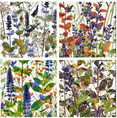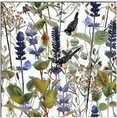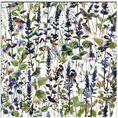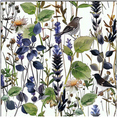
A Study on Digital Textile Design using Image-Generative AI

©2024 The Korean Fashion and Textile Research Journal(KFTRJ). This is an open access journal. Articles are distributed under the terms of the Creative 52 Commons Attribution Non-Commercial License (http://creativecommons.org/licenses/by-nc/4.0), which permits unrestricted use, distribution, and reproduction in any medium, provided the original work is properly cited.
Abstract
This study evaluated the current capabilities of generative AI systems, with a focus on their application in AI-driven textile design, particularly through image-generative AI systems. It also explores the potential application and commercialization of Midjourney, an image-generative AI for digital textile design development. First, ChatGPT-4 was used to analyze textile pattern design trends for 2024/2025. The theme “The Heart of the Forest,” derived from Premiere Vision and Heimtextil's 2024/2025 textile trends, was selected. Keywords related to textile design were identified, and natural colors from Heimtextil were chosen. Second, images were generated in Midjourney using three commonly used functions: text, image+image, and image+text. The “/blend” feature in Midjourney was used to create images through the image+image command. Images were generated by typing “image+text” when prompted to create an image. Third, Midjourney and CLO 3D were used for performing virtual fitting. Midjourney’s ability to generate perfect images from simple text inputs surpasses the capabilities of many professionals. Not only does it accelerate the design process but also enhances the quality of the designs to a professional level or higher. However, despite these advantages, copyright issues must be addressed. Therefore, we anticipate a synergistic effect when a designer's senses and sensibilities are combined with the unlimited creative possibilities of generative AI.
Keywords:
Image Generative AI, Midjourney, ChatGPT, Digital Textile Design1. Introduction
Artificial Intelligence(AI) is becoming one of the most important drivers in all industries and a key element in the future of human industry. Not only will it drive industrial transformation, but the resulting products will be so deeply involved in human life that they will reform every aspect of life we have ever known. AI is the ability to perform intelligent activities, or the process of recognizing, reasoning, and acting. It enables computers to achieve goals autonomously, utilizing human intellectual abilities such as thinking and learning without human intervention. In other words, it is an emerging science that researches and develops systems to simulate, extend, theorize, methodologize, technologize, and apply human intelligence (Theodorou & Dignum, 2020). While early AI was used in the abstract sense of utilizing computers in human thought processes, it has expanded to mean the implementation of human intelligence, such as learning, thinking, and emotions, through computer systems. AI is rapidly advancing in various fields, demonstrating the ability to generate creative output(Lee & Cha, 2023).
AI technology has been applied to many areas of society, leading to changes in various fields. In particular, the scope of AI has recently expanded to the creative field, which was once thought to be the exclusive domain of humans, and is now being used in creative activities. The convergence of art and AI is not only enhancing technology and people with intelligence but also creating new experiences. As such, AI has the potential to act as a medium for creative activities with artistic value. We must be prepared to face the challenges posed by new technologies in the era of AI, which will continue to evolve indefinitely in the future(Still, 2017). AI is also widely used in the fashion industry. In design, AI can generate design ideas, predict trends, create new design patterns, and even produce unique designs based on styles or historical design references( Lee, 2020). In fashion retail, AI-driven recommendations enhance personalized shopping experiences for consumers. This is because AI is able to analyze consumer preferences and behavioral data to provide customized and personalized services that enhance consumer satisfaction(An et al., 2019). On the production side, AI can be used to efficiently manage inventory, demand forecasting, and production forecasting, leading to more effective service creation and cost reduction. In addition, analyzing consumer trends based on extensive data processing in response to changes in mega trends can lead to a virtuous cycle of a more efficient and sustainable fashion industry by utilizing AI(Bang, 2022). As digital textile design rapidly expands in the textile industry, the commercialization of AI in this field will be crucial for the future of the fashion industry.
Therefore, this study analyzes fashion design cases using generative image AI systems and designs digital textiles with generative AI. Shim(2024) said that combining ChatGPT and image generation AI for image enhancement has a positive effect on image enhancement. In particular, Midjourney is considered one of the most advanced graphics software among image-generating AIs(Wei & Eom, 2023; Park, 2023). So, we use ChatGPT and Midjourney to generate images for digital textile design. The study investigates the potential of using generative AI in the textile design industry and education. It presents a system for the design process utilizing generative AI and provides foundational data to enhance digital textile design through generative AI.
2. Theoretical background
2.1. Image generative AI
Among the various AI technologies, generative AI models are anticipated to revolutionize content creation in cultural and artistic fields and are expected to have a significant impact on various industries(Thomas & Nitin, 2022). In particular, generative AI design tools have the potential to further expand the creative realm by generating outputs based on networks with other designers(Lee & Lee, 2021). These tools automate and speed up repetitive steps in the design process, allowing designers to quickly produce the best possible outputs based on data analyzed by AI(Jung & Kim, 2019). Typical types of generative AI include text-to-text[t2t], text-to-image [t2i], and text-to-video[t3v]. Text to text[t2t] is a type that generates text as you type it, such as ChatGPT and Bing Chat. Text to Image[t2i] is a type of technology that generates a picture by inputting a text description. Examples include Midjourney, Dall-E, and Stable Diffusion. And Text to Video[t3v] is a type that generates a video by typing a video; examples include Runway ML and Stable Video Diffusion(Table 1).

Representative types of generative AI
Image generation AI becomes not only possible to leverage complex deep learning algorithms and big data to rapidly generate new, previously unseen images. This technology has become popular and is revolutionizing the field of design(Hwang, 2023). In addition, image generation technology using AI is attracting users' attention due to its unique characteristics of high automation, high efficiency, and creativity that transcends humans (Kim, 2023). Recently released image-generating AI tools(DALL-E 2, Midjourney, Stable Diffusion) allow users to create complex, abstract, or realistic artworks by typing a few words as text.
Shim(2024) showed that combining ChatGPT with image-generating AI produces an image enhancement and synergy effect. However unorganized prompts without a detailed strategy will hinder the designer from utilizing AI as intended and achieving the desired image enhancement effect. Therefore, it is beneficial to specify the topic, context, and desired format when requesting information from ChatGPT or generative AI. By writing specific prompts based on conceptual keywords, it is possible to generate a visual representation that is similar to the original design concept(Na, 2024). Also, effective prompts can assist designers create more efficient and competitive designs by enhancing creativity, simplifying the design process, providing personalized experiences, and facilitating quicker decision-making and feedback(Wu, 2024).
2.2. Image generative AI use cases
Table 2 displays the applications of generative AI in the field of fashion.
Image generative AI use cases
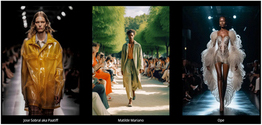
AI Fashion Week(AFW), the world's first artificial intelligence fashion show, proved the potential of AI in fashion design and that AI is a creator, not just a tool. AFW differs in that the AI becomes the designer itself, whereas previous AIs were designed to assist the designer. Participants used prompts to instruct the AI and were never allowed to use prompts that relied on existing designer's work or references(Jang, 2023). Seventy percent of the designers participating in Fashion Week used Midjourney, a generative AI program. The three winners used Midjourney and Stable Diffusion to generate AI images of their clothing items, which were later edited in Photoshop. The winning clothes were made available for purchase on the website in collaboration with Revolve(Park, 2023).
Tilda is an AI artist based on 'EXAONE' developed by LG AI researchers. This EXAONE is responsible for Tilda's core brain function, generating original images based on text input by thinking about it from various perspectives, similar to human thinking. Tilda has also been used in fashion design, including a recent project at New York Fashion Week. The direct involvement of AI in the design process has implications for the fashion industry(Min, 2024)
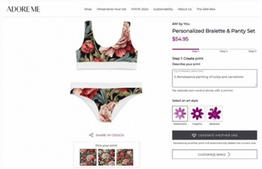
DTC lingerie brand Adore Me has launched AM by You, a generative AI-powered custom design tool that allows consumers to design their own personalized bralette and panty set. Priced starting at $54.95, this program offers customers the ability to select colors and patterns, add simple text, and lets the AI system handle the design process. Customized designs are then put through a multi-step moderation process by the Adore Me team and are not printed until they are approved(Howard, 2024).
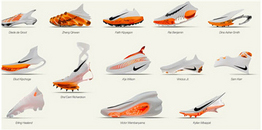
Nike has launched an innovative new project, the Athlete Imagined Revolution(A.I.R.) a project by Nike's innovation team. Using data collected from 13 of Nike's top athletes, including French soccer player Kylian Mbappe, Nike created sneakers tailored to their needs and personalities. Prompts based on the athletes' preferences were inputted into generative AI models to create hundreds of images. Nike designers then quickly refined these images into individual concepts using various digital fabrication techniques, such as 3D sketching and printing. The project actively utilizes athlete data using Nike's generative AI model, LLM(Yoo, 2024).
2.3. Digital textile design
Digital textile design is a major technology of the 4th industrial revolution that has revolutionized the textile & fashion industry, and it is suitable for consumers' pursuit of differentiated individuality and is advantageous for small-scale production of various products, so it is being explored for use in various industries(Kang & Kwon, 2004). Digital textile design involves developing designs using CAD programs and producing products using digital textile printing(DTP) production systems. Digital textile printing without a transfer process can simultaneously transfer multiple colors and convert hand-drawn or photographic images into intricate visuals using computer graphics(Kim, 2009).
The changes in the textile design process due to technological advancements are shown in Fig. 1. The traditional textile design process is a seven-step process, consisting of conceptualization, ideas and color schemes, sketching, coloring, pattern sizing, repeats, and finalizing the paper design(Lee et al., 2000). The CAD textile design process can be used from step 3 of the traditional textile design process. CAD is a system for representing patterns by drawing directly on a digitizer using an electronic pen or mouse. The system has several tools that can be used to texture the pattern effectively. In addition, it offers various functions such as repeating or overlapping a single motif in multiple directions, switching colors, changing brightness and saturation, adjusting the size of the motif, modifying the input motif as much as desired through the scanner, enlarging, reducing, transforming, deleting, etc. Once the design is completed by CAD, it can be directly connected to the automation system, reducing production process time and increasing productivity. It is also capable of handling multi-color and complex designs quickly, with delicate shades and free overlap(Chung, 2001). In the digital textile design process using AI, the “Text to Text” type of generative AI(such as ChatGPT or Bing Chat) can be utilized to set up concepts, ideas, and colors, which correspond to steps 1 and 2 of the traditional textile design process. From step 3 to step 7, the design can be done using generative AI models like "Text to Image" (such as DALL-E, Midjourney, etc.). The characteristics of textile design using AI are that the process becomes more efficient by reducing manual intervention, simplifying steps, and streamlining design and development processes. In addition, it is possible to quickly respond to market changes and design demands, achieve rapid iteration and updates of product design, and enhance overall efficiency by reducing costs and time. The integration of AI in the fashion design process enhances efficiency, accuracy, creativity, and flexibility for designers through automation and data-driven methods(Kim, 2015).
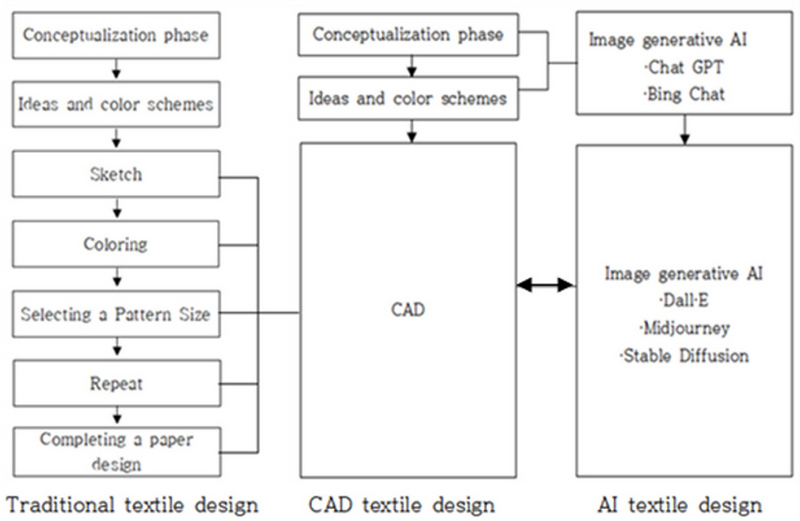
Traditional, CAD, and AI digital textile design processes.
Previous studies in digital textile design includes a study on the development of digital 3D textile designs(Wan & Chung, 2023), a study on the development of upcycled textile designs and sustainable fashion industry development using digital 3D(Kim, 2023), a study on the representation of fabric characteristics in CLO 3D focusing on fur materials (Kim, 2022), material development using 3D printing technology, and garment production using a 3D virtual fitting system(Min et al., 2023). Although there have been many recent studies on 3D and digital textile design, there is a lack of research on AI and digital textile design. Therefore, the development of digital textile design combined with AI will become increasingly important in the textile and fashion industry. This integration enables the production of unique and personalized products.
3. Development methods
The aim of this study is to analyze the cases of image generation AI in the fashion industry and to generate textile design patterns using generative AI. Consequently, we examine the possibility of commercializing it within the textile fashion industry. The development methods are as follows.
Development method 1. Investigate concepts and motifs in textile design with ChatGPT4.
Development method 2. Generate textile design pattern images using Midjourney based on researched keywords.
Development method 3. Virtual fittings in Midjourney and CLO.
Thus, the process of digital textile design using image AI in this study is shown in Fig. 2.
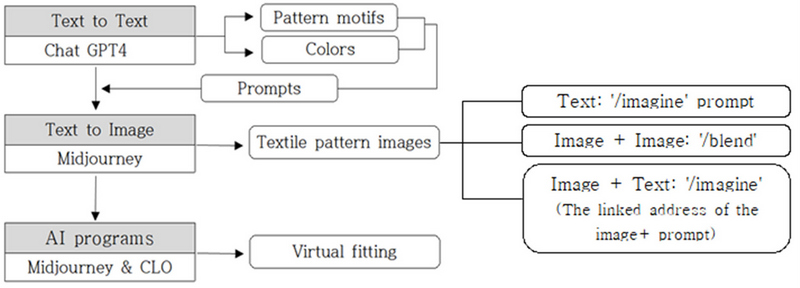
AI textile pattern design process.
3.1. ChatGPT
ChatGPT generates human-like text using deep learning, which is a subset of machine learning, through a Transformer Neural Network.
ChatGPT is a large-scale artificial neural network model used for natural language processing (NLP) tasks. This natural language model is used to analyze human language, which has paved the way for its popularization instead of being the exclusive domain of experts. It answers human questions, and the topics of conversation can be very diverse. They include not only knowledge transfer but also creative answers, technical problem solving, calculations, product descriptions, and artistic responses. When asked specific questions, it understands the context behind the question and remembers the content of previous questions. It utilizes this information in its answers to provide meaningful answers.
OpenAI's ChatGPT was released in November 2022 based on the Generative Pre-trained Transformer (GPT-3.5) model. Four months after its launch, OpenAI released GPT-4, a new and vastly improved large-scale language model (LLM). In an internal evaluation, GPT-4 was 82% less likely to respond to requests for unacceptable content and 40% more likely to generate factual responses compared to GPT-3.5(Shim, 2024). The combination of ChatGPT and image-generating AI for image enhancement has shown a positive impact on image enhancement. AI is a tool that can be controlled by the creator's research and learning (Shim, 2024). Therefore, in this study, ChatGPT 4.0 was used to investigate textile design concepts.
3.2. Features of Midjourney for textile pattern design
Midjourney stands out from other AI graphics software with its unique artistic style and user-friendly interface. The generated images are realistic and detailed, intelligently recommending elements like color, texture, and pattern. This feature makes it easier and faster for users to create beautiful artwork. In terms of image size, Midjourney can generate images up to 2048x2048 pixels to meet the printing requirements of decorative and pattern designs, providing more image size options not available in other software( Wei & Eom, 2023). Midjourney also produces the highest quality images among all image production services available in the market. Users can access it online and on the cloud, ensuring stability regardless of their device's performance(Lee, 2023). Therefore, in this study, we chose Midjourney, a generative AI, to design textile patterns.
Midjourney uses Discord's own command structure, and the call sign for executing commands in Discord is '/'. All commands start with a '/', and the order of the prompts is Image Prompts-Text Prompts-Parameters.
The most commonly used commands in Midjourney are 'blend', 'describe' , 'imagine', 'setting', and 'info'. As shown in the Table 4, some commands require the user to upload an image file , while others require the user to enter a text prompt. One of these commands is imagine, which generates the images that power over 90% of Midjourney's features. ‘Imagine’ of these commands, creates images that drive over 90% of Midjourney's functionality(Cho, 2024).
Commands in Midjourney
Midjourney uses Discord's command structure, and the call sign for executing commands in Discord is '/'. All commands start with a '/', and the order of the prompts is ‘Image Prompts-Text Prompts- Parameters’.
The most used commands in Midjourney are '/describe', '/imagine', '/setting', and '/info'. As shown in Table 4, some commands require the user to upload an image file, while others require the user to enter a text prompt. The '/Imagine' commands create images that drive over 90% of Midjourney's functionality(Cho, 2024).
For this study, we used Midjourney's Upscale, Variation, and Zoom Out features. The 'Upscale' (U) feature enlarges the image by enhancing its resolution. If the user only wants to modify a specific part of the image, they can utilize the 'Inpainting' feature, 'Vary (Region)'. Vary(Strong) will recreate the four generated images with strong changes, while Vary(Subtle) will recreate the four images with minor changes. Midjourney offers two Outpainting features, Zoom Out and Pan, that users can utilize to enlarge the background while adding new elements. Outpainting is an AI technique that analyzes the style, content, and patterns of the original image to naturally extend its outer parts of the image.
Park(2023) used three methods to generate images for fashion design: entering commands individually, entering the same commands with a time gap, and combining existing images with commands. Wei and Eom (2023) conducted a case study on surface patterns using Midjourney expression techniques, focusing on three commonly used methods: picture-generated text/describe, picture-generated picture/blend, and picture+keyword/imagine. So, we used '/imagine' and '/blend' prompts to generate textile pattern images based on previous studies. For '/imagine', we used keywords researched by ChatGPT as prompts. For '/blend', we used two methods: the first was to select four images from the images generated by the '/imagine' prompt, and the second was to generate images using user-taken photos that fit the concept.
Therefore, this study investigated the concept of textile design using ChatGPT, a text-to-text(T2T) type of generative AI, and generated textile pattern designs using Midjourney, a text-to-image( T2I) type of AI.
3.3. AI programs for virtual fitting
To apply the created patterns to the virtual avatar, we utilized the Midjourney and CLO programs. CLO is a commercial 3D computer program for fitting and pattern design. It can be downloaded and accessed at https://clo3d.com/. In a study by Jung & Suh (2023), when virtual fitting garments created with CLO were found to match real garments better than those created with Zepeto. When compared to the fitted garments, they did not match completely due to the specificity of the Zepoto character, which is not a realistic depiction of a person.
4. Results and discussion
4.1. Investigate textile pattern design motifs using ChatGPT4.0
We used ChatGPT4.0 to ask questions about textile design trends for 2024/2025. From the various answers, we chose Premiere Vision and Heimtextil and researched the detailed concepts on their websites(Fig. 3)
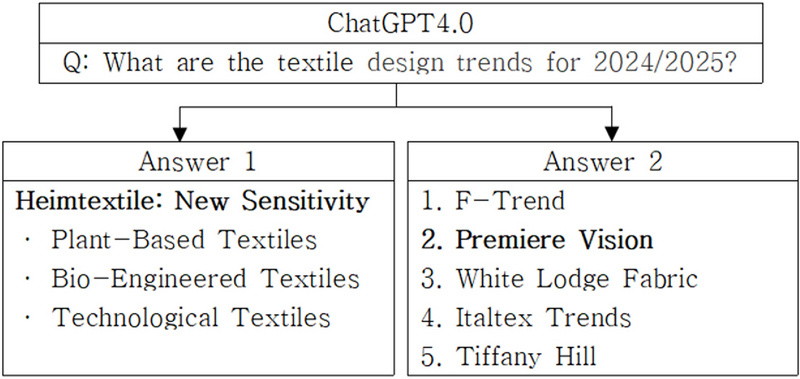
Investigating textile design concepts using ChatGPT4.0.
Premiere Vision is the world's largest apparel and textile trade fair, held in Paris every February and September. It showcases fashion and textiles from top European and Asian companies. Heimtextil, the world's largest textile fair, is held annually in January at the Frankfurt am Main exhibition center in Germany. The fair gathers textile companies worldwide to exhibit textile design, innovative textile-related technologies, and interior design connected to textiles. Heimtextil's trend forecasts have been identifying global trends through the perspective of textiles for decades.
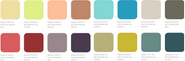
The 2024/2025 trends for Premier Vision and Heimtextil are shown in Table 5. Premier Vision specializes in textile design, while Heimtextil focuses on fabrics. In other words, Premier Vision focuses on the surface design of materials, whereas Heimtextil focuses more on their functionality and texture. The colors of Heimtextil Trend 2024/2025 are inspired by natural pigments derived from avocado seeds, algae, live bacteria, antique pigments such as raw sienna, bio-engineered indigo, and cochineal.
Selecting textile pattern motifs and colors
Therefore, for this study, we selected textile pattern motifs from Premiere Vision's A/W 2024/2025 trends and natural colors from Heimtextil. For the motif, we selected the primary keyword from Premiere Vision and the keyword "Heart of the Forest" from the A/W 24/25 trend themes. Therefore, the selected keywords were used as prompts for designing textile patterns in Midjourney.
4.2. Generating textile pattern designs with Midjourney
In this study, three commonly used features - text, image+image, and image+text, were utilized to generate textile designs using Midjourney.
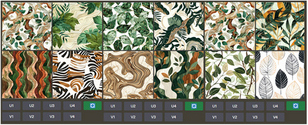
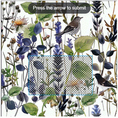
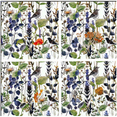
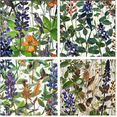
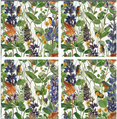
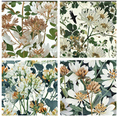
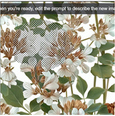
We created a textile design prompt based on a few keywords from Premiere Vision and Heimtextil's 24/25 trends. The first image generation prompt is ‘design a pattern featuring forest, botanical, optical, geometry, leaf ribbings, abstract wood veining, natural colors on a white background - --tile -'. When entering the command in Midgourney's prompt window, we added '--tile' at the end. This --tile feature has a seamless pattern and is only compatible with versions 1, 2, 3, and 5. The seamless feature allows for infinite iterations to repeat naturally.
After entering the prompt, four images will be generated. If the user wants images other than the four generated images, they can press the icon (
 ) to generate another set of four images. Also, pressing the icon in the same prompt, users can continuously generate new images. But if the user wants to include another image among the generated images, they can enter the words of the image they want to add at the prompt. So, to create a different design from the image generated in the first prompt, we used this icon (
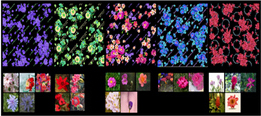
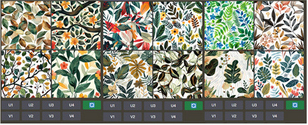
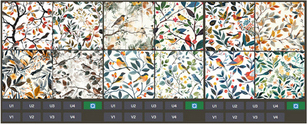
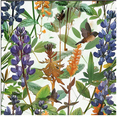
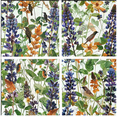
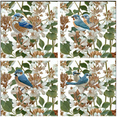
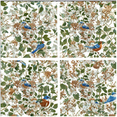
) to generate 12 new textile patterns. We also wanted to add another image to the first generated image, so we added words in it. So, we added 'flower' to the second prompt and 'bird' to the third prompt(Table 6). In this way, we generated 12 images from each prompt by using the refresh icon, resulting in a total of 36 textile pattern images. Thus, utilizing the regeneration feature by adding new words to the same prompt kept generating similar but different images.
) to generate another set of four images. Also, pressing the icon in the same prompt, users can continuously generate new images. But if the user wants to include another image among the generated images, they can enter the words of the image they want to add at the prompt. So, to create a different design from the image generated in the first prompt, we used this icon (
) to generate 12 new textile patterns. We also wanted to add another image to the first generated image, so we added words in it. So, we added 'flower' to the second prompt and 'bird' to the third prompt(Table 6). In this way, we generated 12 images from each prompt by using the refresh icon, resulting in a total of 36 textile pattern images. Thus, utilizing the regeneration feature by adding new words to the same prompt kept generating similar but different images.
Generated images for each of the three prompts
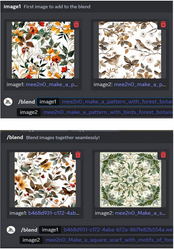
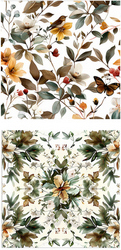
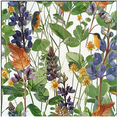
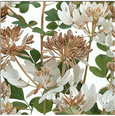
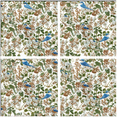
The '/blend' prompt blends between 2 to 5 images. Up to five image files can be uploaded directly. Users can choose dimensions to set the result as a horizontal, vertical, or square image(Square is the default). We selected a total of four images from those generated at the '/imagine' prompt and uploaded two images to the '/blend' prompt. After selecting one of the four generated images, we upscaled it and then checked for repeating patterns at 'check|pycheung.com' (Table 7).
Generating images with ‘/blend’
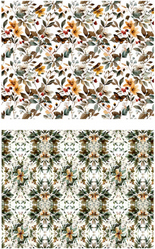
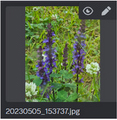
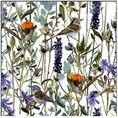
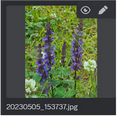
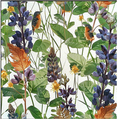
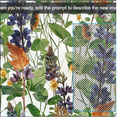
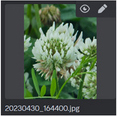
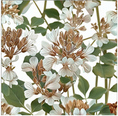
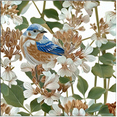
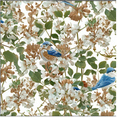
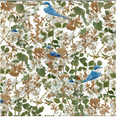
Images were created by entering "image+text" at the "/imagine" prompt. In this study, we can also find and upload images from the internet, but we uploaded photos taken by the researcher to match the design concept. Among the generated textile patterns, we uploaded two photos and created four images. One of them was selected to design a textile pattern using Midjourney's features such as Vary(Subtle), Vary(Region), Zoom Out, Pan. Table 8 and Table 9 are the same photo and the same prompt, but different images are created using Vary(Subtle) and Vary(Region).
Images to text 1
Images to text 2
Table 10 was modified using Vary(Subtle), Vary(Region), Zoom Out, and Pan to align more closely with the design intent.
Images to text 3
4.3. Virtual fittings in Midjourney and CLO
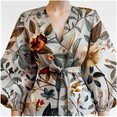
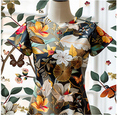
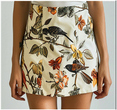
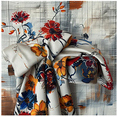
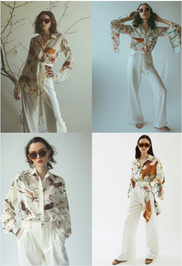
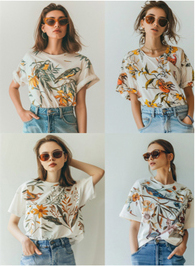
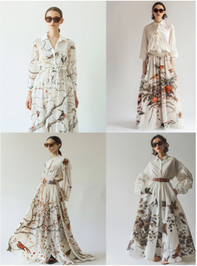
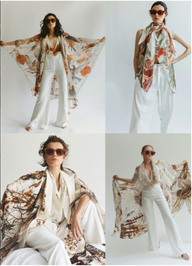
Table 11 shows a design using the textile pattern design prompts and clothing item prompts such as a scarf, skirt, blouse, and t-shirt. However, this image was created by adding prompts for the clothing items, so the textile design was specifically created for the clothing items, not the entire outfit. Therefore, creating effective prompts requires iterative revision and accurate, detailed prompt writing to create the desired image. So, we used the textile pattern design prompt and the outfit model image prompt(Table 12).
Generated images using the fashion item prompt
Virtual outfit with Midjourney
In Midjourney, even if a user uploads a design file, it doesn't appear in the same pattern. In other words, if we apply the pattern design we created, it will recreate the pattern with a similar pattern design, not the exact same pattern design. So, in Midjourney, in order to generate the outfitted image, users need to generate the image by entering the textile design pattern prompts and the wearing model prompts for the pattern they want to design. This means that the normal way of outfitting a completed pattern using an avatar does not apply in Midjourney.
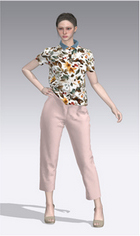
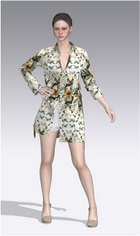
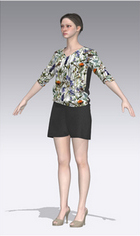
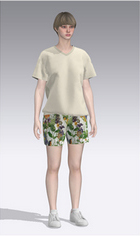
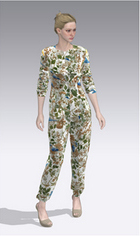
Five textile pattern images generated in Midjourney were simulated in CLO, a commercially available 3D computer program for fitting and pattern design. Since the textile pattern designs generated in this study aimed to investigate the potential for developing textile patterns for Midjourney, they were applied to various clothing items for virtual fitting, rather than specific clothing items (Table 13).
Virtual fitting
5. Conclusions
This study analyzed cases of image generation AI systems and created textile design patterns using generative AI(ChatGPT, Midjourney). The study aims to present a system for design processes using generative AI, explore AI's potential in the textile design industry and education, and provide foundational data for enhancing digital textile design with AI.
First, we utilized ChatGPT 4.0 to investigate the textile pattern design trends for 2024/2025. Based on the results from ChatGPT, we extracted textile design motif keywords from Premier Vision's concept and selected textile design colors at Heimtextil. The biggest advantage of using a chatbot for data research is that it provides clear and quick answers to users' questions with a wide range of data, as opposed to searching for information on Naver or Google.
Second, we utilized three features of Midjourney to generate images: text, image+image, and image+text. In the first step, we used the basic functions to create a textile pattern design. The outcome was of high quality, providing us with a variety of images. In the second step, we used the 'Image+Image' command to generate images using Midjourney's '/Blend' feature. Designing textiles with Midjourney's features allows you to create textile patterns that better reflect your intentions. If a user modifies an image created in Midjourney, the resulting image will be recreated as a similar but not identical version of the original. Therefore, if the user wants to modify the original, they should use another design program in conjunction with Midjourney. The textile design images generated by the current version of Midjourney would be better suited to the designer's intentions if they were enhanced with Photoshop or Adobe Illustrator. But, if a user wants to design a slightly different image from the original, Midjourney is a good option because the unintended outcome of the modification could potentially lead to a better image or inspire the user with a new idea.
Third, we used Midjourney and CLO 3D for virtual fittings. We simulated five textile patterns designed with Midjourney in CLO 3D. The virtual fitting images generated by Midjourney are stylized and can provide valuable design inspiration for the final design.
Jung et al.(2023) showed that creativity and empathy significantly influence aesthetics in human-AI collaboration. So the collaboration between generative AI and designers not only improves the efficiency of the AI textile design process but also increases the completeness and accuracy of textile designs. This collaboration enables designers to quickly implement concepts, minimizing the time spent on handwork and revisions, thus making the entire design process more efficient. Despite these advantages, copyright issues cannot be ignored. The prestigious scientific journal Nature has banned the publication of content generated using generative AI, such as photos, videos, illustrations, and graphical images(Cho, 2024). However, social discussion has not yet caught up with technology. In this imperfect situation, it is important to recognize that the user is entirely responsible for the outcomes of generative AI. Generative AI could have a positive impact on textile pattern design once copyright issues are resolved. Some individuals are concerned that as ordinary people gain the ability to create highquality designs, the expertise of professionals may be devalued.
Therefore, the development of digital textile design with AI will present a new design process and a new design area that combines creativity, emotion, and technical knowledge. Collaborating with technology will also contribute to the creation of innovative and diverse designs. Designers are expected to play a crucial role in creatively solving problems with AI and leading the future of the fashion industry. The limitation of this study is that only Midjourney was used to design textile patterns among generative AIs. Therefore, in a follow-up study, by developing digital textile designs using various image generation AI applications, it will be possible to propose the most efficient and optimized image generation AI application for textile design.
References
-
An, H. S., Kwon, S. H., & Park, M. J. (2019). A case study on the recommendation services or customized fashion styles based on artificial intelligence. Journal of the Korean Society of Clothing and Textiles, 43(3), 349-360.
[https://doi.org/10.5850/JKSCT.2019.43.3.349]

- Bang, J. S. (2022). Utilizing artificial intelligence to expand metaverse services. Journal of The Korean Institute of Communication Sciences, 39(2), 64-73.
- Cho, N. K. (2024). Midjourney Prompt Master Guide. Gyeonggido: VIELBooks.
- Chung, H. J. (2001). A research for textile design making use of computer CAD. Journal of Digital Design, 2, 89-95.
- Howard, R.(2024, May 13) Adore me launches AI design tool. RETAILDIVE. Retrieved Retrieved May 17, 2024, from https://www.retaildive.com/news/adore-me-launches-am-by-you-generative-ai-design-tool/715883, /
-
Hwang, Y. J. (2023). A study on the use of generative artificial intelligence design platform for BI development-Focusing on the use of the ‘Midjourney’-. The Journey of Korean Society of Design Culture, 29(3), 527-541.
[https://doi.org/10.18208/ksdc.2023.29.3.527]
- Jang, W. S. (2023, May 01). World's first 'AI Fashion Week’, TIN NEWS. Retrieved December 15, 2023, from https://www.tinnews.co.kr/24761
-
Jung, D. W., & Suh, S. E. (2023). Development of customized textile design using AI technology-A case of Korean traditional pattern design. Journal of the Korean Society of Clothing and Textiles, 47(6), 1137-1156.
[https://doi.org/10.5850/JKSCT.2023.47.6.1137]
-
Jung, J. R., Jang, S. Y., & Lee, Y. R. (2023). Perception of fashion designer's capability and product quality. Journal of the Korean Society of Clothing and Textiles, 47(6), 743-759.
[https://doi.org/10.5850/JKSCT.2023.47.4.743]
-
Jung, J. R., & Kim, M. H. (2019). A study on AI-based design process innovation in fashion industry. Journal of Communication Design, 67, 140-153.
[https://doi.org/10.25111/jcd.2019.67.11]
- Kang, H. S., & Kwon, M. H. (2004). A study on digitalization of fashion textile design-A study of fashion textile CAD design according to digitalization-. Journal of Korean Society of design science, 17(1), 289-298.
- Kim, H. L. (2009). The expression characteristics of textile surface design adapting digital architecture’s formal tools [Doctoral dissertation, Kyungpook University]. Riss. https://www.riss.kr/link?id=T11596564
- Kim, J. W. (2015). A study on textile design process that applies algorithm [Doctoral dissertation, Konkuk University]. Riss. https://www.riss.kr/link?id=T13704888
-
Kim, K, H. & Kim, H, G. (2023). A case study of ChatGPT and Midjourney-Exploring the possiblility of use for art and creation using AI-. The Society of Korea Illusart, 26(2), 1-10.
[https://doi.org/10.35280/KOTPM.2023.26.2.1]
-
Kim, M. J. (2022). A study on CLO 3D for expressing fabric properties: Focusing on material and type of fur. A Journal of Brand Design Association of Korea, 20(2), 51-64.
[https://doi.org/10.18852/bdak.2022.20.2.51]
-
Kim, M. K. (2023). A study on the development of upcycling textile design and digital 3D utilization sustainable fashion Industry. Fashion business, 27(5), 108-120.
[https://doi.org/10.12940/jfb.2023.27.5.108]
-
Lee, J. H., & Lee C. H. (2021). The applicability of artificial intelligence based design tools on fashion design thinking. Journal of Korea Design Forum, 26(2), 155-170
[https://doi.org/10.21326/ksdt.2021.26.2.014]
- Lee, J. J., Han, M. H. & Choi, W. K. (2000). Textile planning and design. Seoul:Shinkwang.
-
Lee, N. H., & Cha, J. W. (2023). Possibility of generative AI to improve Korean learners’conversational ability. Korean Language, 72, 53-90.
[https://doi.org/10.52636/KL.72.3]
-
Lee, W. Y. (2023). Suggestions for the use of fashion images with generative AI-Focusing on application of AI training data and AI technology-. Journal of the Korean Society of Design Culture, 29(4), 319-336.
[https://doi.org/10.18208/ksdc.2023.29.4.319]
-
Lee, W. Y. (2020). Fashion design education using deep dream generator in intelligence information society. Journal of the Korean Society of Design Culture 26(2), 429-446.
[https://doi.org/10.18208/ksdc.2020.26.2.429]
- Min, E. J. (2024. May 13). Fashion brands, ‘Active use of generative AI from design to marketing. Korea Textile News. Retrieved May 17, 2024, from https://www.ktnews.com/news/articleView.html?idxno=132924
-
Min, J. Y., Kim, H. J., & Kim, H. R. (2023). Developing materials using 3D printing technology and creating garments utilizing 3D virtual fitting systems. Journal of Creativity and Convergence, 3(1), 19-34.
[https://doi.org/10.23021/JCC.2023.3.1.19]
-
Na, H. B. (2024). Study on the use of generative AI prompts based on the product design concept. Journal of Cultural Product & Design, 76, 191-202.
[https://doi.org/10.18555/kicpd.2024.76.017]
-
Park, K. S. (2023). Study on the feasibility of using AI image generation tools for fashion design development-Focused on the combined use of Midjourney. The Journal of the Convergence on Culture Technology, 9(6), 237-244.
[https://doi.org/10.17703/JCCT.2023.9.6.237]
-
Pingjian, J., Xinyi, S., & Chung, J. H. (2023). Comparative analysis of AI painting using Midjourney and Stable Diffusion-A Case Study on Character Drawing-. International Journal of Advanced Culture Technology, 11(2), 403-408.
[https://doi.org/10.17703/IJACT.2023.11.2.403]
-
Shim, S. Y. (2024). Research on image enhancement with Generative AI -Focusing on ChatGPT and the Midjourney. Journal of Communication Design, 86, 22-33.
[https://doi.org/10.25111/jcd.2024.86.02]
- Still, A. (2017, October 18). The changing landscape of creativity in business : Key takeaways from survey. Adobe Blog. Retrieved November 15, 2023, from https://blog.adobe.com/en/publish/2017/10/18/creativity-in-business-key-takeaways-from-survey
-
Theodorou, A., & Dignum, V. (2020). Towards ethical and socio-legal governance in AI. Nature Machine Intelligence, 2(1), 10-12.
[https://doi.org/10.1038/s42256-019-0136-y]
- Thomas H. D., & Nitin. M. (2022). How generative AI iS changing creative work. (2022.11.14.). Retrieved October 10, 2023, from https://hbr.org/2022/11/how-generative-ai-is-changing-creative-work
-
Wan, Y. J., & Chung, J. Y. (2023). Development of digital 3D textile design-Focusing on the analysis of textile embroidery techniques by Maria Grazia Chiuri -. Journal of the Korea Fashion & Costume Design Association, 25(2), 123-134.
[https://doi.org/10.30751/kfcda.2023.25.2.123]
-
Wei, Y. Q. & Eom, K. H. (2023). Case study of surface pattern design utilizing Midjourney expression techniques. Journal of the Korean Society of Design Culture, 29(4), 251-262.
[https://doi.org/10.18208/ksdc.2023.29.4.251]
- Wu, Y. C. (2024). A study on the determinants of generative AI tool usage by generation MZ visual designers across different design process stages-A UTAUT model perspective-. [Doctoral dissertation, Hanyang University]. Riss, https://hanyang.dcollection.net/public_resource/pdf/200000725574_20240530141421.pdf, .
- Yoo, H. D.(2024. May 08). World-class, including Holland & Mbappe, Putting on sneakers made by generative AI. AI POST. Retrieved May 17, 2024, from https://www.aipostkorea.com/news/articleView.html?idxno=2087