Sustainability Practices and Implications of Fashion Brands at the Vegan Fashion Week

©2022 Fashion and Textile Research Journal (FTRJ). This is an open access journal. Articles are distributed under the terms of the Creative 52 Commons Attribution Non-Commercial License (http://creativecommons.org/licenses/by-nc/4.0), which permits unrestricted use, distribution, and reproduction in any medium, provided the original work is properly cited.
Abstract
With the expansion of the vegan fashion industry and increasing consumer interest in vegan goods, the first inaugural Vegan Fashion Week was held in LA in 2019. However, there are no studies examining the sustainability of vegan fashion brands; this study underlines the necessity to close this research gap. This study aimed to ascertain how these issues are handled by vegan fashion brands. Using the “sustainable criterion of fashion brands,” we investigated the companies that participated in Vegan Fashion Week. This study analyzed the featured brands, conducted case studies, and examined each brand’s sustainability strategies and procedures. Press releases, news articles, official websites, and web magazines served as raw data for this study. Analyses of individual networks were performed and brands’ approaches to veganism and sustainability were evaluated; eco-friendly material, fair trade, local production, and vegan inspiration were among these techniques. Every brand had put at least one of these requirements into practice for their business, with vegan inspiration being the most popular approach. Additionally, it was discovered that vegan fashion brands deliberately employed vegan messaging that aligns with their corporate values. After its initial launch, VFW continues to advance the discourse on vegan fashion both within the industry and with the general public. The study’s implications include the analysis of vegan fashion brands’ ethical manufacturing, environmental practices, and overall sustainability.
Keywords:
vegan fashion, Vegan Fashion Week, fashion brand, sustainability, sustainability criteria1. Introduction
In recent years, veganism has emerged as a major consumer point in the fashion industry(Seo & Suh, 2019). Vegan fashion products in particular, unlike other vegan products such as food items, is highly visible and can be used as communication tools for social interaction(Green et al., 2010). Consumers’ interest in ethical vegan products has increased and many brands have noticed it(Reimers et al., 2016). In the U.S. and European markets, which are the leading markets for vegan fashion products, famous fashion designers and brands are receiving favorable responses from consumers by differentiating their identity as vegan fashion brands (Gibson, 2020). Leading fashion brands such as Prada, Coach, Gucci, Ralph Lauren, and Burberry have declared that they will not use mink, fox, and raccoon fur in their products, with more than 800 companies around the world also participating in the movement(Stewart, 2021). Stella McCartney, a known vegan fashion brand goes as far as promoting sustainable materials for vegan fashion products(Nayak et al., 2020).
As the vegan fashion market continues to grow and consumers’ interest in vegan products increases, in 2019, the first Vegan Fashion Week took place in LA. In her interview with Vogue magazine, “Vegan Fashion Week is about more than bringing sustainability to the masses, it’s also about celebrating the great strides taken by designers who have chosen to create clothes which are free from animal cruelty and exploitation. For many, Vegan Fashion Week is an opportunity to draw attention to sustainable brands, which may not otherwise get their recognition”, says Emmanuelle Rienda, the founder and organizer of Vegan Fashion Week(Farra, E., 2019). In the same interview, Rienda states: “It’s not a matter of style anymore. It is a matter of choice. Now is the time to create a Fashion Week that shows how being vegan today is not only about animals— it’s about being good to all beings on the planet, humans included.”. After 2020’s online fashion show due to COVID-19 Restrictions, Vegan Fashion Week returned to runway in 2021, presenting brands that value sustainability and ethics in the fashion industry. The theme for the year 2021 was “Expansion,” which focused on how fashion can be used as a lens to look at the world’s most important challenges.
However, at this point, there are no studies evaluating the sustainability of vegan fashion brands, especially focusing on the recent Vegan Fashion Week. Therefore, this study emphasizes the need to fill this research gap. By applying the sustainability evaluation criteria model to the sustainability implementation of vegan fashion brands, this study intends to study the variables that determine the sustainability of vegan fashion. This study’s primary purpose is to investigate the current practices of sustainability in vegan fashion brands, and to determine how the interest in veganism in the fashion industry can be executed related to sustainability. Learning how ethically conscious vegan brands execute sustainability will allow us to recognize the latest trends in the industry, as well as to understand ways to improve on the matter moving forward. The main research question is: How is vegan fashion sustainable? For instance, vegan leather is produced using artificial or plant-based materials. In many instances—particularly within fast fashion—vegan leather is produced with PU(polyurethane) or PVC (Polyvinyl chloride). These materials are plastic and petroleum-based, which makes them not exactly the most eco-friendly alternative. Of course, materials are not the only issue a brand should be addressing. For example, a brand using organic cotton but not addressing greenhouse gas emissions in the supply chain, textile waste or labor rights issues is far from best practice but using the most sustainable materials is a good base on which to build.
This study intends to find out how vegan fashion brands tackle these dilemmas. The implications of this study are that by conducting a critical evaluation based on the criteria of prior literature, vegan fashion brands were analyzed on their ethical manufacturing, environmental practices, as well as their overall sustainability.
2. Literature Review
The topic of sustainability is essential in the fashion industry. Now more than ever, consumers are paying close attention to it. In this article, to describe the features of sustainable fashion movements, we conducted literature reviews on the historical aspects of vegan fashion and vegan fashion week, as well as the sustainability criteria that should be considered for vegan fashion.
2.1. Vegan Fashion and VFW
Many people have made the decision to live an animal-friendly lifestyle in reaction to the needless suffering and damage caused by animal agriculture alone. Vegan fashion is quickly catching up to vegan food in popularity(Pownall, 2019). Despite its popularity, there is no internationally unified standard as what Vegan fashion is. The general consensus for vegan fashion is identified by US-based animal welfare organization “PETA” and the UK-based organization, “Vegan Society” which defines vegan fashion as “Fashion items that do not include substances derived from dead animals or animal by-products, as well as products that were developed without testing on animals in the production process.”
Recently, the British Retail Consortium(BRC) has released recommendations for UK fashion companies looking to offer to the rising vegan market (Pownall, 2020). According to the article, the number of vegans in the UK has doubled between 2015 and 2019, and these customers demand their clothes purchases to be prominently labeled. It states: “Consumers wishing to purchase vegan products are looking for assurances from retailers in the form of certification, labelling, or registration.” The voluntary criteria are meant to provide reassurance to consumers when purchasing vegan products. The phrases “sustainable,” “biodegradable,” and “circular” have been confused and abused due to a lack of exact definitions. The guideline provides a list of questions that retailers should ask suppliers throughout the sourcing process, as well as internal inspections that businesses may perform and a list of animal-derived items to avoid. Retailers should not declare that vegan items are “sustainable,” according to fashion industry rules. According to The Guardian, the BRC standards aim to prevent shops from profiting from the rise in spending on “ethical” items, which reached £41 billion in the UK by the end of 2018(Smithers, 2019). “It should be stated emphatically that retailers should not claim the product is sustainable simply because it is ‘vegan’,” the guidelines states. Retailers must eliminate evident animal-derived ingredients from their supply chain in order to be classified as a vegan product, according to the guidelines. This includes many glues, dyes, pigments, and inks used in the fashion business, such as beetle dyes, involve animal-derived compounds. The document went on by stating, “Any product that is not traditionally made with animal-derived materials is not in scope. This means a cotton T-shirt should not be labelled as ‘vegan’ as it is traditionally made from cotton.”
According to Vegan Fashion Week, vegan fashion is a lifestyle and a way of life following a philosophy that encompasses all parts of life, with fashion being only one component of a wider picture that includes cruelty-free beauty, food, and any other purchases. The definition of vegan fashion is, “clothing that is 100% “cruelty-free.” In other words, no fur, leather, feathers, wool, silk, or any other animal-based fibers”(“Vegan Fashion vs Sustainable Fashion”, 2020). They are also declaring vegan fashion as a separate term from sustainable fashion, stating: “While most vegan brands are sustainable in their overall production process, sustainable fashion as a whole must be defined separately.”
To summarize all above definitions, vegan fashion is characterized as an ethical fashion that respects animals. Therefore, in this study we define vegan fashion as ethical and sustainable products that is free from animal-based materials, either made with plant-based or alternative garments, as well as being cruelty-free, which excludes products made with unfair labor and trading.
Vegan Fashion Week(VFW) was founded in 2018 by Emmanuelle Rienda, a French creative director living in Los Angeles. VFW takes place in Los Angeles twice a year, in March and October. Hosting a worldwide network of prominent international press, buyers, and industry experts for shows, presentations, and events, VFW has proven to be a historic event. The event also works as a trade expo and conference concentrating on ethics and sustainability each season. VFW was very aware of the current confusion over the nature of what constitute as “Vegan Fashion”, stating: “There is a lot of confusion about the overlapping fashion movements(sustainable, vegan, ethical) that have overtaken the industry. Many people believe these popular fashion terms are interchangeable, i.e. something that is sustainable is always ethical - or rather - something that is ethical is always vegan.”. For this, they were suggesting alternative criteria for vegan fashion. The official website of VFW provides “Vegan Fashion Library”, a categorized list of vegan fashion products. The categorizations are: Vegetable leather (apple, cactus, pineapple, vegan napa leather), Cruelty-Free Wool (linen, cotton yarn), Cruelty-Free Silk(Cellulose Fiber Made by Recycling Cotton), Organic cotton, Vegetable dye, Made in Europe, Made in USA, and Slow Fashion. VFW states, “We are attracting designers, press, buyers, influencers, and celebrities from across the globe. One of our missions is to strengthen our business relationships with Japan and highlight Tokyo/Los Angeles as the new Paris/New York.”
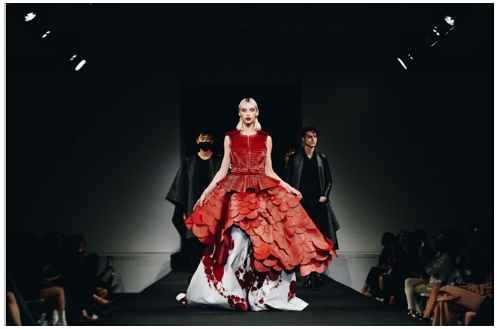
The first inaugural VFW took place in Los Angeles in February 2019 (Fig. 1), with 15 designers in attendance. The following show, including four designers, opened in October 2021. On its huge drop of participants, Rienda stated: “Since it is our first post pandemic fashion week, I am sizing down our tri-fold event inclusive of fashion shows, a trade show(Vegan World) and a conference. Vegan Fashion Week will embrace a new hybrid format of both virtual and physical shows. The revamped digital platform will ensure that editors, buyers, and consumers can access all material whether they are able to travel or not.” VFW organizes the entire production, including venue, staging, light, sound, press release, invitations, VIP guest list, logistics, casting, models, hair and makeup, dressers, photographing and filming of the show, and backstage interviews with the press.
“Vegan Fashion vs Sustainable Fashion” (2020).www.vegan-fashion-week.com.
The following requirements for participation are listed on the VFW website. VFW accept applications from brands that are fully vegan or launching a vegan line or product. All participants must present vegan products only. No animal-derived products are permitted: No fur, no leather, no exotic skins, no silk, No wool, No feathers, No dairy, No honey, No animal testing. Participants are able to select their brand categories, which includes Womenswear, Menswear, Gender-Neutral, Footwear, Handbags, Jewelry, Beauty & Personal Care, Furniture & Design, Food & Drinks, Culture & Lifestyle.
2.2. Sustainability in fashion industry
The meaning of the word “sustainable” is basically “longevity” or “maintenance at a given level”, it comes from how ecosystems work when they support one another over time(Thorpe, A., 2007). “Sustainable fashion” also sometimes referred to as “green fashion” or “eco fashion”, is a component of the growing maintainability philosophy and trend in design, manufacturing, and use (Woodside, A. G., & Fine, M. B., 2019). Sustainable fashion aims to developing a system that can be sustained indefinitely in terms of human impact on the environment and social responsibility(Choi & Kim, 2000). Sustainable fashion is most commonly described as fashion products with a conscience to care about labor conditions and environmental responsibility(Shen et al., 2014). Many studies suggests that sustainable fashion has become mainstream in the fashion industry, and fashion companies are urged to disclose more extensive and transparent information on the manufacturing of sustainable fashion, which helps customers’ purchasing decisions and encourages them to buy more ethical products.
Most fashion industry executives now think that sustainable fashion reflects corporate social responsibility, which is crucial to the strategy of their companies(Shen et al., 2014). According to Weber’s(Weber, M., 2008) argument, corporate social responsibility improves a company’s ability to compete. Understanding the trend of consumers’ concern about sustainable fashion is therefore crucial for fashion firms in order to remain competitive. According to Cervellon and Wernerfelt(2012), apparel manufacturing technology have a substantial influence on both environmental and human well-being in terms of sustainable production and manufacturing. However, producing garments in a sustainable production system and developing them using sustainable and recyclable materials is still insufficient(Cervellon & Wernerfelt, 2012). Therefore, the industry must make various business decisions and plan for the future in order to deal with the “negative parts of the lifecycle of their products”(Kozlowski et al., 2012). This may be accomplished by taking into account issues like “the increasing scarcity of energy, water, and their rising costs, combined with the rising cost of waste and its disposal”(Kozlowski et al., 2012) and their employees’ rights when choices are made about closing factories(Paik et al., 2017).
Sustainable fashion has been the topic of various academic studies. Research findings(Birtwistle, G., & Moore, C. M., 2007; Curwen et al., 2013; Lawless & Medvedev, 2016) have shown that choices made during the design stage have a significant impact on every aspect of the clothing lifecycle, including material selection, production of fiber and textile, garment manufacturing, distribution, marketing, consumer use, and consumer disposal behavior (Kim et al., 2007). However, it can be difficult to tell what constitutes a sustainable material due to the intricacy of the processes involved in resource procurement and textile manufacture(Armstrong & LeHew, 2011). Although certain natural fibers and raw materials could appear to be “organic,” they might get polluted throughout the fiber-to-fabric production processes, such as bleaching, dyeing, printing, and finishing, that are part of the modern textile manufacturing system(Hur, E., & Cassidy, T., 2019). Both organic and technological components can be found in a single material; this is the case with popular fiber mixes like polyester and cotton(McDonough & Braungart, 2002). Sourcing and production techniques that are compliance with fair trade regulations are also considered criteria for sustainable fashion(Joergens, C., 2006).
Some studies focused on the evolution of fashion design in light of various concepts of sustainability, such as recycling and upcycling(Choi & Kim, 2012; Jeong, Y. R., 2012), others are concerned with sustainable fashion strategy and education(Kim, J. K., 2013; Nam, M. K., 2011; Niinimaki & Hassi, 2011; Woodham, J., 2010); and still others are focused with sustainable fashion consumer behavior (Jiang et al., 2019; Hong, Y. M., & Kim, Y. J., 2014; Kwan, J. S., 2012). Purchasing sustainable fashion is a means for ethical shoppers to satisfy their basic human psychological requirements, such as equality and sustainability(Paulins & Hillery, 2009). The idea of ethics plays a big role in sustainable consumerism. Choi and Lee(2020) conducted a study examining consumer perceptions and consumer responses of Halal cosmetics and compared them with vegan cosmetics. They found that consumer impressions of vegan and halal cosmetics, which both incorporated the idea of being cruelty-free. Making ethical decisions may be challenging for both customers and companies due to the intricacy of the textile and apparel production processes. Therefore, it is imperative to explore this predicament. Upon studying the literature on sustainable fashion, we discovered that no research has been done on assessing VFW via a sustainable perspective.
2.3. Sustainability criteria in the fashion industry
The British Fashion Council(BFC) hosts Estethica as a part of London Fashion Week. Being the UK’s largest eco-fashion event, distinguished fashion buyers and international press attend LFW. Only a select few sustainable brands are able to join due to LFW and Estethica’s stringent standards. Sponsored by the UK retailer Monsoon, a total of 108 international designers from 29 countries have received support from Estethica over the past seven years since its founding in 2006 (“The British Fashion Council”, 2014). Fair trade, ethical trading, recyclable textiles, and organic/man-made biodegradable textiles are the four categories that make up Estethica. A study conducted in 2015 examined the sustainability practices of Esthetica, as well as the ethical practices of the featured brands (Kim, 2015). Kim (2015)’s study used these four categories as criteria to investigate sustainable fashion brands’ practices. According to the study’s definition, Fair trade is a market-based strategy that aims to support developing country producers in trading on a more equal basis. Ethical trading is focused on improving the working conditions of those who produce or grow consumer goods around the world. Recyclable textiles can be created using recycled materials and garments. Lastly, Textiles that are organic or man-made and biodegradable minimize environmental damage during their entire existence.
The usage of recycled or organic materials as well as biodegradable garments can be grouped into a criterion of eco-friendly materials. Fabrics are one of humanity’s oldest inventions, yet most of them consume tremendous quantities of resources in their transformation from “animal, vegetable, or mineral” to the garments, shoes, and accessories we wear. A fabric’s life cycle consumes several resources, including oil, land, and water, as well as insecticides, chemical agents, and dyes. When it comes to the planning, production, distribution, usage, and disposal of clothing fiber items, environmentally friendly products are those that use only eco-friendly materials, reuse, or recycle fabric or used clothing (Fletcher, K., 2013). Natural fibers have less of an impact on the environment than petroleum-based synthetic fibers, but all factors, including manufacturing, planning, distribution, usage, and disposal, must be considered. Additionally, as fiber consumption rises continuously, more waste fibers are produced as well. If the waste fibers are used effectively, they can be recycled and used as new resources. By lowering water demand, air pollutant emissions, and garbage production, recycled waste fibers can cut the energy needed to manufacture goods utilizing raw materials by 50% (Choi & Kim, 2000). In addition to the use of new fibers, old garments itself can be reused and repurposed. Utilizing materials like worn jeans to create skirts, purses, and accessories can reduce the amount of fabric used, waste, and dyeing-related pollutants(Ryu, H. S., 2010).
For fair trade, previous studies have demonstrated that the appraisal of non-ethical product qualities, such as health and flavor, is influenced by ethical labelling such as the perception of fair trade and ethical trading(Lotz et al., 2013; Schuldt et al., 2012). It is therefore logical to infer that a label associated with the vegan label, which also influences other ethical traits, such as the perception of fair trade and ethical trading, often associated with the social aspect of sustainability (Stremmel et al., 2022). This study differentiated them by dividing the criteria into two: fair trading and local production.
Fair trade clothing is an apparel that has been made in accordance with ethical business practices (Song & Shin, 2017). Fair trade lays out criteria for textile production that place considerable limits on the fundamental free trade paradigm in an attempt to correct this power imbalance(Jang, N., 2013). Simply described, fair trade is an international movement that aims to help developing-country manufacturers and producers benefit from improved trade agreements. Fairer business practices in the fashion industry are now in demand due to consumer concern over apparel produced in sweatshops. Poor labor standards have been highlighted in movements across Western nations, prompting high-profile boycott demands against companies like Nike and Gap(Shaw et al., 2006). Ethical consumers believe that by making an ethical and informed choice, they can influence and support companies that don’t damage or exploit individuals(Shaw & Clarke, 1999). It is acknowledged that these consumers utilize their purchasing choices to express their values and beliefs(Dickinson & Carsky, 2005). The movement’s aims include ensuring that everyone receives a fair price and better working conditions. Furthermore, ethical commerce promotes positive changes in the areas where apparel and textiles are made. In many situations, ethical trade principles overlap with other progressive trade concepts such as environmental sustainability in manufacturing, the promotion of sustainable materials such as organic cotton, and increased worker access to health care and other essentials.
Producing products locally is one strategy for reducing environmental effect(Curtis, F., 2003). The process of getting garments from point A to point B contributes significantly to pollution in the fashion sector. The decrease in carbon dioxide emissions is huge when global fashion businesses move away from sea and air transportation and instead transfer garments by short maritime freight or rail. This is unquestionably one of the most significant advantages of shopping locally(Walker, S., 2010). Carbon dioxide emissions will be minimized, and industry will become more transparent by producing locally (Vita et al., 2019). Furthermore, producing locally ensures access to a reliable stream of competent labor. Local manufacture, as opposed to global trends, leads to boost local communities, and may also satisfy the need to experience different fashion and immerse customers in their local identity(Erickson & Roberts, 1997). With local production, local workers are more likely to get involved with their communities and provide more support for local economies and environment(McNeill, L., & Moore, R., 2015). This implies the brands should provide a fair working environment for the residents who work there, and the business should be something that helps the community rather than depleting it (Shen et al., 2013).
Additional criteria that should not be overlooked is the communicating sustainability and ethical lifestyle through the vegan messages. It might be difficult to explain what vegan message entails and how these messages and practices meet sustainability due to its complexity. Nonetheless, spreading the vegan message is a very important aspect in practicing veganism (Jeong, J., & Chun, J., 2021). When a brand communicates sustainability, it means it wants to spread knowledge about how its goods and/or services support social, economic, and environmental sustainability(Reilly & Larya, 2018). The goal of sustainability communication is to promote dialog between brands and their relevant stakeholders, not just to broadcast one-way messages(Henninger et al., 2016). According to communication theory, fashion brands should convey their sustainability messages in a way that is simple for their audience to understand(Brydges et al., 2022). Some companies display their CSR(Corporate Social Responsibility) reports on the sustainability section of their website so that consumers can be informed that brands create clothes with less of an environmental impact than their competitors by receiving messaging with social and environmental sustainability indications(Luo et al., 2021). Communication may be a powerful tool for brands that employ sustainability communications to change the purchasing habits of their customers so that they are more environmentally and socially conscious(Henninger et al., 2017). This is why, for vegans, spreading the vegan message is a crucial aspect of their practice(Cherry, E., 2015). Through internalizing and processing the ethical dilemma of consuming animal products, many vegans continue the ethical conversations with other vegans, as well as those around them. This “recruitment” into lifestyle activism is further clarified by other theories of recruitment. Attempts to alter recruits’ beliefs are frequently made as part of activist recruitment strategies for long-standing social movements(Jasper & Poulsen, 1995). Such strategies seem to be less successful for lifestyle movements, which value individual, private action, cultural targets, and ongoing engagement(Haenfler, R., 2004). These strategies work effectively to motivate new recruits to take part in protests, campaigns, sign petitions, and other acts(Haenfler et al., 2012). All of these strategies persuade targets to change their behavior and mobilize for this new movement, whether it be through protracted discussions and the push/pull techniques of social networks(McAdam, D., 1986), through the careful alignment of activists’ and targets’ belief systems through framing the messages(Snow et al., 1986). Table 1 illustrates the above-mentioned main sustainability criteria for vegan fashion and their issues.

Sustainability criteria for vegan fashion
3. Methodology
Using the criteria established in the literature review, this research has conducted case studies focusing on VFW and examined the featured brands, in order to analyze each brands’ sustainability practices and methods. We use secondary data from prominent online fashion forums as well as official sources to study VFW’s sustainability practices. Our analysis is also taken by a cross-time approach, for VFW’s fashion shows have continued every year since its initial launch in 2019. Raw data for this study includes press releases, news articles, official websites, and web magazines. Individual network analysis was conducted, and brands’ methods on veganism and sustainability were assessed. The viability of the listed brands was determined using criteria established in previous literature.
Case studies, statistical analysis of survey data, prior research on vegan fashion and alternative materials were all used in the study. Specifically, this study used a different strategy and included the macroscopic data from internet sources like social media and Google search. Objective data such as items included in the fashion show, participation period, each brand’s sustainability philosophy, and its year of inception were utilized to assess from 2019 to the present. Brands without valid online information were excluded. The final brands can be seen from Table 1. It includes: Altiir, Anew Atelier, Benedetti, Dr. Martens, Ecopel, Enda, Fleur & Bee, KVD beauty, Mistohn, Nous Étudions, Piñatex, Sarah Regensburger, Solios Watches, Sylven New York, Vegan Tiger, WastedLA.
Womenswear category includes brands such as Benedetti, whom is a fashion designer based in Slovenia. She established her first sustainable fashion line in 2014 (“Everything We Do”, n. d.). In the same year, VOGUE ITALIA named her line one of the TOP 20 most promising eco-friendly apparel manufacturers in the world. In 2017, she was interviewed by Suzy Menkes for International Vogue, and Livia Firth chose her apple-skin gown for a Grazia photo shoot that was published the same year. Other brand in Womenswear category is Enda, which is a luxury vegan fashion label launched in 2015 in New York (“VISION FOR THE FUTURE OF FASHION”, n. d.). Through the designer’s personal path of discovering veganism and seeing unethical behaviors behind the scenes of clothes production, the designer developed a vision for a cruelty-free movement. WastedLA is a satirical critique of wastefulness in contemporary culture, emulating the very practices that sustain wasteful institutions (“WastedLA”, n. d.). They say that “the project is situated in an industrial area of a parallel Los Angeles; grungy and grimy, where the commercialization of design has the bulk of the populace laboring as cogs in a hyper-wasteful society.” They gather waste products such as clothes and furniture, then dismantle and break them down into raw materials, allowing them to go to the next stage of the cycle. Sarah Regensburger is a London-based fashion label started in 2018 (“Sarah Regensburger, Ethical Commitment”, n. d.). “It is crucial for Sarah Regensburger as a brand as well as a designer to be sustainable,” their official website notes, “which is why our focus is on vegan and cruelty-free products as well as fair manufacturing in Europe.”. They also declare that their attitude is based on the belief that nature, humans, and the environment should all be respected. In Menswear category, there is Mistohn, which is a high-end fashion and accessory label that specializes in eco-friendly clothes (“Our Philosophy”, n. d.). “Leather or fur are never used,” the firm declares, “instead we advocate novel materials, leveraging breakthrough technologies such as Piñatex.”.
In Gender-Neutral category, there is Altiir, a brand inspired by a utopian vision of living in nature and the modern world (“Altiir”, n. d.). It aims to create luxury garments for conscious consumer. Their Naturals collection showcase natural colors combine a remarkable pineapple alternative to leather with the finest components and hardware the luxury market has to offer. Other gender-neutral brand Vegan Tiger is the first vegan fashion brand in South Korea (“CRUELTY FREE! Vegan Tiger”, n. d.). They propose the slogan “CRUELTY FREE” to eliminate the suffering of furry animals and provide consumers with more ethical options. Vegan Tiger never uses animal-based materials and instead employs high quality non-animal alternatives. Additionally, 5% of the earnings are used to fund anti-fleece charity, resulting in a coexistence and ethical consumption cycle for animals and the environment. Nous Étudions proclaims they are a clear statement of a new generation(“NOUS ÉTUDIONS”, n. d.). Based in Argentina, their designer Romina Cardillo launched her first menswear project in 2007, called “Grupo 134” which was the first vegan brand in Argentina. With Grupo 134, Romina became a reference in sustainable fashion. In 2014, Romina decided to launch a new brand: Nous Étudions. In 2020 Romina was selected by the LVMH Prize.
In Footwear category, there is Dr. Martens, a British footwear and clothing brand founded in 1947, which mostly produced leather goods for their main products(“The DM’s Vegan”, n. d.). However, since 2011, Dr. Martens have offered consumers a version of their shoes made from vegan leather. Today, there are 24 vegan products for sale on the UK website, including boots, shoes, sandals, satchels, and backpacks (Atkin, 2022). The company stated in a 2021 sustainability report that it hoped to develop a “sustainable vegan upper material by 2028.” The report states: ‘As part of our focus on research and development for materials with lower environmental impact, we are trying and testing different materials for our components. For example, we are currently testing cushioning components made from sugarcane bio-plastic and a vegan-friendly alternative upper material made from mushrooms.’ Other shoes brand Sylven New York states that sustainability for them means defending and protecting our natural resources and minimizing the environmental impact of our consumption and decision-making to help preserve our planet for future generations(“Defining Sustainability”, n. d.). Their vegan leathers, recycled rubber soles, and even the glue are made from ethical manufacturing. Even their Packaging is made with recycled paper, recycled cotton dust bags, and recycled and recyclable shoe boxes.
In Handbags category, there is Anew Atelier. Its founder Gemma Trebilco became a vegetarian in 2010 (“Our Story”, n. d.). She was frustrated with the lack of vegan friendly fashion that was available, she decided it was time to fill the gap in the market, thus creating her own brand. In Jewelry, there is Solios Watches. Their goal is to minimize manufacturing environmental footprint, and to maximize long-term usage and to create a circular economy where waste can become a new treasure (“Materials Without Compromise”, n. d.). According to their official website, they strive to prove that it is possible to create a sustainable accessory with an impeccable design.
Lastly, for Beauty & Personal Care, there is KVD Beauty. KVD is a vegan makeup brand founded in 2008 (“We are KVD”, n. d.). Since it’s rebranding in January 2020, KVD stands for Kara, Veritas, and Decora, which translates to “Value”, “Truth” and “Beauty” respectively(Krause, 2021). The brand also revealed its new fundamental principles, stating that it is dedicated to environmental protection and diversity. Another beauty brand Fleur & Bee, is a Vegan and Cruelty-Free skincare brand (“Fleur & Bee”, n. d.). All formulas are 100% vegan, and their product packaging is made using FSC-certified, 100% recycled post-consumer waste paperboard. Also, the products are manufactured using 100% renewable wind energy. Their goal for 2022 is to become completely carbon neutral. Also, donate 1% of all sales to Days for Girls, an organization that distributes menstrual hygiene products to girls in need. They also give back to their local community by volunteering time to various charities in the Los Angeles area.
Unincluded to the official VFW’s category, Ecopel and Piñatex is a textile manufacturer that produce vegan fabrics and garments. Ecopel is a global faux fur textile and apparel manufacturer with a vertically integrated supply chain that straddles from fabric to garments (“What's next?”, n. d.). Their products are approved by PETA for supporting fur free fashion, and their workforce includes 950 people, with manufacturing facilities in China and sales offices servicing markets around the world. Developed by Dr. Carmen Hijosa, Piñatex is a cruelty-free, sustainably sourced natural textile made from waste pineapple leaf fibers (“Ananas Anam, the makers of Piñatex®”, n. d.). The use of pineapple leaf fiber, an agricultural waste product after pineapple harvest, provides the opportunity to build a scalable commercial industry for developing farming communities, with minimal environmental impact. Piñatex is sourced in the Philippines and finished in Spain and Italy. By utilizing existing agriculture, and their use creates an additional income stream for farming communities. The textile is fit for use across fashion, accessories & upholstery and has been used by over 1000 brands worldwide including Hugo Boss, H&M and the Hilton Hotel Bankside.
Brands in Vegan Fashion Week
4. Case Study
4.1. Sustainability practices shown in VFW
Out of the brands that were analyzed, 11 brands(Altiir, Anew Atelier, Benedetti, Dr. Martens, Ecopel, Fleur & Bee, Mistohn, Piñatex, Solios Watches, Sylven New York, WastedLA) met the criteria for “Eco-friendly material”. These brands were heavily featuring what their products are made of, how they are made, and why it is sustainable. Piñatex, an agricultural waste product made from pineapple leaf fiber, helps developing farming communities to build a scalable commercial sector with minimum environmental effect (“Ananas Anam, the makers of Piñatex®”, n. d.). Piñatex is a durable, long-lasting, and water-resistant fabric that has met ISO (International Organization for Standardization) requirements for seam rupture, tear resistance, tensile strength, light and colorfastness, and abrasion resistance. Wallets, purses, handbags, and clothes are all available from Piñatex.
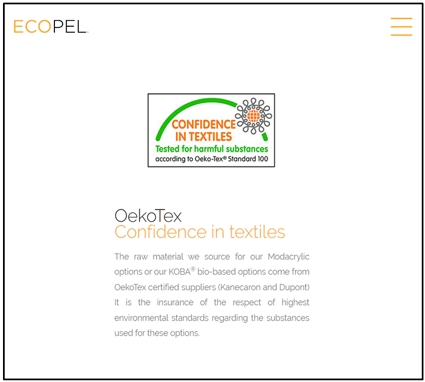
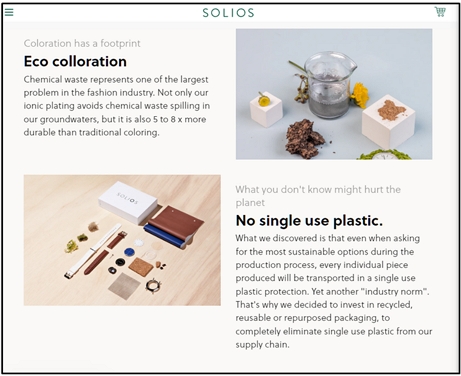
Out of all brands that matched this criteria, 4 brands (Dr. Martens, Ecopel, Sylven New York, WastedLA) were using recycled textiles for their products, and 7 brands(Altiir, Anew Atelier, Benedetti, Ecopel, Mistohn, Piñatex, Solios Watches) were using organic and biodegradable textiles, with two brands(Ecopel, Solios Watches) using both recycled textiles and organic materials. Ecopel is a global faux fur textile and clothing producer with a vertically integrated supply chain that spans fabric to garments, with manufacturing sites in China as well as sales offices serving markets all over the world (Fig. 2). Ecopel uses Cannaba, a vegan wool exclusively made in France. Hemp and recycled fiber mixtures are used to make this material. Hemp is one of the most environmentally friendly materials available today, requiring less water and pesticide use than cotton. Hemp is combined with recycled polyester to make the fabric more robust and long-lasting. Solios Watches use recycled stainless steel and eco-friendly vegan leather for the watch strap(Fig. 3), as well as silicone-based leather alternative, which is incredibly durable and doesn’t contain harmful components such as PU, PVC and toxic by-products (“Materials Without Compromise”, n. d.). The significance of this finding is that vegan fashion brands were using not only natural materials-on behalf of animals and for the sake of veganism- but also environmentally conscious textiles.
“What's next?” (n. d.).www.ecopel.com.
“Materials Without Compromise” (n. d.).www.solioswatches.com.
Out of all brands that were analyzed, 5 brands (Benedetti, Ecopel, Enda, Piñatex, WastedLA) met the criteria for “Fair trade”. This result particularly reveals confirmation that vegan fashion is a subordinate concept to ethical fashion (Reimer et al., 2016). These brands were using fair traded materials as well as being conscious of fair labor. Benedetti, in particular, is known for being fair trade certified. “We care deeply about the quality of manufacturing processes and supply chains, and we put workers’ conditions at the forefront of our operations. We only produce locally and ‘Made in Italy’.”, states their website (“Matea Benedetti”, n. d.).
ENDA is a New York based vegan fashion brand founded in 2015 by Japanese designer Ran Enda (“VISION FOR THE FUTURE OF FASHION”, n. d.). Ran Enda formally designed for top luxury brands such as Ralph Lauren and Diane von Furstenberg, before founding her own vegan luxury fashion brand(Fig. 4). The brand is fair trade, fair labor, and sweatshop free(Kretzer, 2019), with its vision focused on a cruelty-free movement through the designer’s own journey of learning veganism and experiencing unethical activities behind the scenes of apparel manufacturing(Marie, A., 2022).
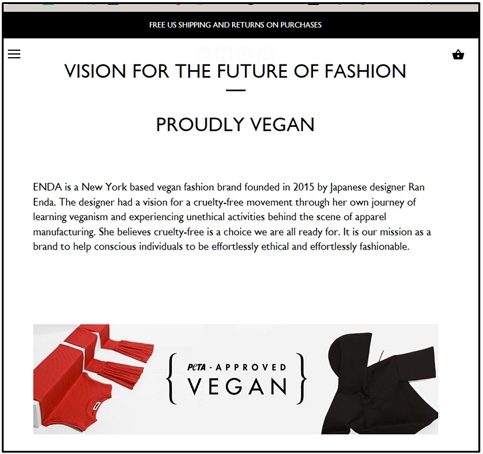
VISION FOR THE FUTURE OF FASHION (n. d.).www.enda.us.
All 5 brands showed indications of labor focused ethical trading, and one brand (Piñatex) have indicated employing fair trade for sourcing materials as well (Fig. 5). Piñatex’s main product, pineapple vegetable leather is a natural textile made from the fibers of pineapple leaves. The leaves are the by-product of existing agriculture, and their use creates additional income for pineapple farming communities (“Ananas Anam, the makers of Piñatex®”, n. d.). Peruvian artisans from the province of Callao, together with those who make the products and generate job opportunities for other locals.
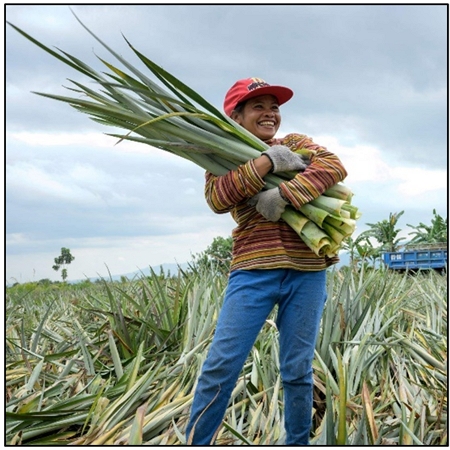
“Ananas Anam, the makers of Piñatex®” (n. d.).www.ananas-anam.com.
Local productions decrease the unnecessary movements of materials and products, resulting in less shipping time, diminishing carbon footprint(Ghosh, S., 2014). Only 4 brands (Benedetti, Nous Étudions, Sarah Regensburger, Vegan Tiger) met the criteria for “Local production”. These brands made their products either by locally sourced materials, or with local labor forces and infrastructures. With these brands locally producing their products, it suggests production methods should also be considered for vegan brands that claims to be environmentally friendly.
Sarah Regensburger, on their official website, states all their products are made with carefully sourced materials from sustainable and small production and fabric mills (“About Us”, n. d.). They work mainly with European based companies and fabric mills that are standing for sustainable and ethical production (Fig. 6). All the pieces are produced within Europe, including Germany, England, and Poland. This result opens new measures for what vegan fashion brands should strive for, since vegan fashion has had the reputation of being more of a material focused, centering around animal-cruelty and alternative materials (“Ethical Commitment”, n. d.).
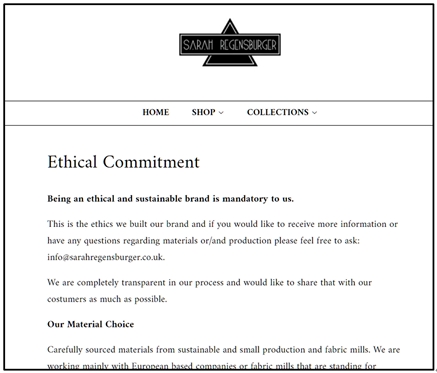
“Sarah Regensburger, Ethical Commitment” (n. d.).www.sarahregensburger.co.uk.
The products of Vegan Tiger are produced in South Korea, where the company is headquartered. Additionally, Vegan Tiger created a Hanji leather material utilizing an eco-friendly laminating technology in conjunction with a Korean fabric mill(“Korean leather black”, n. d.). Another collaboration was with a Korean skincare brand “About me”(Fig. 7), which is a clean beauty brand. In collaboration, they released a series of mini tote bags made with 100% recycled material, as well as makeup pouches containing reusable cotton pads(Shin, 2021).
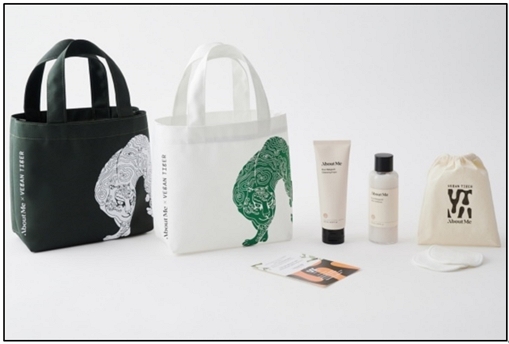
Shin (2021).www.cmn.co.kr.
Consequently, the most common sustainable practice criteria of the featured brands were being done through spreading the vegan message. All brands met the criteria for “Vegan inspiration”. These brands focused on spreading the vegan message through their brand, not just with their designs, but also through various communication methods. Few brands were featuring renowned sustainable manufactures as their textile source to prove their sustainability practices and to showcase their strong network with other companies. Other brands were displaying their own brand’s manifesto on their official websites, explaining the values their brands strive for. KVD for instance, describe themselves as “Tattoo-inspired vegan beauty”(Fig. 8). On their website they explain, “We care for our planet and all beings who inhabit it (“We are KVD”, n. d.). We are 100% vegan and cruelty-free…without sacrificing the performance we’re known for.”. Most brands that meet the “Vegan inspiration” criteria were also utilizing social media platforms, articulating their brands sustainability practices and how they are trying to improve. Some brands even went far as interviewing with reputable media sources, verbally describing why and how their brands aim for sustainable veganism.
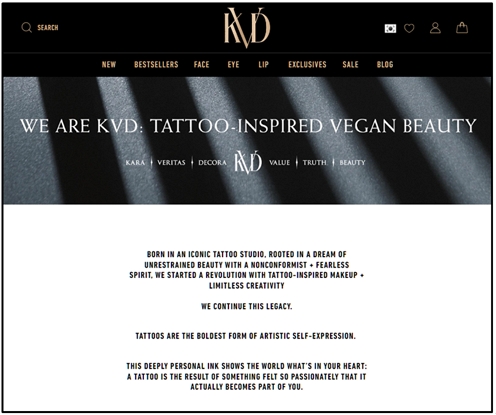
“We are KVD” (n. d.).www.kvdveganbeauty.com.
VFW have undoubtedly played a role in spreading veganism by normalizing what vegans wear and introducing others to an alternative mode of fashion that challenges cultural norms that pertain to the fashion industry (“Emmanuelle Rienda”, n. d.). At the same time, individual vegans can watch the show and disseminate information as well. With an understanding of how fashion designs and branding frame their messages, as well as the potential for information regarding animal maltreatment at human hands to potentially incite a feeling of “wokeness” among an audience, it is necessary to consider the role of vegan fashion in a form of shows in prompting people to pursue veganism.
With regards to the type of information that could be coupled with fashion to effectively communicate a vegan message, this study highlights that, in line with VFW’s view that concern over animal welfare and sustainability of vegan fashion(Fig. 9), information that makes people think about what animals go through in order to become a piece of clothing, as well as it’s environmental and ethical impact is vital. At the same time, we would raise some concerns about how fashion brands that emphasizes the ethical aspect of vegan fashion should be wary of the fact that their messages may have the potential to fetishize violence without actually portraying a vegan message by solely depicting devastating environmental consequences as well as graphic violence perpetrated against animals and workers.
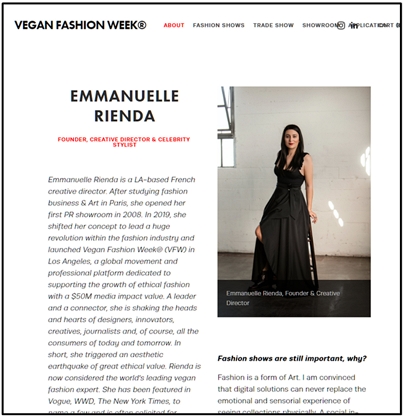
“Emmanuelle Rienda” (n. d.).www.vegan-fashion-week.com.
4.2. The implications of Vegan Fashion Week
Sustainability criteria of the VFW’s brands were analyzed. The results show that certain criteria of sustainability are not quite met at current time, which is consistent with the results of a number of previous studies indicating that fashion brand’s sustainability efforts do not always starts and ends with production(Birtwistle, G., & Moore, C. M., 2007; Curwen et al., 2013; Lawless & Medvedev, 2016).
First, brands showed common interest in animal welfare and environmental consequences of the fashion industry. The fashion show’s brands claim to be particularly concerned with environmental responsibility, laborer welfare, sustainable fashion, and especially animal rights. With regard to beauty and cosmetic products, “Cruelty-free” is more frequently used in the context of veganism, which coincides with the conclusions of several earlier studies(Choi & Lee, 2020). The brands were advocate for animal rights and were against animal testing. Therefor it stands to reason for considering animal welfare as an important goal of veganism in the fashion industry, as the objection to harsh the exploitation the animals go through.
Second, since fashion shows have the ability to connect with an audience, brand participants may tailor their messages for different audiences in the hope that their brand messages as well as the vegan message will resonate and prompt others to join the movement. VFW shows that displaying vegan fashion designs is an effective way of boosting not only the vegan industry, but the entire fashion industry as well, for it has longed for more ethical and sustainable business models in recent years. VFW brands’ sustainability practices encourages the production of more ethical and sustainable fashion products to expand.
Third, this study has found that many brands participating in VFW were fairly new brands. However, it is notable that more brands are participating in VFW since its initial year, and brands are becoming more diverse in terms of nationality and product categories. Every stage of starting a new firm, including capital, brand identity, team building, suppliers, manufacturing, marketing, sales, and PR, is difficult. By providing vegan fashion brands with a platform to display their designs, VFW help the sustainable fashion sector grow and propagate the vegan message thus proving sustainable fashion is not only achievable, but also can be fashion forward. Vegan fashion, therefore, is not just simply a business model. VFW shows the ongoing of vegan fashion and its future direction through its shows and events. It also shows that vegan fashion has now acquired great influence as a trend, despite its former “unfashionable” reputation.
Our findings suggest that studying VFW’s selected brands for vegan fashion’s sustainability might help us better understand the matter. The impact of VFW provides two layers of managerial implications: one for the vegan fashion brands and the other one for vegan fashion consumers. For the vegan fashion brands, promoting their products and brands can be more effective if they put emphasis on the local production features of their products together since at current time, it is the most lacking. Similarly, combining the fair trade and local production, as well as combining the eco-friendly materials with fair traded during product development such as locally sourced organic materials will be more effective strategies as well. It is also very important for the brand managers to understand the reasons why certain dimensions appear to go together. For vegan consumers, managers will note that transparency will be their biggest advantage in improving the overall customer’s perceptions of the sustainability level of their offerings. Clear descriptions of how each product are being made, as well as their brand ethos will help enhance customer’s perceptions of all the various underlying dimensions of sustainability in vegan fashion.
5. Conclusion
Although industrialization has made people’s lives more pleasant, its mass production and consumption have also caused environmental harm and social unrest, raising the question of sustainability. Concerns about social equality, environmental protection, and economic development are all part of sustainability (McDonough & Braungart, 2002). We investigated brands featured in VFW using the ‘sustainability criteria of fashion brands’(Kim, H. E., 2015), which is known to be suitable for identifying characteristics of sustainable fashion.
This study was conducted to understand the vegan fashion’s sustainability prospects by investigating fashion brands featured in VFW. Reviewing the brands, this study identified the methods of procedures the featured vegan brands were implementing. These methods were: Eco-friendly material, Fair trade, Local production, Vegan inspiration. All brands were implementing at least one of these criteria for their company, with the most common method being the Vegan inspiration. Most featured vegan brands were relatively new brands, having not yet enough information available online, or credible reputation. However, it was recognized that all brands were active adamants for sustainability and veganism through various terms. It is also notable that VFW features both big and small businesses, as well as local brands, showing sustainability practice should have no boundaries or limits, thus proving it is possible for any magnitude of businesses.
Vegan fashion is not only a trend but a sustainable lifestyle as well. Upcycling, production transparency, using eco-friendly materials, and quality control are no longer mere suggestions for manufacturers in the fashion industry; they are ideas for designers and brand managers on how to extend the lifespan of a product by selecting high-quality items, all within the vegan values and beliefs. In conclusion, it was found that vegan fashion brands do actively seek out vegan messaging that reflects their brand identity which also reflects previous studies about vegan fashion and its objective on spreading the appropriate vegan message (Jeong, J. W., & Kwon, H. J., 2018; Jeong, J., & Chun, J., 2021). Not just vegan companies, but the entire system as a whole must embrace a sustainable business model, which calls for innovation and teamwork between manufacturers and designers, numerous stakeholders, and ultimately, consumers.
Textile advances are becoming more widely available, and high-end designers are increasingly embracing the vegan fashion scene. In addition to better material options, m any designers recognized the necessity of avoiding plastic-based materials, which are similarly harmful to the environment, in addition to substituting animal-based textiles. Plant-based alternatives are now being introduced by fashion designers in response to the increasing consumer demand. VFW continues to push the industry forward by supporting the growth of ethical fashion after kicking off its next level discourse in the media as well as in the fashion industry.
This study aims to ascertain how sustainability practices were being handled by vegan fashion brands. The analysis was done by conducting a critical evaluation on brands participating in VFW, based on the standards of prior research. The study’s result includes the analysis of vegan fashion brands’ ethical manufacturing, environmental practices, and overall sustainability. The implications of this study demonstrate that VFW is slowly but surely becoming a significant fashion event. VFW is an ongoing event, turning into an online show in 2020 due to COVID-19 restrictions, and coming back in 2021, with plans to continue in 2022. In such manner, movements toward more sustainable fashion should continue as well for hopeful future. Our research implies that provision of sustainability messages information by fashion brands is a way to educate consumers and improve their awareness in the importance of sustainability. It is also beneficial to raise awareness and stimulate consumers’ purchase decision of vegan fashion. The significance of this study is that it was the first approach to analyzing VFW as a subject matter, as well as providing industry insights for vegan designers and brand managers to better develop and promote sustainable fashion.
For future studies, we suggest utilizing the criteria established by this study in order to further confirm the liability of the scale. We hope that by offering a helpful data framework and including the conclusions of empirical research on sustainable fashion, we would be able to foster a broad understanding of vegan fashion.
References
- Altiir. (n. d.). Altiir. Retrieved August 8, 2022, from https://www.altiir.com/about
- ‘Ananas Anam, the makers of Piñatex®’. (n. d.). Piñatex. Retrieved August 8, 2022, from https://www.ananas-anam.com/about-us/
-
Armstrong, C. M. J., Connell, K. Y. H., Lang, C., Ruppert-Stroescu, M., & LeHew, M. L. (2016). Educating for sustainable fashion - Using clothing acquisition abstinence to explore sustainable consumption and life beyond growth. Journal of Consumer Policy, 39(4), 417-439.
[https://doi.org/10.1007/s10603-016-9330-z]

-
Armstrong, C. M., & LeHew, M. L. (2011). Sustainable apparel product development - In search of a new dominant social paradigm for the field using sustainable approaches. Fashion Practice, 3(1), 29-62.
[https://doi.org/10.2752/175693811X12925927157018]
- Atkin, E. (2022, January 5). Are Dr Martens shoes vegan-friendly? METRO. Retrieved August 26, 2022, from https://www.metro.co.uk/2022/01/05/are-dr-martens-shoes-and-boots-vegan-15857903/
-
Birtwistle, G., & Moore, C. M. (2007). Fashion clothing–where does it all end up?. International Journal of Retail & Distribution Management, 35(3), 210-216.
[https://doi.org/10.1108/09590550710735068]
-
Brydges, T., Henninger, C. E., & Hanlon, M. (2022). Selling sustainability - Investigating how Swedish fashion brands communicate sustainability to consumers. Sustainability - Science, Practice and Policy, 18(1), 357-370.
[https://doi.org/10.1080/15487733.2022.2068225]
-
Cervellon, M. C., & Wernerfelt, A. S. (2012). Knowledge sharing among green fashion communities online - Lessons for the sustainable supply chain. Journal of Fashion Marketing and Management, 16(2), 176-192.
[https://doi.org/10.1108/13612021211222860]
-
Cherry, E. (2015). I was a teenage vegan - Motivation and maintenance of lifestyle movements. Sociological Inquiry, 85(1), 55-74.
[https://doi.org/10.1111/soin.12061]
- Choi, N. Y., & Kim, M. S. (2000). Analysis of recognition and behavior characteristics of customers for green fashion products. Journal of Korean Society of Costume, 50(1), 145-159.
-
Choi, Y. H., & Lee, K. H. (2020). Consumer perception of halal cosmetics - Insights from Twitter text mining. Fashion & Textile Research Journal, 22(4), 481-494.
[https://doi.org/10.5805/SFTI.2020.22.4.481]
- Choi, Y. J., & Kim, D. H. (2012). Fashion jewellery development direction through upcycle. Proceeding of the Korean Contents Association Conference, Korea. pp. 317-318.
- ‘CRUELTY FREE! Vegan Tiger’. (n. d.). VEGAN TIGER. Retrieved August 26, 2022, from https://www.vegantigerkorea.com/about.html
-
Curtis, F. (2003). Eco-localism and sustainability. Ecological Economics, 46(1), 83-102.
[https://doi.org/10.1016/S0921-8009(03)00102-2]
-
Curwen, L. G., Park, J., & Sarkar, A. K. (2013). Challenges and solutions of sustainable apparel product development - A case study of Eileen Fisher. Clothing and Textiles Research Journal, 31(1), 32-47.
[https://doi.org/10.1177/0887302X12472724]
- ‘Defining Sustainability’. (n. d.). Sylven NewYork. Retrieved August 8, 2022, from https://www.sylvennewyork.com/pages/sustainable-practices
-
Dickinson, R., & Carsky, M. (2005). The consumer as voter - An economic perspective on ethical consumer behaviour. In: R. Harrison, T. Newholm and D. Shaw (eds) The Ethical Consumer, London: Sage, 25-36.
[https://doi.org/10.4135/9781446211991.n3]
- Emmanuelle Rienda. (n. d.). Vegan Fashion Week. Retrieved August 8, 2022, from https://www.vegan-fashion-week.com/about
-
Erickson, B., & Roberts, M. (1997). Marketing local identity. Journal of Urban Design, 2(1), 35-59.
[https://doi.org/10.1080/13574809708724395]
- ‘Everything we do us for a reason’. (n. d.). Benedetti Life. Retrieved August 8, 2022, from https://www.benedetti.life/our-story/
- Farra, E. (2019, January 19). Vegan Fashion Week is coming to L.A.— And it’s about a lot more than eco leather and faux fur. VOGUE. Retrieved July 1, 2020, from https://www.vogue.com/article/vegan-fashion-week-los-angeles-emmanuelle-rienda
-
Fletcher, K. (2013). Sustainable fashion and textiles - Design journeys. UK: Routledge.
[https://doi.org/10.4324/9781315857930]
- ‘Fleur & Bee’. (n. d.). Fleur & Bee. Retrieved August 8, 2022, from https://www.fleurandbee.com/pages/about-us
-
Ghosh, S. (2014). Measuring sustainability performance of local food production in home gardens. Local Environment, 19(1), 33-55.
[https://doi.org/10.1080/13549839.2012.716412]
-
Gibson, J. (2020). Brands make believe - Ethical veganism and labelling in fashion. Queen Mary Journal of Intellectual Property, 10(2), 143-151.
[https://doi.org/10.4337/qmjip.2020.02.00]
-
Green, L., Dare, J., & Costello, L. (2010). Veganism, health expectancy, and the communication of sustainability. Australian Journal of Communication, 37(3), 51-72.
[https://doi.org/10.3316/ielapa.201102744]
-
Haenfler, R. (2004). Collective identity in the straight edge movement - How diffuse movements foster commitment, encourage individualized participation, and promote cultural change. The Sociological Quarterly, 45(4), 785-805.
[https://doi.org/10.1111/j.1533-8525.2004.tb02314.x]
-
Haenfler, R., Johnson, B., & Jones, E. (2012). Lifestyle movements - Exploring the intersection of lifestyle and social movements. Social Movement Studies, 11(1), 1-20.
[https://doi.org/10.1080/14742837.2012.640535]
-
Henninger, C. E., Alevizou, P. J., & Oates, C. J. (2016). What is sustainable fashion?. Journal of Fashion Marketing and Management - An International Journal, 20(4), 400-416.
[https://doi.org/10.1108/JFMM-07-2015-0052]
-
Henninger, C. E., Alevizou, P. J., & Oates, C. J. (2017). IMC, social media and UK fashion micro-organisations. European Journal of Marketing. 51(3), 668-691.
[https://doi.org/10.1108/EJM-08-2015-0599]
- Hong, Y. M., & Kim, Y. J. (2014). Attitudes of the Korean college students toward upcycle fashion product. The Journal of Korean Society of Design Culture, 20(2), 207-218.
-
Hur, E., & Cassidy, T. (2019). Perceptions and attitudes towards sustainable fashion design - Challenges and opportunities for implementing sustainability in fashion. International Journal of Fashion Design, Technology and Education, 12(2), 208-217.
[https://doi.org/10.1080/17543266.2019.1572789]
-
Jang, N. (2013). Product development process for ethical fashion design-fair trade system approach. Journal of the Korean Society of Costume, 63(1), 16-26.
[https://doi.org/10.7233/jksc.2013.63.1.016]
-
Jasper, J. M., & Poulsen, J. D. (1995). Recruiting strangers and friends - Moral shocks and social networks in animal rights and anti-nuclear protests. Social Problems, 42(4), 493-512.
[https://doi.org/10.1525/sp.1995.42.4.03x0129y]
-
Jeong, J. W., & Kwon, H. J. (2018). Dilemma types in vegan fashion design. Korean Society of Fashion Design, 18(4), 71-91.
[https://doi.org/10.18652/2018.18.4.5]
-
Jeong, J., & Chun, J. (2021). Veganism represented in YouTube fashion contents. Fashion & Textile Research Journal, 23(1), 44-56.
[https://doi.org/10.5805/SFTI.2021.23.1.44]
- Jeong, Y. R. (2012). A study on upcycle redesign using waste in fashion goods industry - Focused on the reuse of industrial waste. Unpublished master’s thesis, Ewha Womans University, Seoul.
-
Jiang, W., Ko, E., & Chae, H. (2019). The Effect of sustainable fashion brand’s advertising color and expression on consumers’ emotions and perceptions- Focus on Instagram. Fashion & Textile Research Journal, 21(4), 432-451.
[https://doi.org/10.5805/SFTI.2019.21.4.432]
-
Joergens, C. (2006). Ethical fashion - Myth or future trend?. Journal of Fashion Marketing and Management, 10(3), 360-371.
[https://doi.org/10.1108/13612020610679321]
-
Kim, H. E. (2015). A study on the characteristics and trends of sustainable fashion through Esthetica at London Fashion Week. Fashion & Textile Research Journal, 17(2), 168-177.
[https://doi.org/10.5805/SFTI.2015.17.2.168]
-
Kim, J. K. (2013). A study on the brand activation strategy for the recycle design. The Journal of Brand Design Association of Korea, 11(1), 53-66.
[https://doi.org/10.18852/bdak.2013.11.1.53]
- Kim, S. H., Lee, J. J., & Jeong, H. S. (2007). A study on the sustainable fashion design by organic cotton. Journal of the Korean Society of Costume, 57(2), 115-131.
- ‘Korean leather black trucker jacket’. (n. d.). VEGAN TIGER. Retrieved August 8, 2022, from https://www.vegantigerkorea.com/product/detail.html?product_no=680
- Kozlowski, A., Bardecki, M., & Searcy, C. (2012). Environmental impacts in the fashion industry - A life-cycle and stakeholder framework. Journal of Corporate Citizenship, (45), 17-36.
- Krause, A. (2021, March 4). Kat Von D's former makeup line is rebranding for a second time in 2 years. INSIDER. Retrieved August 26, 2022, from https://www.insider.com/kvd-beauty-makeup-brand-changes-2021-3
- Kretzer, M. (2019, October 22). vegan fashion takes center stage for PETA-hosted sustainability week. PETA. Retrieved August 8, 2022, from https://www.peta.org/living/personal-care-fashion/vegan-fashion-panel-sustainability-week/
-
Kwan, J. S. (2012). Based on the perspective of sustainability, the characteristics of upcycle fashion design. Fashion and Textile Research Journal, 14(1), 13-23.
[https://doi.org/10.5805/KSCI.2012.14.1.013]
-
Lawless, E., & Medvedev, K. (2016). Assessment of sustainable design practices in the fashion industry - Experiences of eight small sustainable design companies in the Northeastern and Southeastern United States. International Journal of Fashion Design, Technology and Education, 9(1), 41-50.
[https://doi.org/10.1080/17543266.2015.1116616]
-
Lotz, S., Christandl, F., & Fetchenhauer, D. (2013). What is fair is good - Evidence of consumers’ taste for fairness. Food Quality and Preference, 30(2), 139-144.
[https://doi.org/10.1016/j.foodqual.2013.05.010]
-
Luo, S., Henninger, C. E., Le Normand, A., & Blazquez, M. (2021). Sustainable what…? The role of corporate websites in communicating material innovations in the luxury fashion industry. Journal of Design, Business & Society, 7(1), 83-103.
[https://doi.org/10.1386/dbs_00021_1]
- Marie, A. (2022, July 16). Is ENDA New York Vegan? HEALabel. Retrieved August 8, 2022, from https://www.healabel.com/enda-new-york-vegan/
- ‘Matea Benedetti’. (n. d.). Big See. Retrieved August 8, 2022, from https://www.bigsee.eu/profiles/matea-benedetti/
- ‘Materials without compromise’. (n. d.). Solioswatches. Retrieved August 8, 2022, from https://www.solioswatches.com/pages/our-materials
-
McAdam, D. (1986). Recruitment to high-risk activism - The case of freedom summer. American Journal of Sociology, 92(1), 64-90.
[https://doi.org/10.1086/228463]
- McDonough, W. & Braungart, M. (2002). Cradle to cradle - Remaking the way we make things. New York: North Pont Press.
-
McNeill, L., & Moore, R. (2015). Sustainable fashion consumption and the fast fashion conundrum - Fashionable consumers and attitudes to sustainability in clothing choice. International Journal of Consumer Studies, 39(3), 212-222.
[https://doi.org/10.1111/ijcs.12169]
- Nam, M. K. (2011). A study on developing policy and strategy for sustainable global eco-friendly product design. The Journal of Korean Society of Design Culture, 17(3), 185-195.
-
Nayak, R., Nguyen, L. V. T., Panwar, T., & Jajpura, L. (2020). Sustainable technologies and processes adapted by fashion brands. In Sustainable Technologies for Fashion and Textiles. UK: Woodhead Publishing.
[https://doi.org/10.1016/B978-0-08-102867-4.00011-6]
-
Niinimaki, K., & Hassi, L. (2011). Emerging design strategies in sustainable production and consumption of textiles and clothing. Journal of Cleaner Production, 19(16), 1876-1883.
[https://doi.org/10.1016/j.jclepro.2011.04.020]
- Nous Étudions. (n. d.). Nous Étudions. Retrieved August 8, 2022, from https://www.notjustalabel.com/nous-etudions
- ‘Our Philosophy’. (n. d.). Mistohn. Retrieved August 8, 2022, from https://www.mistohn.com/
- ‘Our Story’. (n. d.). Anew Atelier. Retrieved August 8, 2022, from https://www.anew-atelier.com/pages/our-story
-
Paik, G. H., Lee, B., & Krumwiede, K. R. (2017). Corporate social responsibility performance and outsourcing - The case of the Bangladesh tragedy. Journal of International Accounting Research, 16(1), 59-79.
[https://doi.org/10.2308/jiar-51658]
- Paulins, V. A., & Hillery, J. L. (2009). Ethics in the fashion industry. New York: Fairchild Publications.
- Pownall, A. (2019, February 12). Vegan design products will become as popular as vegan food, say designers. Dezeen. Retrieved August 26, 2022, from https://www.dezeen.com/2019/02/12/vegan-design-popular-feature/
- Pownall, A. (2020, February 5). UK retail trade body sets standards for vegan fashion. Dezeen. Retrieved August 26, 2022, from https://www.dezeen.com/2020/02/05/british-retail-consortium-vegan-fashion-guidelines/
-
Reilly, A. H., & Larya, N. (2018). External communication about sustainability - Corporate social responsibility reports and social media activity. Environmental Communication, 12(5), 621-637.
[https://doi.org/10.1080/17524032.2018.1424009]
-
Reimers, V., Magnuson, B., & Chao, F. (2016). The academic conceptualization of ethical clothing - Could it account for the attitude behavior gap?. Journal of Fashion Marketing and Management - An International Journal, 20(4), 383-399.
[https://doi.org/10.1108/JFMM-12-2015-0097]
- Ryu, H. S. (2010) Environmental impacts of textiles production and uses. Fashion Information and Technology, 7, 91-100.
- ‘Sarah Regensburger, about us’. (n. d.). Sarah Regensburger. Retrieved August 8, 2022, from https://www.sarahregensburger.co.uk/pages/about-us-2
- ‘Sarah Regensburger, ethical commitment’. (n. d.). Sarah Regensburger. Retrieved August 8, 2022, from https://www.sarahregensburger.co.uk/pages/ethical-commitment
-
Schuldt, J. P., Muller, D., & Schwarz, N. (2012). The “fair trade” effect - Health halos from social ethics claims. Social Psychological and Personality Science, 3(5), 581-589.
[https://doi.org/10.1177/1948550611431643]
-
Seo, K., & Suh, S. (2019). A study on the characteristics and social values of vegan fashion in H&M and Zara. Journal of Fashion Business, 23(6), 86-100.
[https://doi.org/10.12940/jfb.2019.23.6.86]
-
Shaw, D., Hogg, G., Wilson, E., Shiu, E., & Hassan, L. (2006). Fashion victim - The impact of fair trade concerns on clothing choice. Journal of Strategic Marketing, 14(4), 427-440.
[https://doi.org/10.1080/09652540600956426]
-
Shaw, D.S., & Clarke, I. (1999). Belief formation in ethical consumer groups - An exploratory study. Marketing Intelligence and Planning, 17(2), 109-120.
[https://doi.org/10.1108/02634509910260968]
-
Shen, B., Zheng, J. H., Chow, P. S., & Chow, K. Y. (2014). Perception of fashion sustainability in online community. The Journal of the Textile Institute, 105(9), 971-979.
[https://doi.org/10.1080/00405000.2013.866334]
- Shen, D., Richards, J., & Liu, F. (2013). Consumers’ awareness of sustainable fashion. Marketing Management Journal, 23(2), 134-147.
- Shin, D. W. (2021, October 29). 삼양사 어바웃미, 비건타이거와 친환경 굿즈 제작 [Samyangsa About Me, Vegan Tiger and eco-friendly goods produced]. Retrieved August 8, 2022, from https://www.cmn.co.kr/mobile/sub_view.asp?news_idx=37327
-
Snow, D. A., Rochford Jr, E. B., Worden, S. K., & Benford, R. D. (1986). Frame alignment processes, micromobilization, and movement participation. American Sociological Review, 464-481.
[https://doi.org/10.2307/2095581]
-
Song, Y. J., & Shin, S. (2017). The effect of consumption propensity and fashion product consumption attitude on fair trade fashion product purchase intension. The Research Journal of the Costume Culture, 25(5), 656-669.
[https://doi.org/10.29049/rjcc.2017.25.5.656]
- Stewert, K. (2021, September 28). Pledging to go fur-free. Editorialist. Retrieved August 26, 2022, from https://www.editorialist.com/fashion/fur-free-fashion-brands/
-
Stremmel, G., Elshiewy, O., Boztug, Y., & Carneiro-Otto, F. (2022). Vegan labeling for what is already vegan - Product perceptions and consumption intentions. Appetite, 175, 106048.
[https://doi.org/10.1016/j.appet.2022.106048]
- ‘The British Fashion Council’. (2014). British Fashion Council. Retrieved August 8, 2022, from http://www.britishfashioncouncil.co.uk/pressreleases/Estethica-AW14
- ‘The DM’s vegan line up’. (n. d.). Dr. Martens. Retrieved August 8, 2022, from https://www.drmartens.com/uk/en_gb/vegan
- Thorpe, A. (2007). The designer's atlas of sustainability, Washington DC: Island Press.
- ‘Vegan fashion vs sustainable fashion - All you need to know’. (2020, January 20). Vegan Fashion Week. Retrieved July 1, 2022, from https://www.vegan-fashion-week.com/news/2020/1/16/vegan-vs-sustainable-fashion-all-you-need-to-know
- ‘VISION FOR THE FUTURE OF FASHION’. (n. d.). ENDA. Retrieved August 26, 2022, from https://www.enda.us/pages/about
-
Vita, G., Lundström, J. R., Hertwich, E. G., Quist, J., Ivanova, D., Stadler, K., & Wood, R. (2019). The environmental impact of green consumption and sufficiency lifestyles scenarios in Europe - Connecting local sustainability visions to global consequences. Ecological Economics, 164, 106322.
[https://doi.org/10.1016/j.ecolecon.2019.05.002]
-
Walker, S. (2010). Temporal objects—Design, change and sustainability. Sustainability, 2(3), 812-832.
[https://doi.org/10.3390/su2030812]
- ‘WastedLA’. (n. d.). NICOLE BLUE. Retrieved August 8, 2022, from https://www.nicoleblue.design/wastedLAMacro.html
- ‘We are KVD - Tattoo-inspired vegan beauty’. (n. d.). KVD Vegan Beauty. Retrieved August 8, 2022, from https://www.kvdveganbeauty.com/pages/about-kvd
-
Weber, M. (2008). The business case for corporate social responsibility - A company-level measurement approach for CSR. European Management Journal, 26(4), 247-261.
[https://doi.org/10.1016/j.emj.2008.01.006]
- ‘What's next?’. (n. d.). ECOPEL. Retrieved August 8, 2022, from https://www.ecopel.com/#savoir-faire
-
Woodham, J. (2010). Formulating national design policies in the United States - Recycling the ‘emperor’s new clothes’?. Design Issues, 26(2), 27-46.
[https://doi.org/10.1162/DESI_a_00003]
-
Woodside, A. G., & Fine, M. B. (2019). Sustainable fashion themes in luxury brand storytelling - The sustainability fashion research grid. Journal of Global Fashion Marketing, 10(2), 111-128.
[https://doi.org/10.1080/20932685.2019.1573699]