
Sustainable Business Strategies for Local Fashion Communities (small and medium scale enterprises) in Ethiopia and Ukraine

© 2018 (by) the authors. This article is an open access article distributed under the terms and conditions of the Creative Commons Attribution license (http://creativecommons.org/licenses/by/3.0/), which permits unrestricted use, distribution, and reproduction in any medium, provided the original work is properly cited.
Abstract
The aim of the research study is to carve sustainable business strategies for the fashion communities in Ethiopia and Ukraine which are suffering today due to ever-increasing share of fast fashion consumerism. Fashion houses and international brands propagandize sustainability and consumption for better consumer base, where as originally sustainable local-based craftsmen still stay in the shade. Four communities/local designers are selected from the countries through the method of purposive sampling. Qualitative analysis is the basis of the research as we performed personal interviews and in-depth analysis of the communities to diagnose the problems and subsequently devise the solutions. In this research, we have studied and analyzed the problems faced by hereditary communities and ethnic designers in small and medium scale enterprise sector from two emerging economies. After the grounding the difficulties faced we advised strategies for sustainable future growth to the companies. The current academic literature on small and medium scale enterprises highlights the problems and solutions for general industry sectors. This paper brings attention to fashion communities and designers who promote national heritage and are struggling to survive in emerging economies due to industrialization and globalization. Moreover the comparison of the two geographies is unique in nature.
Keywords:
fashion communities, small and medium scale enterprises (SME), fashion marketing and branding, emerging economies, sustainable development1. Introduction
The global fashion industry (which includes clothing, textiles, footwear and luxury goods) is worth an estimated $3 trillion1) and it has “outperformed the overall market and every other sector across geographies for more than a decade” -more profitable than even high-growth sectors like technology and telecommunications.2) It can’t be doubted that fashion and textile industry has played a very important role in economic development of emerging economies as this sector absorb suggest a number of reasons why the clothing sector has played such an important role in economic development (Brenton et al., 2007). Undoubtedly, there is an intense need of economic empowerment to the emerging economies and the fashion sector is a very viable solution for it but in this race the traditional fashion communities are losing their historical glory as they are left with a very small market share or often skewed consumers. Expansion of offshore companies and diversified business groups established monopolies even in the most emerging economies (Khanna et al., 2007). Moreover, outspread of online-shopping and over globe shipping possibilities introduced new purchasing experience, where customers can contact direct source, without correspondence to local suppliers. It’s, in turn, influenced customer choice making and dislocated balance between global and local business communities (Schoenbachler & Gordon, 2002).
In our understanding a ‘Fashion community’ could be defined as community of people often to be classified as small and medium size enterprises producing a local products with a profound sense of traditional aesthetics very unique is its formation. We identified that local fashion community belong to small and medium scale enterprises sector of these countries and hold a very important part in development of emergent economies. Small and medium-size enterprises are a very heterogeneous group which includes a wide variety of firms – village handicraft makers, small machine shops, restaurants, and computer software firms – that possess a wide range of sophistication and skills, and operate in very different markets and social environments. The statistical definition of SMEs varies by country, and is usually based on the number of employees or the value of assets (Hallberg, 2000). Moreover such a form of art or handicraft has been often identified as a geographical characteristic or indication to the countries where they are found in. Examples here could be Murano glass from Italy or Banaras weave from India and so on. However, as was mentioned by several authors, in many African countries, the local textile activities are either suffering or in near collapse despite NGOs and bi-lateral initiatives to bolster production and nurture the sector. Many textiles with alleged indigenous prints sold to Africans who use local dressmakers to create tunics and wraps (particularly in the west and south of the continent) are now manufactured in Asia and sometimes the prints are even designed in Europe (Dubois, 2008).
On reviewing academic literature we found out that similar problems appear over all developing countries; fashion communities or SME`s often suffer from problems such as less support from government, financial issues, lack of exposure to enterprise and market trends, customer service and preference, quality, consistency, up to date design (Dubois, 2008; Kunkongkaphan, 2014; Ussman & Franco, 2000). Due to the stated problems developing economies lost control even over their own local market as the traditional art as either copied or reproduced in mass quantities. In addition to all economic consequences, those causes influenced degrading of national craftsmanship development and heritage oblivion. Not only that the communities are struggling to form a consistent livelihood but also have been extinct in the past due to side-effects of globalization from the west. Our main research area was taking into consideration two main regions: Africa and Eastern Europe which are presented on example of Ethiopia and Ukraine as the authors live and work in these countries. The authors have consulted these companies in the past and thus have formulated the problems from these cases which can be used further on for other small and medium size enterprises. Moreover what adds as an advantage to this research is the fact that both the countries have a similar political and financial situation which is described later on in the literature review.
While main problems, reasons and intended way of development were outlined in analyzed sources, proposed solutions still deliver superficial and fragmented implementation. This concurrent estimates subsisting contradiction between growing inequality of global versus local brands and imperfection of proposed universal marketing and management solutions. Above-mentioned demonstrates existence of problem which we can characterize as insufficient local strategy for marketing and management development within researching area.
2. Literature Review
2.1. The current state of fashion Industry in Ethiopia and Ukraine
Textile and clothing companies are the dominant source of exports and foreign exchange in several countries. Low income and developing countries such as Cambodia, Bangladesh, Pakistan and Sri Lanka depend on textile and clothing exports for more than 50% of total manufacturing exports (e.g. 80% in Cambodia, 83.5% in Bangladesh) (Keane & Velde, 2008). There is a clear indication that Ethiopia and Ukraine are moving very quickly towards mass production and joining the league of producing economies as this is one of the revenue making sector for economies.
Ethiopia’s economy is primarily based on agriculture (46% of GDP) but over the last 5 years the government has been determined to diversify the exports with a priority set for strategic sectors like light manufacturing, textile and garment manufacturing. The Ethiopian textile and apparel industry has grown an average of 51% over the last 5-6 years and some 65 international textile investment projects have been licensed for foreign investors. Retailers like H&M, Primark and Tesco have established offices in 2012 and are buying clothing and finished products from Ethiopian manufacturers (Pols, 2015). Leading the Ethiopian government's long-term vision for economic growth that taps into the country's huge potential workforce and low labor costs, work is underway a network of specialized and vertical clothing and textile hubs across the country. 3) The Ethiopian government is on the verge of establishing the whole value chain in the country starting from producing cotton in the Northern Ethiopia to establishing a number of Industrial parks such as Mekelle Industrial Park, Kombolcha Industrial Park (in Northern Ethiopia), Adama Industrial Park, Dire Dawa Industrial Park Bole Lemi II Textile Park, 4km from the main airport in the capital Addis Ababa. H&M along with PVH Corp, owner of the Calvin Klein and Tommy Hilfiger brands is an ‘anchor’ at the Hawassa Industrial Park (HIP), Mekelle and Bole Lemi industrial parks. In the pipeline of this expansion plan Hawassa Industrial Park (HIP) has Raymond Group (India), one of the largest integrated manufacturers of worsted fabric in the world and Wuxi Jinmao (China) with customers including Gap, JC Penney, Target, VF Corp, Next and Mark &Spencer on their way of building manufacturing facilities. The government of Ethiopia hopes to bring in textile exports worth $30bn by 2025 and increase the GDP of the country, household income, foreign currency and employment in the country by establishing these industrial parks throughout the country.
Ukrainian Economy is majorly represented by providing services (60% of GDP), and in past resent years import dramatically privilege upon export (Central Intelligence Agency). Apparel sector is represented by roughly 6000 legal entities (including individual entrepreneurs), producing different types of textile wear, including fur and knitted goods. However, as per estimated statistics, around 90% of Ukrainian apparel sector is operating in the shadows or by grey schemes. The shadow economy in Ukraine has remained fairly stable over the years. It constitutes 60% of official GDP (Dzvinka, 2002). Thus, it is valid to assume that real number of enterprises which operate in the sector outgrow much official statistics. In order to survive in crisis economy some big and medium sized producers continue to apply “grey” schemes to optimize related cost structure.4) As per realized production, according to official statistics of National statistical agency of Ukraine, in 2016 were produced and sold textile and apparel production which quantified in 1% of all realized production in Ukraine. From those goods 44% were exported. However, in addition to export of textile material and apparel production which was quantified in 508108.9 thousand USD, there is also import of goods which reached figure twice as high as level of export (1113925.8 thousand USD) in 2016 (National Agency of Statistics in Ukraine [Державна служба статистики України], 2016). In general, export was mainly prevailed to countries of Western Europe (France, Germany, Czech Republic, Poland), while import was mostly from Asian countries (Turkey, China, India, Cambodia, Turkmenistan etc.) In more segregated analysis it is important to highlight that in textile production import considerably outweighs export, with raising figures of just linen and hemp, realization of which is almost fully exported to Europe with low level of local usage (National Agency of Statistics in Ukraine [Державна служба статистики України], 2016). As per apparel production, manufacturers confirm that those companies which consider extension on international level have intention to work in high-street or haute couture segment. Such decision is mostly subjected by high price of ready product.
Tax system on imported textile and realization abroad often doubles price of the product, what makes almost impossible for manufacturers to keep their prices low enough to compete with global manufacturers in mass market segment. Considerable amount of Ukrainian enterprises which decide to work with European markets regardless tax system, most of the time operate as manufacturers, what leave them without risk as per realization of the product. Although such approach means that they produce clothes under the name of European brand. As per imported products, mass-market global chains as ZARA and alliances, M&S, H&M etc. opened their offices in big cities and are gaining popularity among young and middle-aged population. Although with an average income of 6475 UAH (240$) per month (National Agency of Statistics in Ukraine [Національна служба статистики України], 2016) and minimum income of 1600 UAH (120 $) per month (Low about national budget of Ukraine for year 2017 [Закон України Про Державний бюджет України на 2017 рік], 2016), many citizens still can’t afford even goods proposed by mass-market global chains. Thus, imported products from Asia continue to expand their influence on the market, some consumers also prefer second-hand quality European products as alternative way to low-quality Asian production. However, with growth of patriotism, social awareness and development of communicative channels (Internet platforms as Instagram, Facebook etc.), active youth began to establish local brands often with no legal registration or physical address, communicating directly with their consumers through channels of social networks.
Ukraine is a case where the entrepreneurial talent by itself is not enough for fast evolution of small and medium-sized enterprises. Due to absent of registration, home production and comparably small niche market, such brands are able to keep just 1 or 2 staff members, keep their prices low and deliver quality products in short period of time. Such schemes gained popularity both among young entrepreneurs and consumers. Regarding local brands and national heritage, it was outlined that Ukrainian national crafts are facing rebirth and innovation, and gaining fame on international level. In addition to affordable price and high quality, consumers also mark that such products increase their level of individuality and social patriotism. Brands which operate by such schemes, however, often struggle to expand their business on international platform due to original lack of legal rights in its’ establishment.
2.2. Importance of local fashion communities to emerging economies
In emerging economies, small business and local entrepreneurs plays a tremendous role in economic and social development of the country. These enterprises largely represent a stage in industrial transition from traditional to modern technology. Entrepreneurship development is essential to solve the problem of economic development through creating local employment, balanced area development, decentralization of economic power and diversion of profits from rich to middle class & poor. According to academic researches (Daniels & Ngwira, 1992; Daniels & Fisseha, 1992; Fisseha, 1991; Fisseha & McPherson, 1991) it is estimated that SMEs employ 22% of the adult population in developing countries. Many local innovations go unnoticed because of innovator’s limitations in commercializing the product. If stakeholders of entrepreneurship work in tandem, SMEs can grow fast. For developing country, to promote SMEs is a winning strategy, which decentralize the wealth more equitably compared to the large industry. SMEs create local employment; direct & indirect. SMEs can be feeder to the large industries. SMEs can be tool for exploiting local innovations and enhance consumer life conditions (Sapovadia, 2015). Benefits of SMEs can extend to the external sector, through their launching of new products. The role of the private sector, including SMEs, as engine of growth was illustrated by the postwar recovery in Austria and Germany and by the diverging paths of Central and East European and Baltic countries. Most governments also recognize the potential of SMEs to create employment and contribute to poverty eradication, although in many cases this potential is not being fulfilled (Reinecke and White, 2004). They constitute a large part of the economy in most countries, dominate the industrial and commercial infrastructure and have significant roles in economic growth (Curran & Blackburn, 2001;OECD, 2010; Tetteh & Burn, 2001). In addition Carrier (1994) said that the SMEs are more fertile than their larger counterparts in terms of innovation and development. With the end of the central planning system, SMEs have become the major driving force for the development of the economy in many transition countries. In Africa, Okpara (2011) argued that SMEs play a momentous role in the macro economy. There has been an obvious rise in the widespread emergence of SMEs in Sub-Saharan Africa. The importance of the micro and small enterprises sector in Ethiopia, particularly for the low-income, poor and women groups, is evident from their relatively large presence, share in employment and small capital requirement. The small and medium enterprises informal and small manufacturing enterprise sector (SMEs) contributed value added of Birr 8.3 million in 1996. Based on the 1992/93 data, this figure constitutes about 3.4% of the GDP, 33% of the industrial sector’s contribution and 52% of the manufacturing sector’s contribution to the GDP of the same year (Amha & Ageba, 2006). The five-year Growth and Transformation Plan (GTP) of Ethiopia envisages to create a total of three million micro and small scale enterprises at the end of the plan period.5) SMEs in Ethiopia comprise of those having paid up capital of 20,000-500,000 Birr (about US$4,000-100,000) and more than 500,000 Birr, respectively; or having 11-15 employees and more than 50, respectively.
Small and medium-size enterprises in Ukraine in 2000 gave work to 9.5% of employed people (6% of working age population) and produced 8.6% of GDP of Ukraine (ICS, 2001). They are not only providing job opportunities, but also, acting as suppliers of goods and services to large organizations, and any lack of their product quality could adversely affect the competitive ability of the larger organizations (Greenan et al., 1997; Parkin & Parkin, 1996; Rose et al., 2006; Storey, 1994). These are sufficient reason for governments and other stakeholders in development to be interested in micro and small enterprises.
3. Methodology
As the theoretical base secondary data was analyzed (documents, production and marketing statistics). Following research methods was implemented:
Interviews: The managers and owners of two Ethiopian and Ukrainian communities/designers were polled using informal approach. They were asked to speak freely about problems and concerns which appear regarding their work on international market. The interviews were talking separately with each community by researchers in their country of residence. As the initial condition was proposed to speak freely about problems which communities face, while more attention were devoted to their concerns about opening international market.
Additionally, we observed current business models and marketing approaches, analyzed environment, supply chain and brand identity. Through these interviews we analyzed past, present and future prospect of business to get full picture of analysing communities.
Non-participant observation: using retrospective approach, were analyzed environment and external irritants of analyzed questions. In addition, local business model and orientation of communities in past, present and future prospects were considered.
Model exploration: according to particular topic and contemporary scenario were analysed existing marketing approaches; were taking into consideration focus on developing economies and market segment detached to analysed communities.
3.1. Research questions
i. According to research aim, following questions were outlined:
ii. Defining and comparing existing problems of communities via collecting primary data.
iii. Analyze current marketing & management strategy of local communities in Ethiopia and in Ukraine;
Identify and propose improved business strategy according to current business models of communities and brand aims.
3.2. A brief on Local Communities/SME`S in Ethiopia and Ukraine
We researched on the four SME`s/local communities which contribute to fashion and textile sector in both the countries. The selection of the communities is based on the method of purposive sampling. Purposeful sampling is a technique widely used in qualitative research for the identification and selection of informationrich cases for the most effective use of limited resources (Patton, 2002). This involves identifying and selecting individuals or groups of individuals that are especially knowledgeable about or experienced with a phenomenon of interest (Cresswell & Clark, 2011). The communities were selected on the basis of the importance of availability and willingness to participate, and the ability to communicate experiences and opinions in an articulate, expressive, and reflective manner which are the factors important for purposive sampling as noted by Bernard (2002). On reviewing literature (Aidis, 1998; Aidis, 2003; Aidis, 2004; Aidis et al., 2007) on development of SME`s under women entrepreneurs we chose women entrepreneurs as we consider this to be a sensitive topic for emerging economies. Hence it was taken care during the selection of the communities that they should be either communities with a social message or essentially women entrepreneurs who are fashion designers.
Another consideration which was given to choose the companies were that they have an averagely equipped workshops for producing the garments so as if the changes to increase outputs could be implemented.
“I wanted to live in a place where women and men live as equals and where all of our children can go to school. I didn’t want religion and tradition to dictate every aspect of our lives. So I decided to create a place where everyone is respected equally, and works collectively, so we can stand a chance of coming out of poverty.”- ZumraNuru.
AwraAmba is an Ethiopian community of about 463 people, located 73 kilometers east of Bahir Dar in the Debub Gondar Zone. It was founded in 1980 with the goal of solving socio-economic problems through helping one another in an environment of egalitarianism in marked contrast to the traditional norms of Amhara society. Founded by ZumraNuru, who currently serves as co-chairman of the community, with 19 other people who shared his vision, as of 2007 AwraAmba has some 400 members, and is lauded as a model to alleviate poverty and promote gender equality in a country where women are generally subservient to men. The village is unique not only for its attitudes toward gender, religion, and education, but for the social security it provides its members in need. Minna Salami (Nigerian-Finnish writer and commentator, and the founder of MsAfropolitan) suggested that environmental sustainability is not a goal in AwraAmba, it is a reality. What is now a necessary but catchy concept, namely “the green economy”, is not a new idea in AwraAmba. As they cannot live on farm activities, given the soil poverty and the scarcity, they have diversified into the weaving business, using both traditional and modern weaving machines. They started off by building one traditional weaving machine, which they used to make scarves, blankets and clothing to sell. Soon they had saved enough money to buy the parts for another machine. Their production capacity doubled and so their operation started to grow and grow. The cottage industry produces shirts, dresses, skirts, table clothes, scarfs, hats, towels, blankets and many other forms of garment using attractive design (Joumard, 2010). Begging is an activity frowned up on, the most appropriate way to contribute would be to buy some of the handspun cotton and wool items in the warehouse: - a range of “shamas”, scarps, shirts and blankets costs half what can be paid in most other parts of the country. We came to know about the community from travelers and NGO`s (non-governmental organizations) which specially traveled to see the lifestyle as preached by ZumraNuru and bought unique fashion and lifestyle products at a very affordable price.
Today, AwraAmba is a thriving, gender-equal democracy and a hugely successful social enterprise. This has allowed the community to invest in social services, like education and healthcare, which they have shared with thousands of people in the region. These efforts have gone a long way in helping improve their relationship with many of their former enemies – most of whom now regard AwraAmba as a positive example of change and development.
Mafi is a fashion designer based in Addis Ababa. She started her career at 16 as a model and musician, while simultaneously studying nursing. She left school and quit modeling to follow her passion and become a professional fashion designer. She has since gained critical acclaim for her cutting-edge designs; winning the 2012 Origin Africa's design award, showcasing her work at African Fashion Week, New York 2012, and winning the 2010 Designer of the Year award from Alliance Ethio-Française at European Fashion Day in Addis Ababa. Mafi works exclusively with hand-woven fabrics made by women in villages of Ethiopia. She creates clothing and accessories which are high in aesthetic value being fresh and cutting- edge and at the same time very functional and wearable. Working with hand-woven fabrics is a way for Mafi to give back and to support women weavers livelihoods who are often marginalized within the male-dominated weaving community. The connection between hand-woven fabrics and Ethiopian culture and history is something Mafi explores in her work. Culture and tradition can sometimes become as essential and as invisible as air as exclaims the designer. Pushing herself creatively Mafi produces contemporary pieces with ancient fabrics, giving visibility to the diversity and depth of Ethiopian culture and tradition. Brand is known for its strong Ethiopian essence across the fashion centers of the world and is admired for contemporizing of design and culture in the form of garments. We consulted and proposed solutions to Mafi to systematize her company for better selling and also analyzing her problems. The company wanted to increase market share of the products in order to basically increase revenue and support more livelihoods. They also wanted to open a retail outlet for better market presence and reaching the consumer.
Musthave is young retail brand started by two young girls in 2010 – Anya Kovalenko and Nastya Yancovenco who studied together in university and were never connected to fashion industry. They just had dream to create some business together. After sometime, these entrepreneurs faced the problem of high-cost for qualitative outfits. Foreign mass-markets are either expensive or have really low quality, or some of them don’t attract Ukrainian consumer by its models and designs. That is how these women decided to open their own mass-market brand, which will sell garment for affordable price and good quality. Now brand is becoming more and more popular among citizens of capital. MustHave has own production of 1,000 square meters, 6 stores in Ukraine, 200 employees, on-line shopping, and representation of brand in 10 countries. Fabrics and accessories designers buy in Europe (they explain it by low quality of Ukrainian textile), but all manufacturing process is settled in Kiev. With regards to international market, brand claims that consider it in their future plans. Perhaps now it’s more a skeptical dream than plans. Designers explain that their first purpose is help to reinvent Ukrainian mass-market, and they want to proof that country can demonstrate quality outfits for affordable prices, but unfortunately now the European consumer associates Ukrainian products with either high price or very poor quality. To break this stereotype, we first have to leave strong foot prints in our market, believe designers, and just then build strategies to come to international level.
- MustHave is: (http://musthave.ua)
- • Ideal combined with each other things;
- • High-quality fabrics and accessories;
- • 100% author patterns;
- • More than 1000 models available;
- • Family looks for mothers and children;
- • Limited tailoring is taking care of your personality.
Nenka is young brand based in second largest city after capital, Kharkiv. Brand “Nenka” is comparably young brand, they work with retail production, but all their sales based online. Founded by Kateryna Kuznecova in 2012 this brand is created by passionate youth who is dreaming to expand trends of Ukrainian national symbols among citizens and abroad. Currently the brand has 50 employees and targets the middle segment of the Ukrainian consumer. Distinctive feature of the brand are ethnic motifs and affordable, low cost of qualitative products. For now, brand position its’ marketing and management solution just on Ukrainian market: Website presented just on Russian and Ukrainian and as a delivering method you can choose just system, which is based in Ukraine either collect your purchasing in Kharkiv store. Although, brand is becoming popular in the country and due to its low cost, costumers prefer brand to many others competitors. Inventors themselves claim, that brand is real proof that Ukrainian high-quality products can and must be affordable. They said that first aim of brand creation was promoting of national heritage and national symbols, and second – show to Ukrainian youth that can and should stop their choice on locally produced garment.
4. Results and Discussion
4.1. Constraints faced by Local communities/SME`s
As noted by Pissarides (1998), SMEs are the most dynamic firms and they are the most likely to take any available niche where a comparative advantage exists, however as explained in the figure1 below by World Bank constrained they are by economic, institutional and legal factors. These obstacles vary from one that are linked to production, like limited access to capital and credits, to those that shape the overall business environment, like excessive regulation, weak contract enforcement, inadequate infrastructure, skill and education of the workers and corruption. Previous research (Okpara & Mengistie, 2007) shows that only 30% of the promoters were holding Diploma or higher qualification. 92% of the SMEs are sole proprietorship business and less than 10% could speak English language. Only 23% promoters had better marketing skill, an essential skill for success of an enterprise. 55% promoters felt access to finance & marketing as bottleneck & problem for their success. 77% of the enterprises are managed by self or family.
On the survey of available academic literature and studying the communities, we came to the conclusion that communities face the following problems and concerns regarding opening international market. Therefore, we have merged analysed data in following list which can be equally corresponded to all four communities and are listed below:
- • Lack of better technology for increasing quality and variety of products;
- • Lack of awareness of policy coherence and institutional alignment;
- • The products have no branding which could probably create a future market or awareness;
- • Lack of strong supply chain to quickly connect big cities as well as rural areas;
- • External stereotypes about products’ quality and price;
- • Illicit imports and negative impact of second hand clothing;
- • The accounts on Social Networks are not visible enough;
- • The concepts of online selling through e-marketplaces such as Amazon or eBay are not thought off;
- • Consistency and quality in the final products not always correspond to expectances;
- • Word of mouth as a tool for marketing was missing in many of the cases, where in we realized that the brand or artists where not known to the consumer due to low quantities;
- • Small or medium size of production office, what is resulted in difficulties to increase sales;
- • Defined and strong management strategy is lacked in all off cases;
- • Large competitors such as strong western monopolies, or cheap Asian goods.
- • High cost and difficulties to access credit and finance.
4.2. Proposed Solutions for the communities
As can be seen from data above, communities face a varied scope of problems, including technological, quality issues and governmental issues. Hence we propose solutions in accordance to the problems faced by the communities. Considering the fact that countries have similar level of economy development and the main target of expanding market to the international level is the same, we have merged solutions in one general set of recommendations which have just some particularities regarding differentiation in consumer expectations and experiences in cultural aspect.
With numerous high-street multinational retailers such as Zara, Gap and H&M, the power of trends and fashion has shifted, as well as the accessibility of fashion. At the moment, we also observe that there is scope for local brands to establish themselves against foreign brands as they are less accessible to the consumer as they are expensive for the masses.
Beyene (2002) suggest among the measures needed to support SME developments are:
(a) Undertake a thorough review of the policy and regulatory environment with the aim of determining their weaknesses and learning from best practices within and outside Africa and revamp their laws, regulations and procedures in a manner that will stimulate the growth of MSEs;
(b) Regularly review policies to determine their effectiveness; and
(c) Continued effort to harmonize laws, regulations and procedures at national and regional levels;
Following are the components in our opinion that are required to develop a sustainable strategy for the fashion communities we studied.
The main reason of the poor performance of the small business entrepreneurs is mainly due to lack of managerial competence and experience (Bhatia & Batra, 2003). The company must have a clear strategy which is in line with the marketing mix to reach the selected segment group (Kotler et al., 2008). In the last decade, we observed that the fashion and textile sector transformed into fashion and lifestyle products which opens a great way to product extensions under the same brand name which opens an opportunity Fig. 1. Most cited constraints to SMEs, Source: World Bank (2007a). to develop brand extensions. Aaker and Keller (1990) defined brand extension as “the use of an established brand name to enter new product categories or classes”. This strategy consists in using a current brand name to launch a product in a category considered as new for the company. This new product has different functions and a different nature in comparison with the product the brand used to do. As an example, the MAFI, an Ethiopian brand recently launched a line is shoes which has Ethiopian hand woven designs. Regarding Ukraine brand “Nenka”, recently they have proposed line of accessories in national style which are compliment clothes from regular collections as well as exude as independent segment. During the research, we suggested the communities to make a wider range of products under the same brand name which involve lesser investment and more consumer involvement.
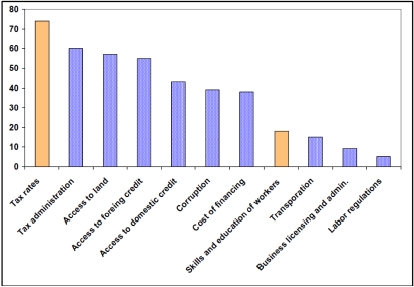
Most cited constraints to SMEs, Source: World Bank (2007a).
Certain advantages of brand extension are- faster growth (Albrecht et al., 2013), development of product assortment (Kapferer & Tabatoni, 2012), lower introduction costs (Keller, 2003; Tauber, 1988), increased consumer acceptance (Tauber, 1988), market share (Reddy et al., 1994; Smith & Park, 1992), sales and profit brand image (Aaker, 1991; Balanchander & Ghose, 2003), brand awareness (Stankeviciute & Hoffmann, 2011) and customer loyalty.
In order to implement brand extension successfully we would suggest to implement Keller`s Customer-Based Brand Equity (CBBE) model for further strengthening of the company. According to the model, building a strong brand involves four steps: -
- • Establishing proper brand identity that is, establishing proper breadth and depth of brand awareness.
- • Creating the appropriate brand meaning through strong, favorable and unique brand associations.
- • Eliciting positive, accessible brand responses
- • Forging brand relationships with customers that are characterized by intense, active loyalty.
Hence one of the measures to occupy market segments through a robust brand model inclusive of brand extensions and hold share of the market against foreign brands.
As markets go global and competitions turning intense, organizations are fast realizing the immense potential of a proactive Supply Chain Management (SCM) to improving their market positions in this cut-throat business environment. The tangible benefits of SCM implementation include shortening the product development life cycle, increasing on-time order delivery, reducing production costs, improving quality, reducing inventory, and bettering inventory management (Higginson & Alam, 1996). It has been pointed out that understanding and practicing (SCM) has become an essential prerequisite to staying in the competitive global race and to growing profitably (Moberg et al., 2002; Power et al., 2001). Many studies found that supply chain could be used by SMEs with considerable success. Spekman et al.(1998) and Quayle (2003) found that the introduction of supply chain has helped in reducing costs without compromising on customer satisfaction levels. Many studies found that supply chain could be used by SMEs with considerable success. The perceived and realized benefits of SCM system consists of tangible and intangible benefits. During the research it was observed that not only the SME`s have limited access to selling channels but also the final production is very less in quantity due to less financial capacity and sometimes availability of raw materials. A good supply chain channelization shall help the raw materials to reach the production sites and further on go ahead to the markets.
A differentiation strategy must be based on two key factors: the strategic customers, the company has to identify their needs and what they will value, and also on the key competitors, to be different, the company has to identify against who it is competing (Hitt et al., 2009). Differentiation strategies exist in order to bring the companies competitive advantage. In order to understand why they should differentiate themselves, it is important to understand what competitive advantages the companies are offering to the consumers. If we take examples of both countries we studied, were discovered that the cheap Chinese product have occupied the market which are low quality products. We do not deny the fact that Chinese products are perfectly placed in price margins but still there exist a variety of people which would like to pay a premium price for domestic products.
The differentiation is due to buyers perceiving experience or product which they expect for, therefore, the particularities do not have to be very big, and differentiation can just be made by a unique packaging, advertising campaign, sales promotion or distribution chain.
The accentuation can also be made by the product itself; the main sources of differentiation for products are:
- • Differences in the product’s functional aspects
- • Differences in quality
- • Differences in price (Hoyle, 2005).
Hence in order to compete with the local market and the existing market leaders these communities need to essentially innovate in their product so that the consumer recognizes the potential and is ready to pay a premium price for it.
A company's image can be described as the overall perception of the company. The image can be enhanced by promotional activities, environmental factors, competitor’s actions or by nonpaid for activities, such as word of mouth. Image is formed as a result of all the experiences, values and the impression that external actors have about the company. The companies from Ethiopia and Ukraine are a living example of sustainable development, conscious consumption and sustainable material sourcing. The incentive of sustainability claims that it can: i) increase brand value by differentiating the offer from competitors’ or, conversely ii) shield brand value against reputation risks related to name and shame campaigns. Thus, the higher the brand value and reputation, the stronger the incentive to adopt sustainability practices (Ricchetti & Khurana, 2017). Such factors could be used to build up brand image in the understanding of local and foreign consumers.
These brands should take shape in terms of social entrepreneurship models. These new kinds of companies are defined as “integrated enterprises” or “hybrid enterprises”, and they can generate different forms of social innovation. Hybrid enterprises are those enterprises “straddling the boundary between the profit business world and the social mission-driven public and not for profit organizations. Thus, they do not fit completely in either sphere” (Hockerts, 2006). Designing sustainable and strong brands with a message has been of great significance on the commercial market. A strong brand is the company's most powerful asset and the importance of it is recognized by various companies (Melin, 1999). An effective image does three things for a products or company; it establishes the product's planned character, it differentiates the product from competing products and it delivers emotional power (Kotler & Keller, 2007). Such a message of social hybrid enterprises shall attract a lot of consumer to buy products. To highlight here the case of AwraAmba community in Ethiopia, the existence of such a community is a live example of such social development and such stories work quite well in the consumer market. There is a small margin of people supporting such communities but surely is ever increasing.
Local fashion communities are generally small or medium enterprises in size and are able to produce and sell very limited quantities of products which are often a threat to their growth as a business. Here concepts of mass production or economies of scale shall not fair very well as the core market strategy of social cause shall not succeed. Since the products belong the niche market segment these communities could always opt for a premium price segment but not very high thought. When many firms are competing for the same consumer with homogeneous product offerings, price defines the competitive position, and is as a powerful competitive weapon (Kotler, 2003; Lucas et al., 1994).
- • According to Shankar and Bolton (2004), the following list summarizes considerations and factors for determination of pricing strategies:
- • Market factors – market and city characteristics (metropolitan, small city);
- • Chain factors – chain size, positioning, in regards to corporate mission and polices;
- • Store factors – store size, category assortment;
- • Category factors – size assortment, storability, extent of necessity;
- • Brand factors – brand equity or preference, relative brand advertising, relative trade deals;
- • Customer factors – consumer sensitivity to prices changes.
The governments of emerging opportunities often have a lot of opportunities in terms of trade agreements, funding, capacity building of workers and exposure to opportunities outside. A common problem observed in SME`s especially in Ethiopia was up to the mark quality of products as to be desired by European and American markets. The merchandise need to be up to the quality mark and this needs a kind of superior workmanship. For this we propose that capacity building would be a very important parameter to be implemented in the Performa of the companies. Skilling of labor becomes a very big area of development for both the countries and there has been support and funding through NGO`s from European Union, United nations and USA in both the continents. There are some examples of initiatives in both the countries; Small and Medium sized Enterprises (SMEs) in Ukraine can receive support from the EU's SME Flagship Initiative called Deep and Comprehensive Free Trade Area (DCFTA) and The Center for African Women Economic Empowerment (CAWEE) established in 2004, registered under the Ethiopian Ministry of Trade as a non-governmental organization. Such organizations not only provide funding but also develop projects to help local communities in issues such as capacity building, sourcing raw materials and design intervention to make better products. We found that they had not much awareness on such schemes and programs which would help them get international fame and help with issues.
E -retailing and social media found a natural fit with fashion and lifestyle merchandise. Selling online is directly connected to exhibiting online through various means of social media. Singh et al., 2016 states that that Ethiopia doesn’t have significant and effective e-commerce platforms and Information and Communication Technology (ICT). Ethiopia is still very nascent in approach to social media and online selling as internet is still more expensive then water in the country whereas we found that Ukraine is quite open to social media marketing and selling. The brands from Ukraine are present on the internet and are also practicing online selling but do not achieve much success in this type of selling. The emergence of social media (e.g., Facebook, Instagram) has boosted interest in word of mouth and viral marketing among brands. Word of mouth (WOM) – interpersonal communication about products and services between consumers is one of the most influential sources of marketplace information for consumers (Alreck & Settle, 1995; Arndt, 1967). When WOM travels on the Internet, it is much faster and effective in terms of communication and convincing the consumer to buy a particular product as it’s accepted by a particular target group. The companies we consulted need to essentially form a very strong social media standing and essentially promoting the social message what they are working for to sell beyond borders. The tools and approaches for communicating with customers have changed greatly with the emergence of social media; therefore, businesses must learn how to use social media in a way that is consistent with their business plan (Mangold & Faulds, 2009).
In the 90`s a very famous indigenous art of Banaras weaving in India began to get copied by the Chinese but was not paid much attention by the Indian government. By the beginning of the millennium the artists began to suffer so bad that they had to close their mills resulting into the death of state of art Banaras weaving. Fashion communities mostly came into the market place due to small but very effective innovation which leads to sustainable development in their societies and hence they have survived till today. In order to take their product beyond borders they essentially need to register it under intellectual property rights laws in the countries they were originated from. We understand the fact that fashion products couldn’t successfully come under IPR laws but registering would surely protect rights of the workers in such communities and also go much ahead in saving their product from getting replicated and mass produced by production economies. During our research, we found brilliant examples of traditional Ukrainian embroideries and handlooms of Ethiopia for woven fabric which could suffer major duplication in the coming future if not protected. Hence, we suggest that registering the state of the art procedures under Geographical indication (GI) would be a very important measure to save such art and make sustainable business for the communities. World Trade Organization’s Trade Related Intellectual Property Rights (TRIPS) Agreement, adopted in 1994, Geographical Indications (GIs) are “indications which identify a good as originating in the territory [of a member] where a given quality, reputation or other characteristic of the good are essentially attributable to its geographical origin”.
4. Conclusions
Although there is a lot of encouragement to SME`s and local communities in the respective countries but there still lies an immense work to be done in internal business strategy development. We started our research by observation on the products that they made and how they were supplied to the market. With the growing consumer demand in both the countries and simultaneous entries of foreign mass market giants the task becomes quite competitive to achieve a right spot in both domestic and international market. We also conclude that there is a need of systematic management in terms of design and production to be implied in these communities in order to increase their presence in the market. The opening of trade policies in the countries have raised a serious threat as the consumer today is essentially price-sensitive and when has more options in a lower price range is automatically attracted. Skilling of labor and producing better quantity and quality of the products could be considered as key factors for increasing revenue. There is fierce competition from imported second-hand clothing, mostly through illegal routes, and imports from cheaper sources due to trade liberalization. The communities in general do not have much awareness on the new schemes and generally find it difficult to approach to the banks for finances or loans. If the governments of the respective countries intervene and acknowledge the traditional art and craftsmanship, it shall be a great step in saving these communities from a tough time ahead due to globalization. However, we also see the novelty of product, the social message and the initiative taken by the women entrepreneurs despite of the problems they faced in these emerging economies.
Our research has raised actuality and may result in significant positive impact for all of communities. Moreover, there are a lot of such communities that might need such intervention in fashion and textile industry sector from academia and governmental institutions worldwide.
References
- Aaker, D. A., & Equity, M. B., (1991), Capitalizing on the value of a brand name, New York, Simon & Schuster.
-
Aaker, D. A., & Keller, K. L., (1990), Consumer evaluations of brand extensions, The Journal of Marketing, 54(1), p27-41.
[https://doi.org/10.2307/1252171]

- Aidis, R., & Fellow, F., (1998), Women and Entrepreneurship in Lithuania: Research Results and Recommendations.
-
Aidis, R., (2003), Female small and medium-sized enterprise ownership in Lithuania: A comparison, Journal of Baltic Studies, 34(3), p332-353.
[https://doi.org/10.1080/01629770300000121]
- Aidis, R., (2004), Laws and customs: Institutions, gender and entrepreneurship during economic transition, University College London, London.
-
Aidis, R., Welter, F., Smallbone, D., & Isakova, N., (2007), Female entrepreneurship in transition economies: The case of Lithuania and Ukraine, Feminist Economics, 13(2), p157-183.
[https://doi.org/10.1080/13545700601184831]
-
Albrecht, C. M., Backhaus, C., Gurzki, H., & Woisetschläger, D. M., (2013), Drivers of brand extension success: What really matters for luxury brands, Psychology & Marketing, 30(8), p647-659.
[https://doi.org/10.1002/mar.20635]
- Alreck, P. L., & Settle, R. B., (1995), ‘The importance of word-ofmouth communications to service buyers’; Proceedings of American Marketing Association.
-
Amha, W., & Ageba, G., (2006), Business development services (BDS) in Ethiopia: Status, prospects and challenges in the micro and small enterprise sector, International Journal of Emerging Markets, 1(4), p305-328.
[https://doi.org/10.1108/17468800610703360]
- Arndt, J., (1967), Role of product-related conversations in the diffusion of a new product, Journal of Marketing Research, p291-295.
-
Balachander, S., & Ghose, S., (2003), Reciprocal spillover effects: A strategic benefit of brand extensions, Journal of Marketing, 67(1), p4-13.
[https://doi.org/10.1509/jmkg.67.1.4.18594]
- Bernard, H. R., (2002), Research methods in anthropology: Qualitative and quantitative approaches (3rd ed.), Walnut Creek, CA, Alta Mira Press.
- Beyene, A., (2002), Enhancing the competitiveness and productivity of small and medium scale enterprises (SMEs) in Africa: An analysis of differential roles of national governments through improved support services, Africa Development, 27(3), p130-156.
- Bhatia, B. S., & Batra, G. S., (2003), Entrepreneurship and small business management, New Delhi, Deep and Deep Publications Pvt. Ltd.
- Brenton, P., Newfarmer, R., & Walkenhorst, P., (2007, September), Export diversification: a policy portfolio approach, In Growth Commission Conference on Development, Yale University, September.
-
Carrier, C., (1994), Intrapreneurship in large firms and SMEs: A comparative study, International Small Business Journal, 12(3), p54-61.
[https://doi.org/10.1177/0266242694123005]
- Cresswell, J. W., & Plano Clark, V. L., (2011), Designing and conducting mixed method research (2nd ed.), Thousand Oaks, CA, Sage.
-
Curran, J., & Blackburn, R., (2000), Researching the small enterprise, Sage.
[https://doi.org/10.4135/9781849209847]
- Daniels, L., & Ngwira, A., (1993), Results of a nation-wide survey on micro, small and medium enterprises in malawi, GEMINI Technical Report No. 53, New York, PACT Publications.
- Daniels, L., & Fisseha, Y., (1992), Micro and small scale enterprises in Botswana: Results of a nation-wide survey, Gemini Technical Report No. 46, Washington D.C., Development Alternatives Inc.
- Dubois, J., (2008), ‘Roots and Flowerings of Ethiopia's Traditional Crafts’ UNESCO [online], Available at unesdoc.unesco.org/images/0018/001846/184662eo.pdf.
- Dzvinka, R., (2002), How does the unofficial economy interact with the official one, Economics Education and Research Consortium MA thesis Kyiv, Ukraine, National University of Kyiv-Mohyla Academy.
- Fisseha, Y., (1991), Small scale enterprises in Lesotho: Summary of a country-wide survey, Gemini Technical Report No. 14, Washington D.C., Development Alternatives Inc.
- Fisseha, Y., & McPherson, M. A., (1991), A country-wide study of small scale enterprises in Swaziland, Gemini Technical Report No. 24, Washington D.C., Development Alternatives Inc.
-
Greenan, K., Humphreys, P., & McIvor, R., (1997), The green initiative: Improving quality and competitiveness for European SMEs, European Business Review, 97(5), p208-214.
[https://doi.org/10.1108/09555349710179816]
- Joumard, R., (2010), Awra Amba, an Ethiopian utopia.
-
Hallberg, K., (2000), A market-oriented strategy for small and medium scale enterprises, 63, World Bank Publications.
[https://doi.org/10.1596/0-8213-4727-6]
-
Higginson, J. K., & Alam, A., (1997), Supply chain management techniques in medium-to-small manufacturing firms, The International Journal of Logistics Management, 8(2), p19-32.
[https://doi.org/10.1108/09574099710805646]
- Hitt, M. A., Ireland, R. D., & Hoskisson, R. E., (2012), Strategic management cases: Competitiveness and globalization, Cengage Learning.
-
Hockerts, K., (2006), Entrepreneurial opportunity in social purpose business ventures, In Social entrepreneurship p142-154, Palgrave Macmillan, London.
[https://doi.org/10.1057/9780230625655_10]
- Hoyle, D., (2005), Automotive quality systems handbook: ISO/TS 16949: 2002 edition, Butterworth-Heinemann.
- ICS, (2001), Small Entreprenership in Ukraine: the Process of Development. Kyiv. (Мале підприємництво України: Процес розвитку. Інститут конкурентного суспільства. Київ. 2001).
- Keane, J., & te Velde, D. W., (2008), The role of textile and clothing industries in growth and development strategies. Overseas Development Institute, Dostupno na: www. odi. org. uk/resources/docs/3361. pdf [28.6. 2013.].
- Kapferer, J. N., & Tabatoni, O., (2012), The LVMH–Bulgari agreement: Changes in the luxury market that lead family companies to sell up, Journal of Brand Strategy, 1(4), p389-402.
-
Keller, K. L., (2003), Brand synthesis: The multidimensionality of brand knowledge, Journal of Consumer Research, 29(4), p595-600.
[https://doi.org/10.1086/346254]
-
Khanna, T., & Yafeh, Y., (2015), Business groups in emerging markets: Paragons or parasites?, Review of Economics and Institutions, 6(1), p60.
[https://doi.org/10.5202/rei.v6i1.174]
- Kotler, P., (2003), ‘Marketing Management’, 11th ed., Prentice-Hall, Upper Saddle River, NJ.
- Kotler, P., Armstromg, G., Wong, V., & Saunders, J., (2008), ‘Principles of marketing’, Fifth European Edition, London, Financial Times/Prentice Hall.
- Kotler, P., & Keller, K., (2007), ‘A framework for marketing management’, third edition, Pearson Education.
- Kunkongkaphan, P., (2014), Impact of Globalization on Thai Small and Medium Enterprises: A Study of the Clothing and Textile Industry (Doctoral dissertation, Victoria University).
- Lucas, G. H., Bush, R. P., & Gresham, L. G., (1994), ‘Retailing’, Houghton Mifflin, Boston, MA.
- Low about national budget of Ukraine for year 2017 [Закон України Про Державний бюджет України на 2017 рік], N 1801-VIII (December 21, 2016).
-
Mangold, W. G., & Faulds, D. J., (2009), Social media: The new hybrid element of the promotion mix, Business Horizons, 52(4), p357-365.
[https://doi.org/10.1016/j.bushor.2009.03.002]
- Melin, F., (1999), Varumärkesstrategi: Om konsten att utveckla starka varumärken. Liber ekonomi, Available at www.rvo.nl/sites/default/files/2015/11/Rapport_Textile_Ethiopi%C3%AB.pdf.
-
Moberg, C. R., Cutler, B. D., Gross, A., & Speh, T. W., (2002), Identifying antecedents of information exchange within supply chains, International Journal of Physical Distribution & Logistics Management, 32(9), p755-770.
[https://doi.org/10.1108/09600030210452431]
- National Agency of Statistics in Ukraine [Державна служба статистики України], (2016), Export/import of goods in 2016 [Експорт/імпорт товарів за період 2016 року].
- National Agency of Statistics in Ukraine [Національна служба статистики України], (2016), Offical web-site of National Agency of Statistics in Ukraine [офіційна веб-сторінка Національної служби статистики України], Retrieved from Society deviation acording to average income [Розподіл населення за рівнем середньодушових еквівалентних загальних доходів]: http://www.ukrstat.gov.ua/.
- OECD, (2010), SMEs, Entrepreneurship, and Innovation, Paris, OECD, (http://www.oecd.org/cfe/smesentrepreneurshipandinnovation.htm).
-
Okpara, F. O., & Mengistie, A. D., (2007), Entrepreneurship with special reference to the status of small business entrepreneurship: A case study of Gondar, Ethiopia, African Research Review, 1(2), p17-42.
[https://doi.org/10.4314/afrrev.v1i2.40998]
-
Okpara, J. O., (2011), Factors constraining the growth and survival of SMEs in Nigeria: Implications for poverty alleviation, Management Research Review, 34(2), p156-171.
[https://doi.org/10.1108/01409171111102786]
-
Parkin, M. A., & Parkin, R., (1996), The impact of TQM in UK SMEs, Industrial Management & Data Systems, 96(4), p6-10.
[https://doi.org/10.1108/02635579610117458]
- Patton, M. Q., (2002), Qualitative interviewing, Qualitative Research and Evaluation Methods, 3, p344-347.
-
Pissarides, C. A., (1998), The impact of employment tax cuts on unemployment and wages; the role of unemployment benefits and tax structure, European Economic Review, 42(1), p155-183.
[https://doi.org/10.1016/s0014-2921(97)00090-1]
- Pols, D. van der, (2015), 2015).‘Business opportunity report Ethiopia textile & apparel industry Commissioned by Netherlands Embassy in Addis Abeba CBI and Nash international BV’, https://www.rvo.nl/sites/default/files/2015/11/Rapport_Textile_Ethiopië.pdf.
-
Power, D. J., Sohal, A. S., & Rahman, S. U., (2001), Critical success factors in agile supply chain management-An empirical study, International Journal of Physical Distribution & Logistics Management, 31(4), p247-265.
[https://doi.org/10.1108/09600030110394923]
-
Quayle, M., (2003), A study of supply chain management practice in UK industrial SMEs, Supply Chain Management: An International Journal, 8(1), p79-86.
[https://doi.org/10.1108/13598540310463387]
- Reinecke & White, (2004), op. cit. and information provided by ILO Islamabad, June 2006.
-
Reddy, S. K., Holak, S. L., & Bhat, S., (1994), To extend or not to extend: Success determinants of line extensions, Journal of Marketing Research, 31(2), p243-262.
[https://doi.org/10.2307/3152197]
- Rose, R. C., Kumar, N., & Yen, L. L., (2006), The dynamics of entrepreneurs’ success factors in influencing venture growth, Journal of Asia Entrepreneurship and Sustainability, 2(3), p1-19.
- Ricchetti, M., & Khurana, K., (2017), Shifting perspectives on sustainable supply chain management in the fashion business-Fashion Tales-Feeding the Imaginary (Peter Lang), https://www.peterlang.com/view/9783034327893/chapter-011.xhtml.
-
Sapovadia, V. K., (2015), Analyzing Challenges & Opportunities of Ethiopian SMEs: Micro & Macro Economic Drivers, Available at SSRN: https://ssrn.com/abstract=2589674 or http://dx.doi.org/10.2139/ssrn.2589674.
[https://doi.org/10.2139/ssrn.2589674]
-
Schoenbachler, D. D., & Gordon, G. L., (2002), Multi-channel shopping: Understanding what drives channel choice, Journal of Consumer Marketing, 19(1), p42-53.
[https://doi.org/10.1108/07363760210414943]
-
Shankar, V., & Bolton, R. N., (2004), An empirical analysis of determinants of retailer pricing strategy, Marketing Science, 23(1), p28-49.
[https://doi.org/10.1287/mksc.1030.0034]
-
Smith, D. C., & Park, C. W., (1992), The effects of brand extensions on market share and advertising efficiency, Journal of Marketing Research, 29(3), p296.
[https://doi.org/10.2307/3172741]
-
Spekman, R. E., Kamauff Jr, J. W., & Myhr, N., (1998), An empirical investigation into supply chain management: a perspective on partnerships, Supply Chain Management: An International Journal, 3(2), p53-67.
[https://doi.org/10.1108/13598549810215379]
- Stankeviciute, R., & Hoffmann, J., (2011), The slippery slope of expansion-Look to the luxury sector to understand how brand extensions affect parent brands, Marketing Management, 20(4), p26.
- Storey, D. J., (1994), Understanding the small business sector, 1st Edn., Routledge, London, ISBN-10: 0415100380 p355.
- Tauber, E. M., (1988), Brand leverage-strategy for growth in a costcontrol world, Journal of Advertising Research, 28(4), p26-30.
-
Tetteh, E., & Burn, J., (2001), Global strategies for SME-business: Applying the SMALL framework, Logistics Information Management, 14(1/2), p171-180.
[https://doi.org/10.1108/09576050110363202]
-
Ussman, A. M., & José, B., Franco, M., (2000), The cooperation process in textile and clothing SMEs: A Portuguese case, Journal of Fashion Marketing and Management: An International Journal, 4(1), p49-56.
[https://doi.org/10.1108/eb022579]