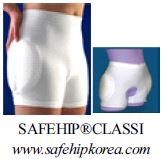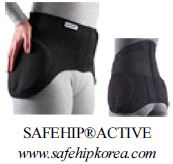
Hip Protector Design Process for the Korean Elderly
© 2016 (by) the authors. This article is an open access article distributed under the terms and conditions of the Creative Commons Attribution license (http://creativecommons.org/licenses/by/3.0/), which permits unrestricted use, distribution, and reproduction in any medium, provided the original work is properly cited.
Abstract
This research aims to propose an ergonomic design process for hip protector based on previous studies, existing products, multidisciplinary experts opinion, and wearing test. The elderly are more likely to suffer a hip fracture when they fall due to their physical changes in skeletal form, muscle quantity, bone density, and joint movement. A hip protector is an effective product to prevent hip fractures in the elderly but it also has a problem in that it is uncomfortable. Therefore there is a high chance that it won’t be able to prevent hip fractures properly. Since the comfort of a hip protector is one of the most critical elements in preventing a hip fracture, we need to keep improving the hip protector for mobility and usability. Based on the previous studies and limitations of current hip protector products, we need to come up with an optimal design for the Korean elderly. First, knowledge has to be built relating to the ergonomic design of the hip protector considering body shape and size analysis using 3D-scan data, and biomechanical analysis on hip fracture. Second, we need to develop a design process including hip protector pattern design, and wearing evaluation with virtual system. Third, we suggest to reevaluate and verify the design procedure from impact evaluation using testing simulator, virtual evaluation of impact, to wearing comfort and usability evaluation. This design process presented in this study would be expected to contribute to the development of ergonomic hip protector which is suitable for the Korean elderly.
Keywords:
hip protector, design process, the Korean elderly, hip fracture, 3D-scan data1. Introduction
It is very likely that the elderly can suffer a hip fracture when they fall due to their physical changes in skeletal form, muscle quantity, loss of bone density, and joint movement. Hip fractures are a threat to the health, mobility, and independence of older adults as well as a burden on the care system. In the U.S.A. approximately 258,000 people aged 65 years and older were hospitalized for hip fractures in 2010(Stevens & Rudd, 2013). In Korea, about 21% of people over age 65 had experienced falling and of 47.4 % of these suffered a disability due to the fall(Statistics Korea, 2011). The incidence of hip fractures in elderly increase year by year, as has hip surgery was reported increase of 1.4 times in 2013 compared 2009(Health Insurance Review & Assessment Service, 2013).
According to the International Osteoporosis Foundation, the number of hip fractures occurring each year will grow more than 5 times by 2050(Compston, 2008). Hip fracture patients who are older than 65 years of age are two to three times more likely to die within a year following their injury(Faramand et al., 2005). Even after survival, there’s an added financial burden to individuals and to government due to the long-term complications of treatment and recovery(Chung et al., 2011).
Hip protectors represent an attractive strategy for reducing hip fractures among high-risk fallers in long-term care facilities(Korall et al., 2015). Most of the hip protectors that are available in Korea are imported, so it does not accommodate Korean’s elderly body type as well. A hip protector is a specialized form of pants or underwear containing pads(either hard or soft) along the outside of each hip/leg, designed to prevent hip fractures following a fall. They are most commonly used in elderly individuals who have a high risk of falls and hip fractures. The imported hip protector costs twice as much compared to the domestic ones which limits elderly consumers from purchasing one. There are different types of hip protectors: belt type, underwear type, pants type, etc (Jeon et al., 2014). There are two different designs for shock-absorbing hip protector pads: foam pad type and plastic shield type(Kannus et al., 2000). According to Derler et al.(2005), foam pad type was more effective in reducing shocks than plastic shield type. While there are many researches on the effects of the shock-absorbing hip protector pads, the study and the analysis of hip protector’s ergonomic design for the human body is insufficient.
It is reported that the Korean elderly has smaller frame in parts of the hip joint compared to Westerners(Joo et al., 2013). Therefore there is a high chance that it won’t be able to prevent hip fractures properly. Based on this report, we need to come up with an optimal design for the Korean elderly. While hip protectors decrease the number of hip fractures among the elderly, the acceptance and long-term compliance towards them is quite low, mainly because of discomfort, dislike of their appearance by the person wearing it. There needs to be an improvement in mobility and usability so that it is more acceptable and comfortable for daily use. Kannus et al.(2000) reported that the risk of hip fracture decreased by more than 50% when the elderly are wearing the hip protectors. It is also reported that it is uncomfortable and inconvenient when wearing(O'Halloran et al., 2005).
Therefore, ergonomic design process for hip fracture prevention products needs to be developed based on previous studies, analysis of existing products, multidisciplinary experts opinion, and wearing pilot test. This research will suggest the design process for the hip fracture prevention product expecting to contribute to the development of ergonomic hip protector which is suitable for the Korean elderly.
2. Method
2.1. Research survey
Domestic and international research survey to the article was proceeded through a keyword combination, and then sorted 94 articles through paper titles and abstracts screening. After selecting a total of 26 cases through the level(high, medium, low) of relevance of literature, we obtained the final 20 related review papers with high and medium relevance level(Fig. 1.a). The final selected papers were classified as part a method, result, and discussions. And then in-depth analysis was performed to extract key provisions to be applied in the design process. Through these research survey, hip protector research situation, research methods, application point in the design, the general procedures and basic items were established(Fig. 1.b).
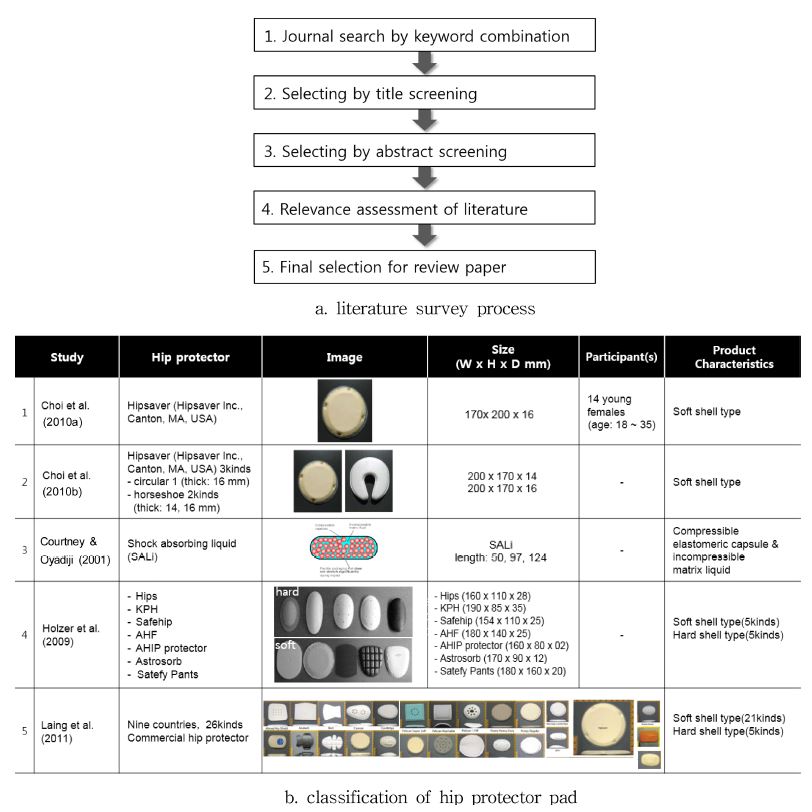
Literature survey process and pad classification.
2.2. Products characteristic analysis
For the market research on hip protector products, textile material, pad material, pad shape, pricing, strong and weak point of product, and product form were analysed for characteristics of existing products. Specific items related to design, pattern and wearing assessment have been established in the development stage. Through survey of existing hip protector products, we can figure out the potential problems and improvements about materials and design of hip protector. Based on the identified results, we can make survey items for existing hip protector products and establish development strategies for new hip protector products(Table 1).

An example of hip protector product market research survey
Collecting data was proceeded with these steps. Through a preliminary survey of the Korean elderly on hip protector, research methods and items were determined, and then followed by the internet search, visiting production company and product purchase steps. Through the survey of products, the selected analysis item for wearing characteristics was divided into wearing convenience(fit, allowance, mobility, pad placement, pad thickness, pad size, material, design, easy of dressing or undressing), movability(standing inconvenience, sitting inconvenience, movement inconvenience, pad inconvenience, band inconvenience), material suitability(tactile, durability, absorptiveness, ventilation, insulation, lightness) and design suitability(hip protector design, pad design, color)
2.3. Wearing characteristic analysis
Finally, through the actual wearing pilot test for 43 female aged 65 or older, we investigated some problems in the wearing sensation, discomfort and improvement requirements for hip protector, and we identified improvements to be applied in the hip protector design. The 43 elderly people were divided into 15 persons aged 60~65, 15 persons aged 66~70, 13 persons aged 71~75. They were classified with 4 different somatotypes(small/short, small/tall, large/short, large/tall) based on height and weight. User requirements and wearing characteristics might be identified through the survey and interview questionnaire targeted users and potential users. Based on existing products and market research results, the questions of wearing characteristic analysis could be classified as follows.
- 1. Fall experience, and characteristics(direction of fall, season, fall locations, fall activities of causes, fracture parts)
- 2. Hip protector acceptance(awareness, necessity, purchasing experience, preferred protection area, wearing experience, requirement)
- 3. Hip protector preferences(design, detail)
- 4. Use characteristics(ease of wearing, ease of movement)
- 5. Improvement requirement
If the hip protectors are designed on the basis of wearing characteristic analysis with the Korean elderly, it will be able to improve wearing comfort and inconvenience in the Korean elderly. Questionnaire, interview, and wearing evaluation are the techniques for the information collecting about wearing characteristics. Multidisciplinary expert opinions from clothing, medicine, mechanical engineering, and human engineering specialists were gathered for hip protector development. We could collect useful information from multidisciplinary experts, for example, pattern design in clothing, biomechanical properties part of the hip area in medicine, impact assessment in mechanical engineering, usability test and verification in human engineering.
More specific explanation, drop tower system(falling into a vertical path) and pendulum - based system(falling into a curved path) which were collected from mechanical engineering were applied to establish this research of design process on impact evaluation (Fig. 2).
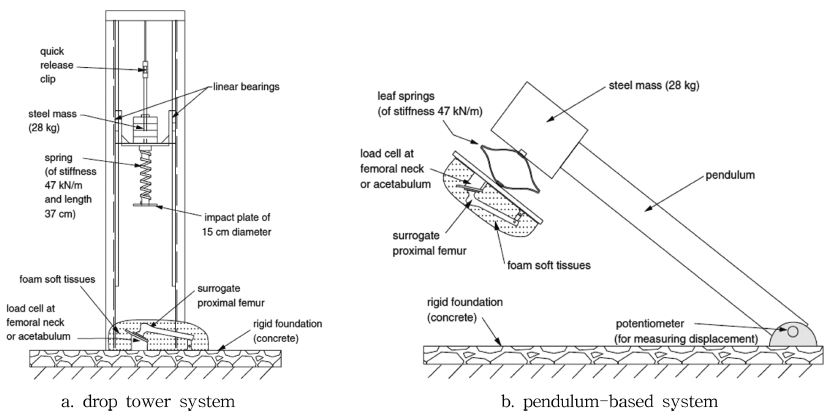
System for impact evaluation(Robinovitch et al., 2009).
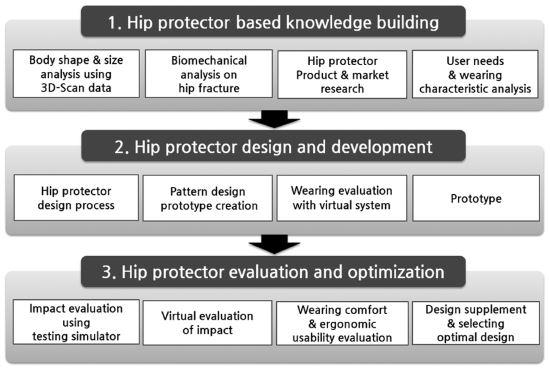
Fig. 3 shows the design processes and the details set up through the precedent studies on domestic and foreign research, characteristic analysis of existing product, and multidisciplinary expert opinions mentioned above. In other words, research is composed of following 3 processes.
Research process for hip protector development.
First, in knowledge base step related to hip protector, we could build a strong knowledge base through 3D anthropometric characteristics analysis, biomechanical analysis of hip fracture, product research, market research and wearing analysis.
Secondly, in the design process steps for the hip protector, we could develop a final prototype by selection of designs and pattern, wearing sensation and verification of fitness.
Finally, in the evaluation step of hip protector, we objectively would like to verify the design process through the simulation evaluation, physical evaluation, impulse visualization evaluation, wearing comfort assessment, and usability assessment.
3. Results and Discussion
3.1. Hip protector based knowledge building
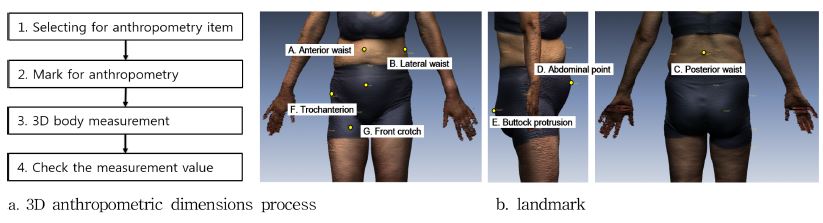
Knowledge base step for the hip protector product, we analyzed hip shape and dimensions of the elderly using 3D scanning technology. In 3D scanned data analysis, data selection, landmark as a marking of reference point, body measurement and size review will be conducted in four basic steps(Fig. 4.a). 3D Scanned data(female, 60~75 year, n=271, 2010) which already measured in Size Korea could be used. From the 3D scanned data, the information for the hip size and features of Korean elderly could be easily identified. Key reference points for body measuring were indicated by hand on the 3D scan image using Geomagic XOR 2014(3D Systems Corp., USA)(Fig. 4.b).
3D anthropometric dimensions process & landmark.
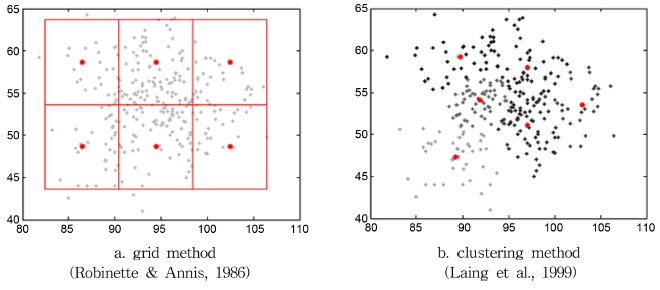
Next, critical variables necessary for the hip protector design were selected, anthropometric dimension(height, length, circumference, depth) were measured using Matlab 2013a(Mathwork Inc., USA). Measurement systems and representative features of the human body were selected using the grid method (Robinette & Annis, 1986) and clustering method(Laing et al., 1999). Grid method and clustering methods were analytical method for determining the measurement system based on the scope for population. Grid method built a constant grid meeting the acceptance target rate, the center of grid was decided to as a size system as shown in Fig. 5.a. In clustering method, the center of cluster was decided to as a size system by applying K-means cluster analysis as shown in Fig. 5.b.
An example of size system analysis methods.
Biomechanical characteristics of hip fracture were figured out through numerical modeling which is based on the motion analysis equipment and 3D scanned data. By analyzing the biomechanical properties, protection range of hip and the impulse amount on hips could be calculated. In advance, after grasping the changing posture when they fall, the impulse that should be absorbed by hip protector would be calculated through developed model using motion analysis equipment. Next, various hip fracture incidence was measured by using motion capture system, and then calculated a hip area that should be protected with hip protectors. If the hip fracture of biomechanical traits which were identified through a variety of analysis was reflected in the design of hip protectors, hip fracture caused by fall would be able to be prevent effectively.
3.2. Hip protector design and pattern development
In the designing of hip protectors, the elderly's body shape and dimensions, biomechanical properties of hip area, product research, wearing features, and user requirements which were identified in the knowledge-based step should be applied systematically. In the design step, we took into consideration product feature, dimensional system according to the body shape, dressing and undressing manner, range of body protection, application mechanism, application materials, and utilization etc.
Based on expert advice in related fields such as ergonomics, clothing and textile, the new hip protector design needs objective assessment and verification about shock absorption, operating convenience and materials compatibility. In the recent study(Jeon et al., 2014), improvements of hip protector in design and aesthetic terms will enhance the wearing rate of hip protectors in everyday life, and finally prevent the hip fracture caused by fall in the elderly.
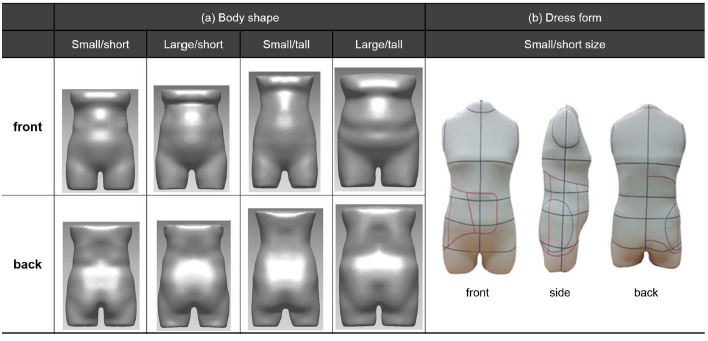
The pattern of the hip protectors were planned on the representative human body models which were manufactured using 3D print. Body form of RP(Rapid Prototype) for draping as shown in Fig. 6.a was produced based on the scanned data, and then proceeded surface operation such as filling, textile attachment and point marking. Four representative human body models(small/short, small/tall, large/short, large/tall) were derived from Korean elderly 3D scan data(2004, n=271, women, 60~75 years). The pattern of hip protectors could be designed from the 3D shape and dimensional analysis for the elderly. A formula for pattern parts has established and then flat patterning has performed. After designing a pattern based on the preferred hip protector, the fine details such as placement of pad and velcro was determined by applying best location which was identified as a result of biomechanical analysis(fall characteristics, direction of fall, hip shape), and by applying the relevant mechanism.
3D body shape and dress form for pattern design.
Material for hip protector should have characteristics of flexibility, adhesion and air permeability. After the absorption impact evaluations, pad on hip protector should be made with shockabsorbent material
After attaching the baseline and design line on to body shape, draping for the hip protector was made along the cut side with draping techniques(Fig. 6.b).
Flat pattern was completed by applying the size and ease on patterns derived from draping work, by establishing design equation and by standardization. Finally, the adequacy of the pattern between flat and draping were verified by a size comparison.
After inputting the new designed hip protector pattern into computer using PAD system, wearing evaluation was attempted with 3D human body models using virtual wearing system(Fig. 7). Human body models for the elderly used in virtual wearing system were formed in two ways. First, we created avatar by applying human dimension which was identified in the hip imagery analysis phase on a CLO program. Second, we converted the 3D scanned data to obj file on 3D max program, and then bring out from a CLO program.
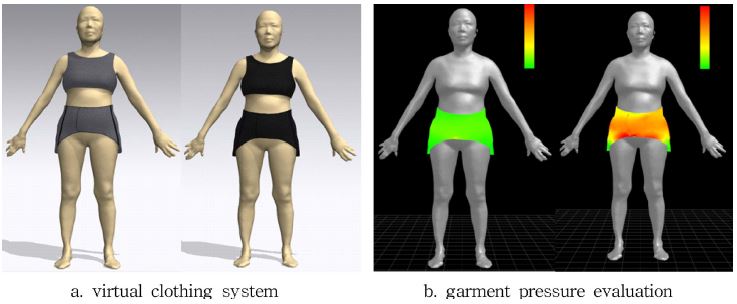
3D virtual clothing system(CLO Virtual Fashion Inc., South Korea).
After completing the human body model, we checked new designed hip protector patterns and verified in terms of fitness, volume of ease and clothing pressure using virtual wearing system. After verification of wearing evaluation through virtual wearing system, we surveyed the fiber and subsidiary materials. With comprehensive approach on the characteristics of materials such as flexibility and strength, we conducted a final wearing assessment by virtual human models.
Prototype was produced using the final patterns which was validated through 3D virtual wearing system. Prior to producing the prototype, investigation on materials(e.g., flexibility, resilience, volume, weight) and sewing properties(e.g. flat lockseam, seam sealing) in hip protector body and pad parts must be carried out. On a prototype production, materials should be focused on the shape and functionality, and most especially, the material having great impact absorption must be selected for pad. And then pad should be constructed with suitable shape for hip image of the elderly.
As shown in Fig. 8, the types of hip pad that have been applied to the existing hip protectors were soft shell, hard shell, shell foam type and silicon type. Materials like polyurethane, polyethylene, and pvc foam were used. Appropriate protective pad parts, waist belt height, velcro location which were selected in the conceptual design phase could be applied to prototype with various mechanisms. In terms of convenience, functionality, movability and fracture prevention effect, the final prototype should be evaluated using the objective assessment protocol such as shock absorption test, wearing assessment.
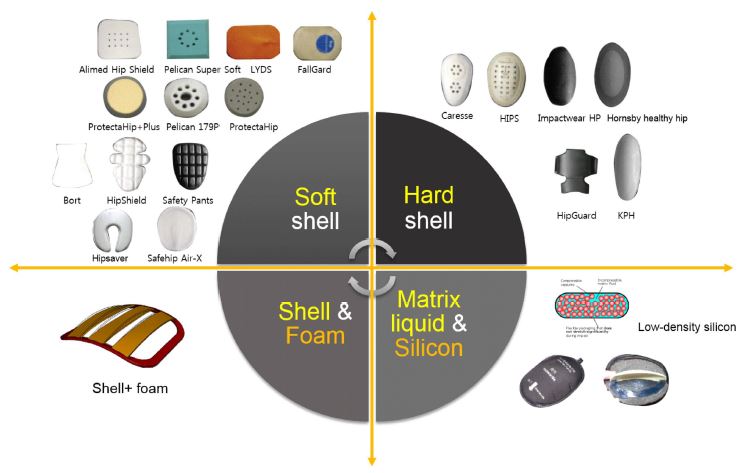
Classification of hip protector pad.
3.3. Hip protector evaluation
The performance of the shock absorption of hip protector was verified with shock testing using simulators for physical performance assessment and finite element analysis system(ex: ANSYS®) for visualization on impact. The suitability of the prototype was evaluated using the simulator for physical performance assessment. Risks when performing experiments with the elderly person are attached, it is recommended to use the hip protector testing simulator.
Hip protector testing simulator as shown in Fig. 9 is a device to recreate the external shocks which works on the hip when falling, and is offering the precise controls such as amount of shock impact, scope and direction. As an example of impulse testing simulator, Laing et al.(1999) developed impact pendulum which was an equipment to recreate the shock on the hips. Impulse that could be implemented by simulator are determined by the physical properties of the ground, mechanical properties of the human body, and impact velocity.
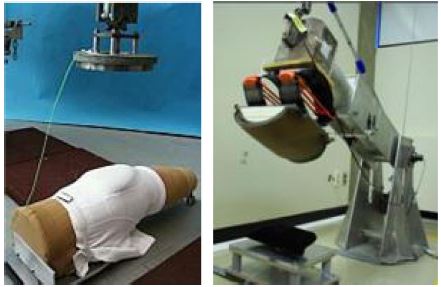
An example of hip protector testing simulator for one pad(Laing & Robinovitch, 2008).
The shock absorption effect of the hip protector was grasped by comparison in various impulse conditions in terms of impact strength(strong, medium, weak), impact direction, impact area and impact of wearing /not wearing. The effect of some impulse to be sent to the human body and not absorbed by hip protectors was discussed with hip fracture specialist.
In Fig. 10, visualization on impact was evaluated by finite element analysis system(ex: ANSYS®). This finite element analysis system could simulate the feature strain, shock absorption and human impulse with taking into account hip protector pad material property. Shock absorbing effect of pad material was analysed by the absorption rate about total strain energy, impact energy and shock reflecting. These experiments could be performed in a wide range of conditions, by separating the material and impact strength of the hip protector pad. Based on the evaluation results derived from hip protector testing simulator and finite element analysis system, patterns and design requirements for hip protector prototype could be corrected and supplemented.
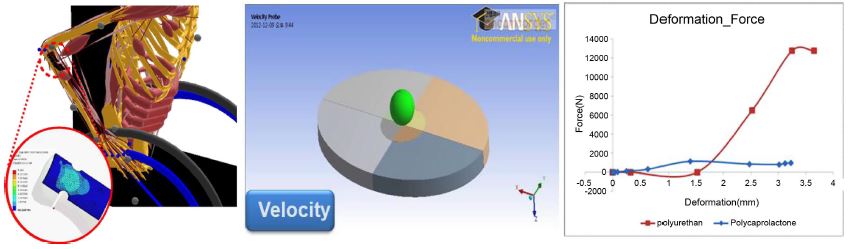
An example of impact visualization using finite element analysis system ANSYS®(ANSYS Inc., USA. www.ansys.com).
Shock absorption performance and subjective satisfaction were evaluated with people older than 65 years who are actually wearing the hip protector. In the impulse assessment of the actual fall, safety device such as secondary loop is needed for preventing accidents which might occur during evaluation. The usability and wearing sensation of the hip protectors can be estimated using evaluation system of clothing. Evaluation system of clothing is composed of physiological characteristics, kinetic characteristics and psychophysical characteristics, and it is available by selecting suitable evaluation criteria for hip protector product.
Physiological characteristics were analyzed with skin temperature, sweat rate, temperature, humidity, and electromyograph(EMG). Kinetic characteristic of hip protector user was possible to analyse with the working range of waist, hips and knees which are relevant to the range of hip motion. Subjective satisfaction was assessed using five points or seven points scale on wearability, ease of dressing/ undressing and material suitability.
The final design of hip protector was derived through the design improvements based on the results of its impact test, usability test and subjective satisfaction assessment. The final design of hip protector should be examined in terms of measurement, size system, material, fitness, protecting mechanism, aesthetic impression and functionality. In impact test, for example, if the pad has absorbed only a small amounts of impulse, pad shall be controlled in material, thickness and volume. Based on the subjective satisfaction results, the way to wear and use could be improved. If the way of wearing is not suitable for elderly, it is necessary to correct the pattern on hip protector(Fig. 11.a). Details on easily attached hip pad finally improve the ease of wearing and movability(Fig. 11.b).
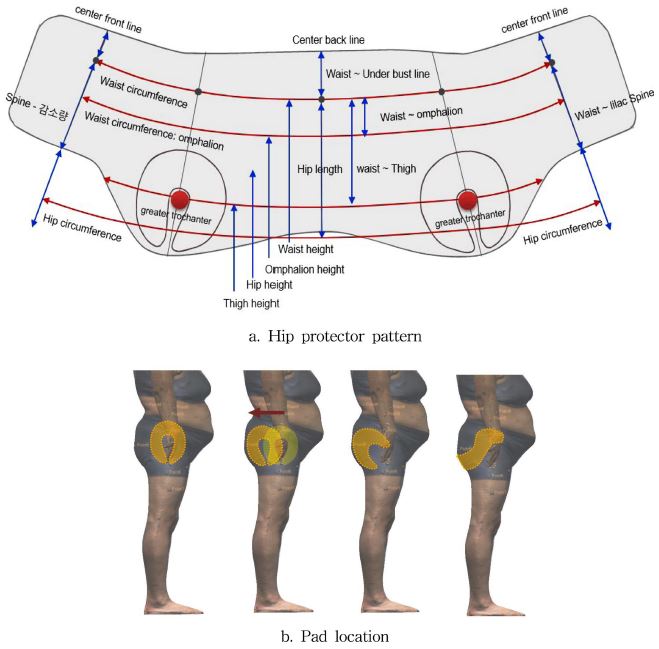
An example of hip protector pattern design(a), pad space and location(b).
4. Conclusions
Ergonomic design process for hip fracture prevention products has been developed based on leading researches, existing product analysis, multidisciplinary research expert opinion, and wearing pilot test. First, through the research process of a precedent study on hip protectors, point of application of the methods and evaluation, design research and design procedures were derived. These hip fracture prevention products based on the survey data, deployed a foundation for knowledge. Second, through the characteristic analysis of existing products, we derived a more detailed items relevant in design concept, patterns, and wearing assessment. And then we built the design procedure for the new deployed hip protectors. Third, from characteristics for multidisciplinary expert opinion and wearing pilot test process, items for the usability test and ergonomic design methods were drawn up. And the optimized objective assessment methods were established.
In the step of the data base, analysis of physical characteristics and biomechanical properties of Korean elderly, and analysis of wearing characteristics for existing hip protectors products were established. The physical characteristics and biomechanical properties of Korean elderly could be figured out by motion characteristics of falling and the impulse of the hip. Clothes that are designed with consideration on the physical characteristics and biomechanical properties were known to provide the best wearing sensation(Cho et al., 2008; Yeow & Sen, 2003). Hip protector, which was produced by reflecting the characteristics of fracture such as the hip shape and fall direction would reduce the hip fracture rate.
Wearing characteristics analysis for user can precisely identify the preference to the products, products characteristics, problems, improvements and use characteristics. Wearing characteristics analysis shown in this study was performed with various ways such as surveys, interviews, behavior observation and subjective satisfaction. And this has an advantage to figure out the elderly’s social, physical and emotional aspects.
Early stage of its development, the evaluations could be established by applying physical characteristics and biomechanical properties to designing and patterning of hip protector, and by applying virtual wearing system to verifying a wearing sensation. In hip protector design stage, product feature, dimensional system according to the body shape, dressing and undressing manner, range of body protection, application mechanism, application materials, and utilization etc should be considered. 3D RP body making, body foam production, draping and flat patterning were systematized through establishing of hip protector design, and were verified through wearing assessment using virtual wearing system. Virtual wearing assessment has advantage of grasping about fitness, pressure and ease before making the hip protector prototype.
A clothing pattern designed with the body size and motion characteristics could improve the movements of wearer. Therefore, new developed hip protector design and pattern which was suggested in this study would effectively prevent hip fracture when falling, because the representative body shape of the Korean elderly has been applied.
In the stage of hip protector evaluation and optimization, an objective evaluation methods were established on physical impact assessment, visualization using finite element analysis system, usability and wearing sensation of the hip protectors. Hip protector products are closely related with the safety of the aged, there is a need for objective test on functionality and safety. In this study, we established manufacturing methods and detailed production conditions were used to assess impact testing. Also we proposed the kinds of impulse visualization analysis program and analysis methodology. The assessment in physical impact and visualization has a benefit to predict a ratio that could protect the hip from falling in advance. Finally, usability assessment survey items and detailed processes were derived. So it could be possible to analyse the subjective satisfaction about wearing sensation, movement, ease of dressing and undressing, and usability.
The design process for the hip fracture prevention product suggested in this study would be expected to contribute to the development of ergonomic hip protector which is suitable for the Korean elderly. For the further study, continuous research on development of senior-friendly products based on design process is needed. Hip protector development reflecting human characteristics of Korean elderly will give hope of improving the quality of the elderly’s life by lowering the rate of hip fracture caused by a fall. The design process for the hip protector provided in this study could be usefully applied to the clothing designs for the elderly, device designs for disabled person and a wide range of medical equipment designs.
Acknowledgments
“This research was supported by Basic Science Research Program through the National Research Foundation of Korea(NRF) funded by the Ministry of Education, Science, and Technology(No. 2013R1A2A2A04014195).”
References
-
Cho, J. Y., Jeong, J. R., Yeon, S. M., Chang, J. H., You, H. C., & Kim, H. E., (2008), Cost-effectiveness analysis for clothing design improvement using ergonomic methods: Evaluation of flameproof clothing and design optimization, Journal of the Ergonomics Society of Korea, 27(4), p45-58.
[https://doi.org/10.5143/JESK.2008.27.4.045]

-
Choi, W. J., Hoffer, J. A., & Robinovitch, S. N., (2010a), Effect of hip protectors, falling angle and body mass index on pressure distribution over the hip during simulated falls, Clinical Biomechanics, 25(1), p63-69.
[https://doi.org/10.1016/j.clinbiomech.2009.08.009]
-
Choi, W. J., Hoffer, J. A., & Robinovitch, S. N., (2010b), The effect of positioning on the biomechanical performance of soft shell hip protectors, Journal of Biomechanics, 43, p818-825.
[https://doi.org/10.1016/j.jbiomech.2009.11.023]
-
Courtney, W. A., & Oyadiji, S. O., (2001), Preliminary investigations into the mechanical properties of a novel shock absorbing elastomeric composite, Journal of Materials Processing Technology, 119(1-3), p379-386.
[https://doi.org/10.1016/S0924-0136(01)00977-3]
-
Chung, P. H., Kang, S., Kim, J. P., Kim, Y. S., Lee, H. M., & Choi, Y. H., (2011), One-year mortality rate of patients over 65 years old with a hip fracture, Journal Korean Hip Society, 23(2), p137-141.
[https://doi.org/10.5371/jkhs.2011.23.2.137]
-
Compston, J., (2008), The national osteoporosis guideline: Comprehensive and up to date, The Journal of Prescribing and Medicines Management, 19(22), p7-9.
[https://doi.org/10.1002/psb.312]
-
Derler, S., Sprierings, A. B., & Schmitt, K. U., (2005), Anatomical hip model for the mechanical testing of hip protectors, Medical Engineering & Physics, 27(6), p475-485.
[https://doi.org/10.1016/j.medengphy.2005.02.001]
-
Farahmand, B. Y., Michaelsson, K., Ahlbom, A., Ljunghall, S., & Baron, J. A., (2005), Survival after hip fracture, Osteoporosis International, 16(12), p1583-1590.
[https://doi.org/10.1007/s00198-005-2024-z]
- Health Insurance Review & Assessment Service, (2013), Increase rate of hip fractures incidence in elderly, Retrieved November 10, 2015, from http://www.hira.or.kr.
-
Holzer, L. A., Skrbensky, G. V., & Holzer, G., (2009), Mechanical testing of different hip protectors according to a European Standard, Injury, 40(11), p1172-1175.
[https://doi.org/10.1016/j.injury.2009.02.005]
-
Jeon, E. J., Park, S. K., You, H. C., & Kim, H. E., (2014), Wearing characteristic evaluation of hip protector for hip fracture prevention, Fashion & Textile Research Journal, 16(6), p1001-1007.
[https://doi.org/10.5805/SFTI.2014.16.6.1001]
-
Joo, J. H., Lee, S. C., Ahn, H. S., Park, J. S., Lee, W. J., & Jung, K. A., (2013), Evaluation of the alpha angle in asymptomatic adult hip joints: analysis of 994 hips, Hip International, 23(4), p395-399.
[https://doi.org/10.5301/hipint.5000036]
-
Kannus, P., Parkkari, J., Niemi, S., Pasanen, M., Palvanen, M., Jaervinen, M., & Vuori, I., (2000), Prevention of hip fracture in elderly people with use of a hip protector, New England Journal of Medicine, 343(21), p1506-1513.
[https://doi.org/10.1056/NEJM200011233432101]
-
Korall, A., , M. B., Feldman, F., Scott, V. J., Wasdell, M., Gilan, R., Ross, D., Tompson-Franson, T., Leung, P. M., & Lin, L., (2015), Facilitators of and barriers to hip protector acceptance and adherence in long-term care facilities: A systematic review, Journal of the American Medical Directors Association, 16(3), p185-193.
[https://doi.org/10.1016/j.jamda.2014.12.004]
-
Laing, R. M., Holland, E. J., Wilson, C. A., & Niven, B. E., (1999), Development of sizing systems for protective clothing for the adult male, Ergonomics, 42(10), p1249-1257.
[https://doi.org/10.1080/001401399184929]
-
Laing, A. C., & Robinovitch, S. N., (2008), The force attenuation provided by hip protectors depends on impact velocity, pelvic size and soft tissue stiffness, Journal of Biomechanical Engineering, 130(6), 061005.
[https://doi.org/10.1115/1.2979867]
-
Laing, A. C., Feldman, F., Jalili, M., Tasi, C. M., & Robinovitch, S. N., (2011), The effects of pad geometry and material properties on the biomechanical effectiveness of 26 commercially available hip protectors, Journal of Biomechanics, 44(15), p2627-2635.
[https://doi.org/10.1016/j.jbiomech.2011.08.016]
-
O'Halloran, P. D., Murray, L. J., Cran, G. W., Dunlop, L., Kernohan, G., & Beringer, T. R., (2005), The effect of type hip protector and resident characteristics on adherence to use of hip protectors in nursing and residential homes-an exploratory study, International Journal of Nursing Studies, 42(4), p387-397.
[https://doi.org/10.1016/j.ijnurstu.2004.09.010]
-
Robinovitch, S., Evans, S., Minns, J., Laing, A., Kannus, P., Cripton, P., Derler, S., Birge, S., Plant, D., Cameron, I., Kiel, D., Howland, J., Khan, K., & Lauritzen, J., (2009), Hip protectors: recommendations for biomechanical testing-an international consensus statement (part I), Osteoporos International, 20(12), p1977-1988.
[https://doi.org/10.1007/s00198-009-1045-4]
- Robinette, K. M., & Annis, J. F., (1986), A nine-size system for chemical defense gloves (Technical report AAMRL-TR-86-029), Ohio, Wright-Patterson Air force base.
- SAFEHIP®ACTIVE, (2014), Hip protector product, Retrieved July 10, 2014, from http://www.safehipkorea.com.
- Statistics Korea, (2011), Increase rate of elderly population, Retrieved October 21, 2015, from http://kostat.go.kr.
-
Stevens, J. A., & Rudd, R. A., (2013), The impact of decreasing U.S. hip fracture rates on future hip fracture estimates, Osteoporosis International, 24(10), p2725-2728.
[https://doi.org/10.1007/s00198-013-2375-9]
-
Yeow, P. H. P., & Sen, R. N., (2003), Quality, productivity, occupational health and safety and cost effectiveness of ergonomic improvements in the test workstations of an electronic factory, International Journal of Industrial Ergonomics, 32(3), p147-163.
[https://doi.org/10.1016/S0169-8141(03)00051-9]