Design Analysis of the Sustainable Characteristics of Maria Cornejo's Fashion Brand Zero

©2026 The Korean Fashion and Textile Research Journal(KFTRJ). This is an open access journal. Articles are distributed under the terms of the Creative 52 Commons Attribution Non-Commercial License (http://creativecommons.org/licenses/by-nc/4.0), which permits unrestricted use, distribution, and reproduction in any medium, provided the original work is properly cited.
Abstract
Maria Cornejo is a fashion designer for the sustainable luxury fashion brand Zero and has been involved in the industry since 1997. Analyzing her ecologically informed practice for 25 years (1997 to 2013) is considered a necessary endeavor for thìe fashion industry given today’s environmental and climate problems. Accordingly, this research conducted an in-depth examination of the sustainable design characteristics embedded in Zero, with the research approach combining a literature review and case studies. The analysis was directed toward four stages of Zero’s evolution: the pioneering period (1997–2004), the experimental stage (2005–2009), the development phase (2010–2016), and the golden period (2017–2023). As a result, four sustainable design characteristics were identified: geometric zero-waste patternmaking and innovative design approaches (core strategy), the use of sustainable materials (supporting mechanism), ethical and local production through fair trade (contextual condition) and collaboration with other fields (strategic expansion). Through these dimensions, Maria Cornejo has expanded and advanced existing upcycled fashion by achieving 'the value transformation of zero-waste', 'the embodiment of materials for value creation', 'the expansion of ethical/moral production into the realm of socio-sustainability' and 'the evolution of sustainability into a cross-industrial circular ecosystem'. This research presents a valuable model for future fashion design that can respond to environmental changes. We also look forward to changing designs to eliminate the stigma from fashion companies that cause considerable environmental pollution all over the world.
Keywords:
sustainability, upcycling, zero-waste, ethical production1. Introduction
The fashion industry has undergone a significant evolution driven by growing concerns over environmental impact and ethical practices (Fletcher, 2008). This awakening has impelled designers and luxury brands to reassess their approaches, acknowledging the imperative need for sustainable practices that align with conscientious consumer values and ecological responsibility. Luxury fashion brands flourish considerable influence, making their adoption of sustainable practices pivotal in reshaping consumer behavior and industry norms. This shift not only responds to the ethical imperative of reducing environmental harm but also resonates with an increasingly value consumer base, thereby shaping the future scenery of luxury fashion (Gwilt & Rissanen, 2011).
The convergence of luxury and sustainability has emerged as a defining paradigm within the contemporary fashion industry, signaling a critical shift toward ethical practices and environmental responsibility. At the forefront of this transformative movement stands Maria Cornejo, a fashion designer whose unwavering commitment to sustainable luxury fashion has redefined industry standards and inspired a profound reevaluation of fashion's relationship with the environment. Cornejo steadfast commitment to sustainability, coupled with a distinct design aesthetics, has set her apart as a trailblazer in the realm of sustainable luxury fashion (Phelps, 2018). Through her innovative approaches and unwavering dedication, she has sparked a broader dialogue, demonstrating that luxury and sustainability can harmoniously coexist within the fashion industry.
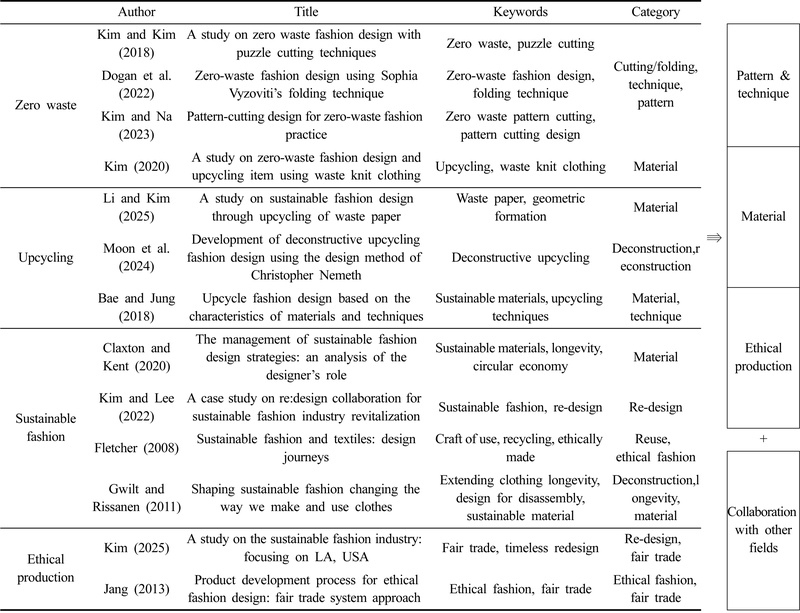
Previous studies on sustainable fashion have been conducted primarily in the areas of ‘zero waste,’ ‘up-cycling,’ ‘sustainable fashion,’ and ‘ethical production’ (Table 1).

Key keywords of sustainable fashion in previous studies
Regarding zero waste, Kim and Kim (2018) explored the puzzle-cutting technique as a construction method for zero-waste fashion, while Dogan et al. (2022) examined Sophia Vyzoviti’s folding technique. Kim and Na (2023) investigated pattern-cutting methods for zero waste and Kim (2020) analyzed zero-waste fashion design methods utilizing waste knit clothing. In the field of up-cycling, Li and Kim (2025) studied geometric formation methods using waste paper. Moon et al. (2024) analyzed upcycling fashion through Christopher Nemeth’s deconstructive approach, and Bae and Jung (2018) examined upcyclingfashion focusing on sustainable materials and upcycling techniques. Regarding sustainable fashion, Claxton and Kent (2020) addressed sustainable materials, longevity, and the circular economy. Kim and Lee (2022) explored sustainable fashion through re-design, and Fletcher (2008) discussed recycling and ethical production through the “fashion design journey.” Furthermore, Gwilt and Rissanen (2011) presented specific sustainable design strategies across the entire fashion lifecycle, such as extending clothing longevity, design for disassembly, and the use of sustainable materials. In relation to Ethical production, Kim (2025) analyzed strategies for establishing a sustainable fashion industry, suggesting fair trade, locality, timeless re-design, recycling, and reuse. Finally, Jang (2013) examined the process for ethical fashion design, placing a strong emphasis on fair trade.
As a result of the combination of these previous studies, the keywords of sustainable fashion design converged to ‘pattern & techniques’ aspects such as cutting/folding, construction/reconstruction, ‘material’ aspects based on the use/re-design of existing materials, and ‘ethical production’ (Table 1). Based on the keywords identified in previous research, Maria Cornejo’s design strategies were categorized into geometric zero-waste patterns, sustainable material use, ethical local production via fair trade, and various collaboration with other fields.
Furthermore, Maria Cornejo is highly regarded as a designer who has successfully led the luxury brand ‘Zero’ for 25 years, utilizing upcycling, sustainable materials, zero-waste practices, and ethical local production. Her contributions to sustainable fashion have garnered significant academic attention in both design and industrial contexts, yet domestic research on her work remains nonexistent to date. This lack of local scholarship underscores a clear necessity for an in-depth analysis of her long-term trajectory. Accordingly, this study distinguishes itself from previous research based on simple case enumerations by presenting an integrated and evolutionary strategy for the long-term success of sustainable fashion brands through the lens of Maria Cornejo.
Thus, the purpose of this research is to conduct an in-depth analysis of the sustainable design characteristics embedded within Maris Cornejo's luxury fashion brand, Zero. The study also aims to analyze and comprehensively understand the sustainable design strategies implemented by fashion brand Zero, assessing their impact on the fashion industry and the environment. Additionally, the research seeks to shed light on the brand's innovative approaches towards sustainable design, providing insights that could contribute to the broader discourse on sustainability within the luxury fashion area.
As for the research method, literature review and case studies were combined. A literature Review is conducted a comprehensive review of existing literature and journals on sustainable fashion, luxury brands, and specifically Maris Cornejo's Zero. This will form the foundation of understanding key concepts, frameworks, and prior research on sustainable design in fashion. A case study approaches focusing on Zero's design materials sourcing, pattern cutting, production ethics. This includes a detailed review, focusing on materials from Zero's collection and Maria Cornejo's interviews with the fashion media, materials from the two books she published, and what is recorded on the official website.
2. Maria Cornejo: A Sustainable Luxury Fashion Designer
2.1. Biography and Career Highlights
Maria Cornejo was born in Chile and moved to England as a political refugee with her family when she was a child. She started her fashion career after studying at Ravensbourne College of Design and Central Saint Martins in London (“Maria Cornejo”, n.d.). Her varied career spans London, Paris, Milan and Tokyo, where she was part of the ground-breaking design partnership John Richmond and Cornejo, and developed her own signature “Maria Cornejo” collection, and worked as a creative consultant for major retailers such as Joseph, Tehen and Jigsaw (“Zero+Maria Cornejo”, n.d.).
In 1996, Cornejo and her family moved to New York. She opened a fashion space in Mott street, New York, highly creative atelier and store known as ‘Zero+Maria Cornejo’ in 1998, and started making clothes with up-cycled materials with zero-waste (Fig. 1). From the beginning, Cornejo established an independent point of view and developed new ways of cutting fabrics based on the simple geometric shapes for zero-waste. This simplicity, ease and freedom in her designs have become her trade mark. In the fashion industry, her work is guided by the idea of creating wearable and sustainable luxury for women. It has been said of her work “In Maria Cornejo’s hands, minimalism is not a bland word, her clothes have a sleek sophistication and always a sense of surprise (“Zero+Maria Cornejo”, n.d.).”
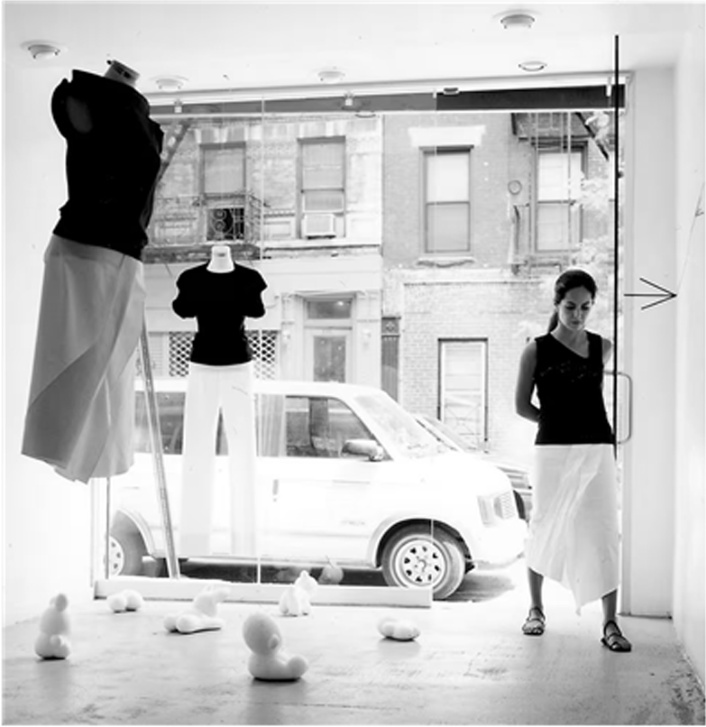
Maria Cornejo’s Atelier Zero 225 Mott Street, N. Y. Cornejo, 2017, p.185.
Throughout her career, Cornejo's designs are characterized by architectural silhouettes and a commitment to effortless sustainability. She has been a member of the CFDA since 2003 and is a original member of the CFDA’s Sustainability Committee. Maria Cornejo was honored as a winner of the Smithsonian Cooper Hewitt National Design Awards in 2006 (“Maria Cornejo”, n.d.). In 2010, Cornejo won the first CFDA Lexus Eco Fashion Challenge and in 2017 was awarded one of the top three prizes in the CFDA + Lexus Fashion Initiative. In 2018, Cornejo was honored with the Fashion Group International’s Sustainability Award at their Night of the Stars Gala in New York City. In 2019, she was appointed to the CFDA Board of Directors by the new Chairman, Tom Ford. Recently, she has earned Geoffrey Beene Lifetime Achievement Awards CFDA(Council of Fashion Designers of America) in 2023 (Garcia-Furtado, 2023).
Cornejo’s long-term commitment to local manufacturing and responsible design has spurred change in the American Fashion Industry. She also served as the 2018 Brand Ambassador to Premiere Vision New York, creating a special sustainable capsule collection to help draw attention to the areas of sustainability, innovation and local manufacturing in the industry. Cornejo also becomes a board member at Women.nyc, a program that is a part of the New York City Economic Development Corporation, created to help support, empower and connect women in the city (“Zero +Maria Cornejo”, n.d.). Cornejo moved her atelier to Bleecker street in Greenwich village, New York 2008, she continues to sustainable fashion design for 25 years.
2.2. Philosophy and Approach towards Sustainability
Maria Cornejo's collection is available at more than 70 stores worldwide, including Bergdorf Goodman, Nordstrom, Barneys Japan, Takashimaya and ByGeorge (“Zero+Maria Cornejo”, n.d.). According to her official web site, Maria Cornejo's design philosophy turns around a steadfast commitment to sustainability and ethical practices. Her brand's approach encompasses responsible sourcing, innovative sustainable materials, and a dedication to ethical production. Noteworthy initiatives include the use of eco-friendly fabrics and minimizing waste through meticulous pattern cutting (“Zero+Maria Cornejo”, n.d.).
Cornejo advocates for mindful consumption by designing clothes that are both timeless in design and sustainable in production, urging consumers to consider the environmental impact of their fashion choices. The garments are still founded on the original principles of taking the fundamental geometric shapes and transforming them into unexpectedly simple garments based on zero-waste cutting and angles using volume and circular shapes as a starting point since 1998 (“Zero+Maria Cornejo”, n.d.) (Fig. 2, 3). Garments are often draped and cut from one piece of fabric, use as few seams as possible to fit and flatter as many women as possible and utilize up-cycled fabrics and original prints (“Zero +Maria Cornejo”, n.d.).
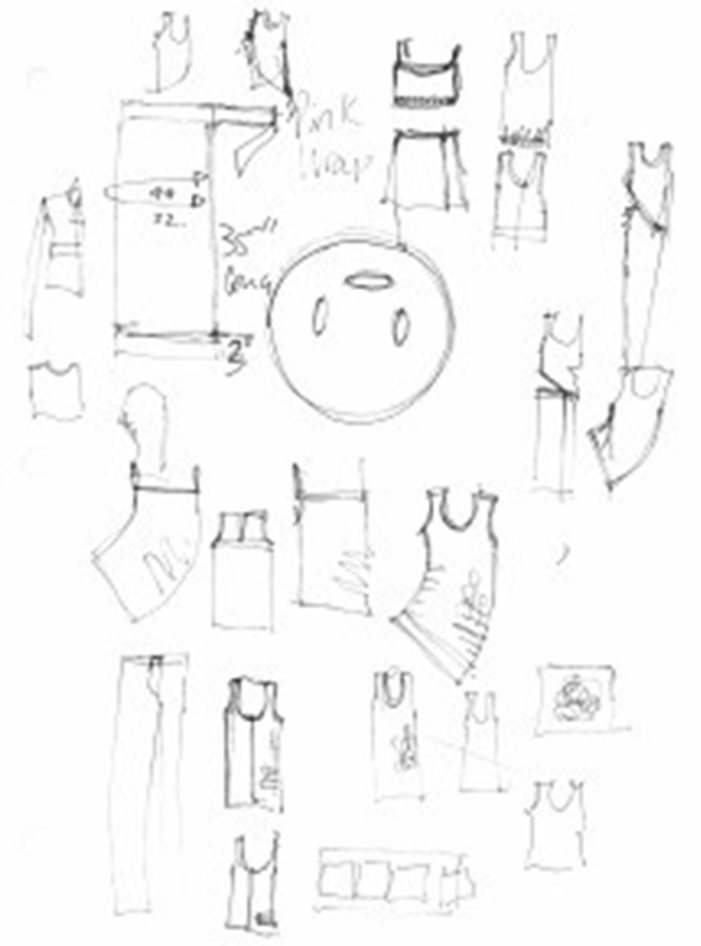
Design sketches by Maria Cornejo. Cornejo, 2017, p.83.
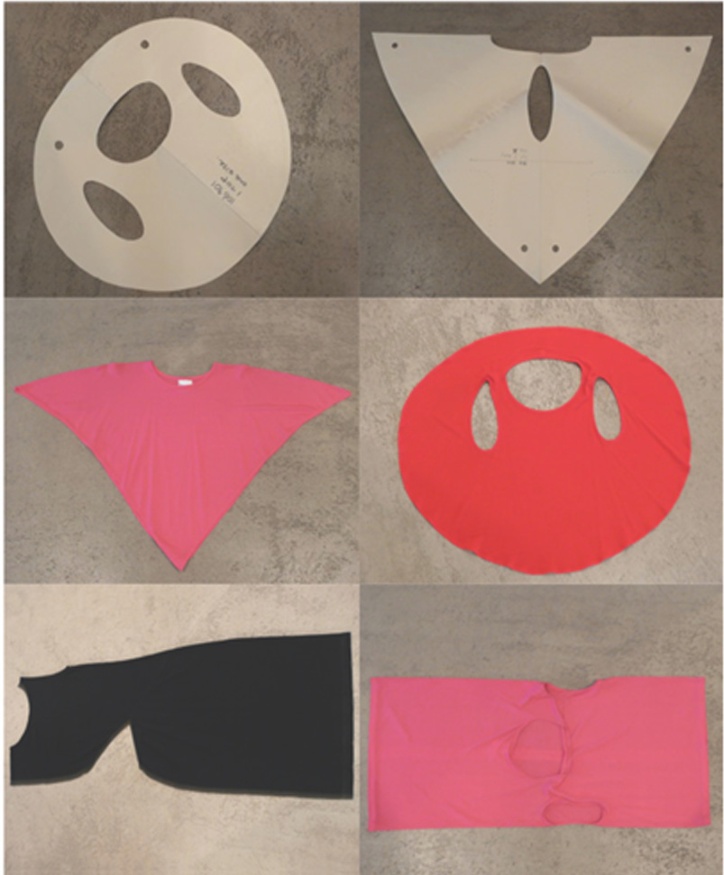
Circle top, triangle top, tube top and cut out triangle dress pattern, 1998. Cornejo, 2017, p.229.
Zero+Maria Cornejo as a purely retail concept when, prompted by a desire to re-connect with the core of her ideas about design, cutting and garment construction. Timelessness, ease, and a modern take on luxury are the essence of Zero+Maria Cornejo’s design philosophy. The collection has a loyal following and high praise from fashion insiders and clients such as Tilda Swinton, Christy Turlington Burns, Cindy Sherman and First Lady Michelle Obama (“Zero+Maria Cornejo”, n.d.).
In the interview with Marie Claire, she said “I don't follow trends, it's more of an instinct thing.... For me, my clothes are related to my mood. If I feel like I’m not wearing the right thing, I don't feel confident. I think it's in everybody's psyche. If you feel good about your clothes, you get excited. And I want women to feel good when they’re wearing my clothes—not just because they're beautiful, but because the process and every step involved in making them is incredibly thoughtful. You can be proud wearing them (O’Neill, 2017).” In this interview, she clearly shows her fashion philosophy that clothes don't just end up being beautifully made, but that everything should be made in a reliable and thoughtful state. In 2023, she published a book titled ‘Back to Zero’ (Cornejo & Bothwick, 2023) with Mark Bothwick, as well as 25 year anniversary. She also published a book titled ‘Zero 1997-2017+ (Cornejo, 2017)’ about her works from 1997 to 2017.
3. Design Analysis of Collections from 1997 to 2023
This chapter analyzes Maria Cornejo’s collections from 1997 to 2023, with a specific focus on the dimension of sustainability. The analysis is based on the 25-year design trajectory documented in the two aforementioned publications and her ‘Zero’ collection. Moving beyond a conventional biographical periodization, this study focuses on the evolutionary process in which the three key dimensions of sustainable fashion—pattern/technique, material, and social/collaboration—interact and develop. Rather than a simple chronological sequence, this framework reinterprets the timeline into the brand’s evolutionary developmental phases: individual experimentation → technical systematization → aesthetic perfection → ecosystem expansion. These stages are defined as the pioneering, experimental, developing, and golden periods, representing a progression from establishing a design identity and experimenting with pattern-based techniques to achieving aesthetic perfection through three-dimensional forms and expanding her brand’s scope through interdisciplinary collaborations (Table 2).
Analysis of Maria Cornejo’s design evolution based on technical, material, and social dimensions
3.1. Pioneering period: 1997-2004
This period marks the launch of Maria Cornejo’s brand and the establishment of her unique design identity, particularly in terms of pattern/technique and material. Introducing the ‘dartless and seamless’ design concept for the first time, she explored the possibilities of sustainable fashion through the upcycling of various materials. Among her early works in New York, she created the ‘big circle dress (1998)’, an upcycled design utilizing discarded car covers (Fig. 4), and experimented with the ‘tube dress’ and ‘circle/triangle tops’ made of matte jersey in the same year. These efforts represent a formal inquiry into sustainable fashion and demonstrate her strategic zero-waste design thinking (Fig. 5, 6). In 1999, she presented the ‘one-piece wraparound dress,’ an advanced form that simultaneously realized zero-waste and upcycling by using recycled K-Mart blankets (Fig. 7). As the 2000s began, her zero-waste patterns evolved further. The mohair ‘pod shrug’ and ‘back-tuck skirt (Fig. 8)’ were produced without any wasted fabric and utilized mohair sourced through fair trade with Peru. The off-shoulder linen dress (Fig. 9), a piece from the 2002 fashion show that was canceled due to the 9/11 attacks, showcases a zero-waste design that achieves a free-flowing silhouette by connecting small linen scraps without seams or darts. This aligns with Nicole Phelps’ observation in the preface of Cornejo’s book Zero 1997-2017: “She doesn’t rely on darts and seams to make clothes for women who don’t have perfect bodies (Cornejo, 2017).”
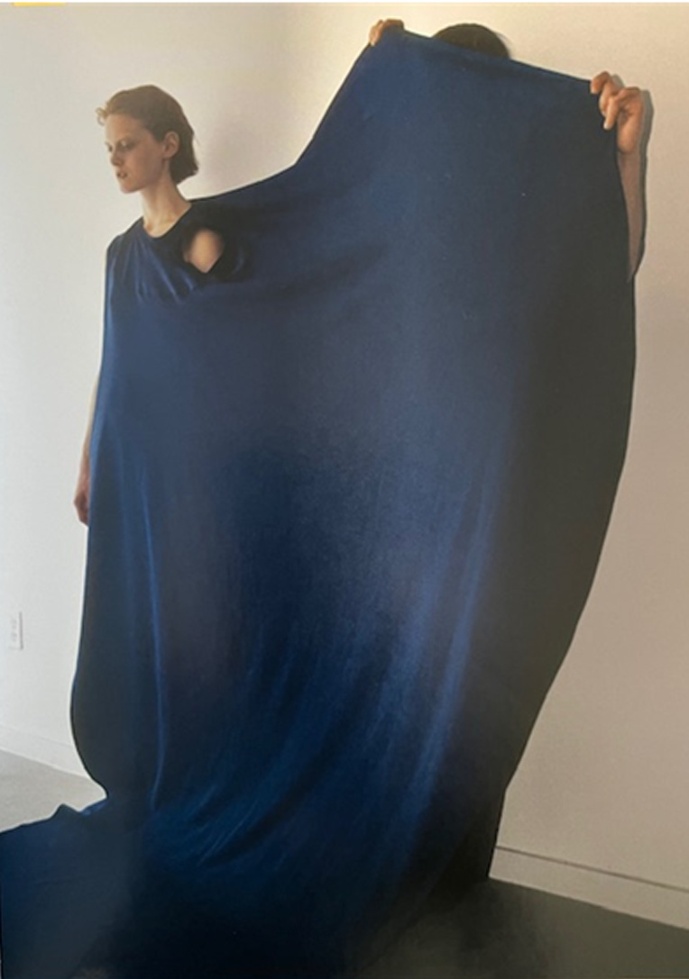
Big circle dress, 1998. Cornejo, 2017, p. 29.
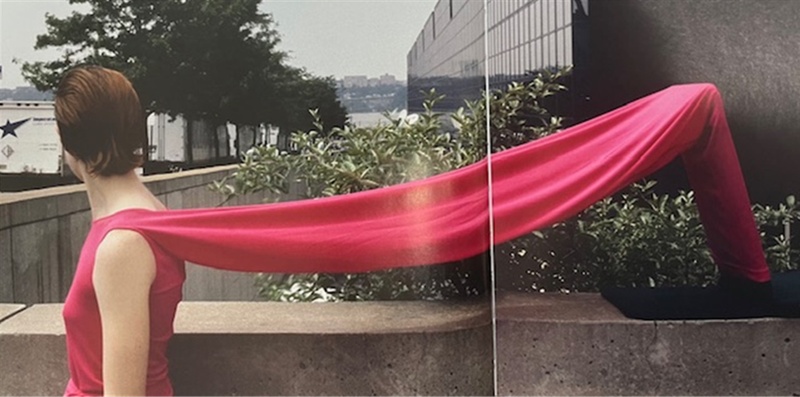
Tube dress in matte jersey, 1998. Cornejo, 2017, p. 20-21.
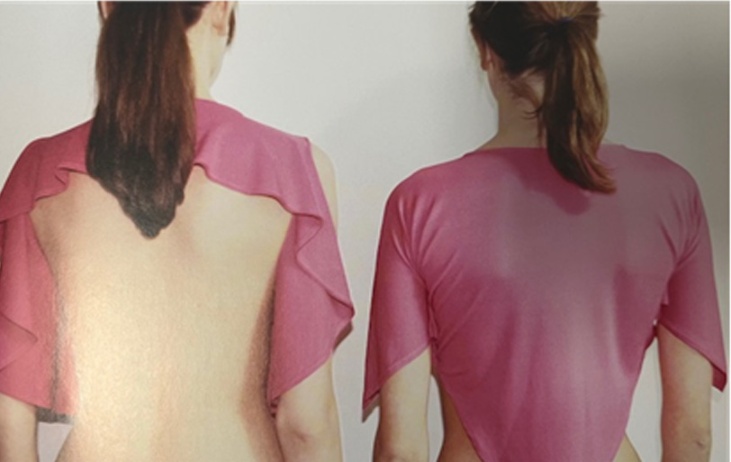
Left circle top, right triangle top, 1998. Cornejo, 2017, p. 39.
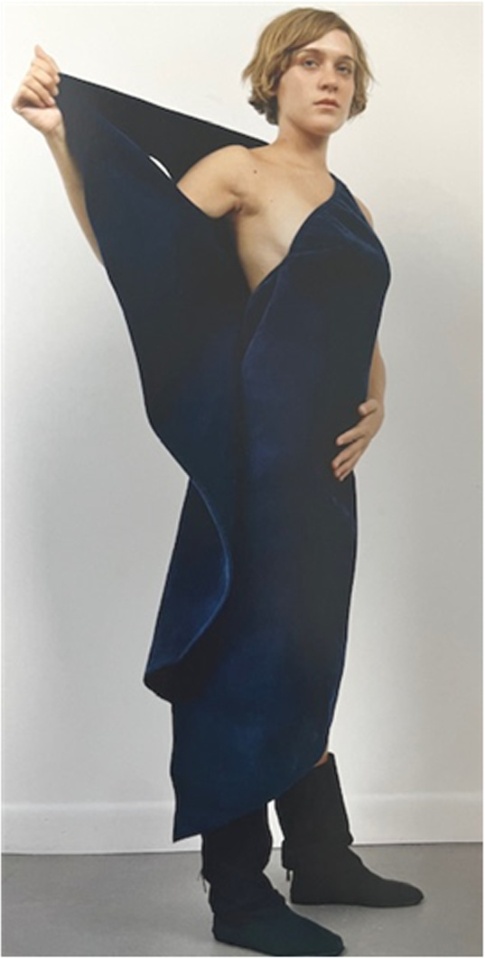
Chloe one wraparound dress, 1999. Cornejo, 2017, p. 43.
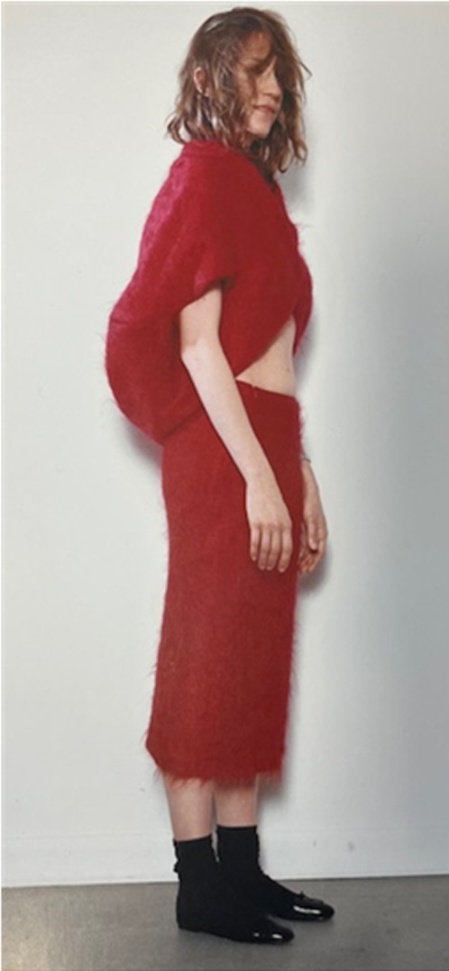
Mohair pod shrug and back tuck skirt, 2000. Cornejo, 2017, p. 58.
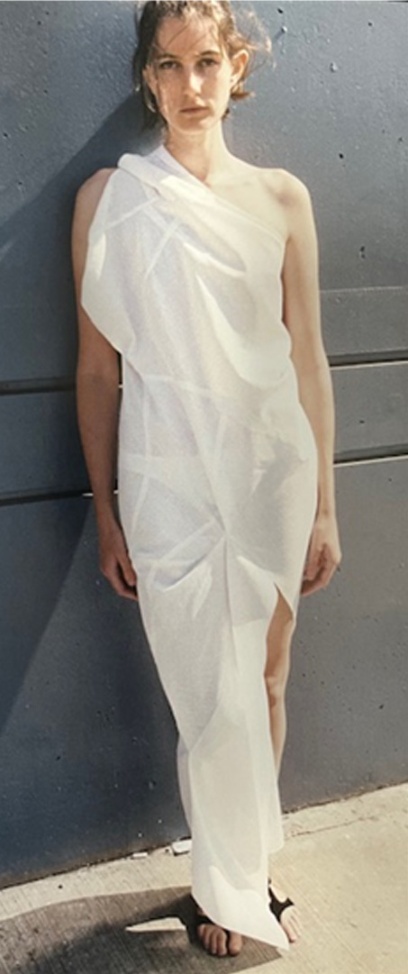
Off-shoulder linen dress, 2002. Cornejo, 2017, p. 69.
Maria Cornejo’s designs during this pioneering period can be interpreted as a formative experimental stage that converted resource constraints into a design logic. During this time, zero-waste and upcycling served as formal strategies to build a unique design language within the limitations of materials and production conditions; they also functioned as practical and formal product strategies. Furthermore, by experimenting with the upcycling of post-consumer waste and opening markets for fair trade, she sought to establish a sustainable system within the fashion industry from a material perspective. By establishing the principle of local production centered around her Mott Street atelier in New York, she laid the groundwork for the brand’s sustainability policy. In essence, sustainability during this period was not an extrinsic value but an endogenous result generated from within the design methodology, forming the foundational structure for the long-term strategies that would follow.
3.2. Experimental period: 2005-2009
This period can be characterized as an experimental phase, moving beyond simple seam elimination to conduct full-scale research on ‘geometric zero-waste patterns’. Cornejo’s design goes into a more experimental stage as it passes through the early pioneering period, and from 2005, the geometric zero-waste pattern has developed more precisely, and digital technology has been added to it to maintain a simple design line but experimental design has been attempted to create a variety of styles depending on the wearer's intention. The dress presented in Fig. 10 in 2008 is a dress made of a single square pattern, and the black and white square patterns can appear in various ways depending on the wearer's intention, and experimental attempts have been made to create a zero-waste pattern that can be worn regardless of fashion and body type. In addition, by using digitally printed fabrics taken with an iPhone camera at Tate Modern Gallery in 2009, the blurred image of a man is highlighted in the design by combining digital technology and fashion with sustainability (Fig. 11).
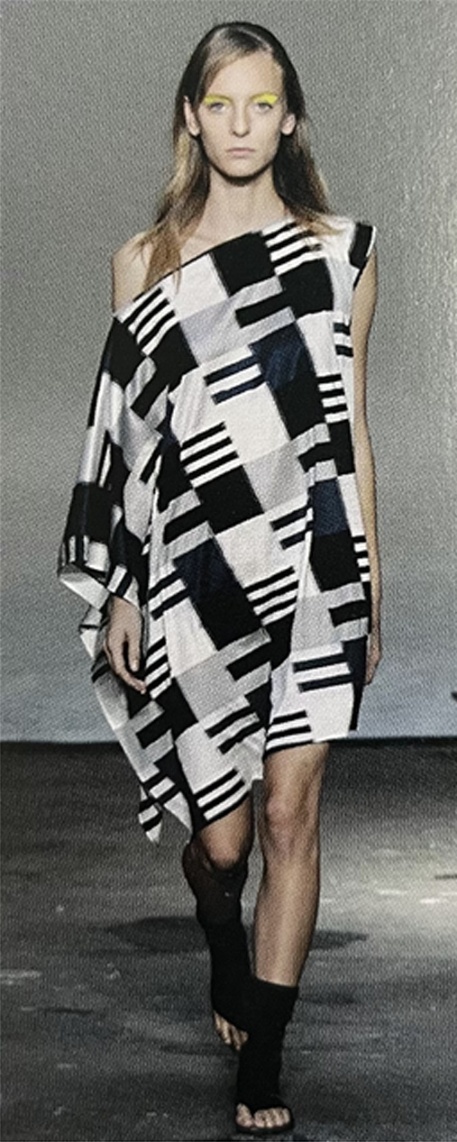
Square pattern dress, 2008. Cornejo, 2017, p. 146.
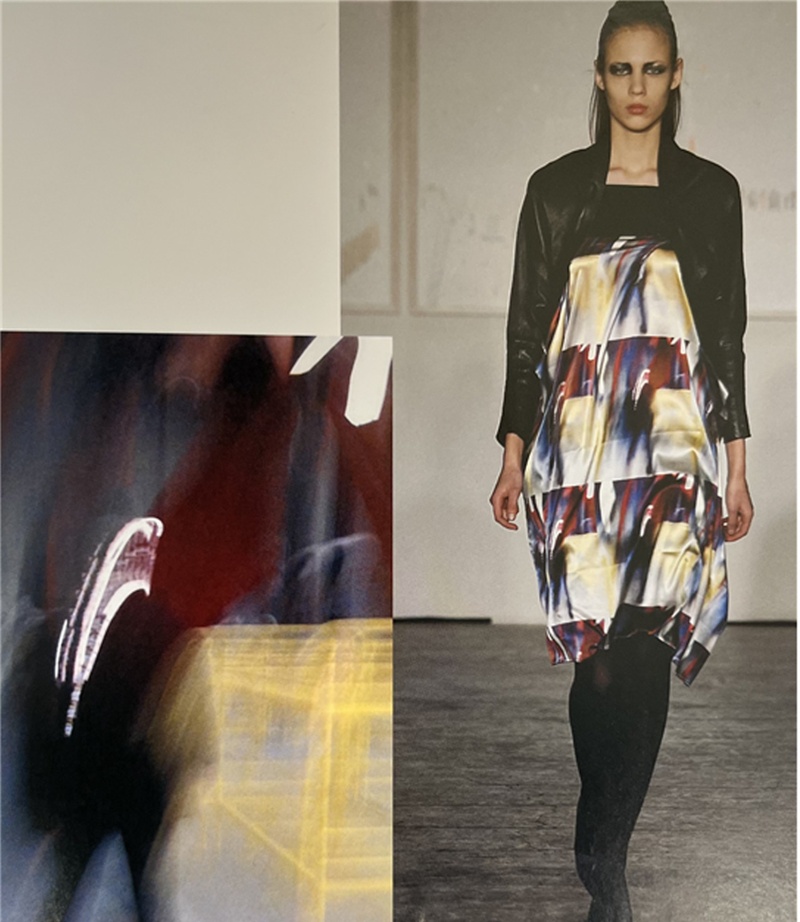
Digital print dress, 2009. Cornejo, 2017, p. 157.
The Experimental Stage can be defined as the phase in which the zero-waste concept transitioned from a characteristic of individual pieces into a systematizable design strategy. During this period, the brand’s formative aesthetics were technically established through designs that accommodated diverse body types and wearer intentions. Furthermore, the expressive domain was broadened by integrating digital printing technology into the material dimension.
3.3. Developing period: 2010-2016
While the previous period utilized flat geometric patterns, this period can be defined as an era of three-dimensional structural beauty, in which designs evolved to be more wearable and aesthetically refined through enhanced drape. In the development stage after 2010, her designs feature digitally printed patterns of nature and attempts of various drapes, especially advanced designs that can be transformed in various ways with a single square. The design presented in Fig. 12 shows the combination of zero-waste patterns and drapes using digitally printed fabric of waves taken with an iPhone, and the entire S/S collection in 2010 was designed with inspiration from various elements of nature (Cornejo, 2017). The 2012 design presented in Fig. 13 shows the process of gradually transforming a piece of cloth with a stripe pattern into clothing. There are many cases of using images taken with an iPhone for digital printing during this period, and if the existing zero-waste pattern was two-dimensional, a more three-dimensional form of zero-waste pattern appears from this period, resulting in a unique volume and drape. In particular, the colorful paint-stroke print 2016 S/S collection, which is dyed by the less water method on eco-friendly cotton fabrics imported from Italy, shown in Fig. 14, shows that while social responsibility and sustainable fashion in the fashion industry coexist, sustainable and colorful designs are possible. The Koya coat of the 2016 F/W collection presented in Fig. 15 also shows an example of a more three-dimensional development of a zero-waste pattern to form a sophisticated drape.
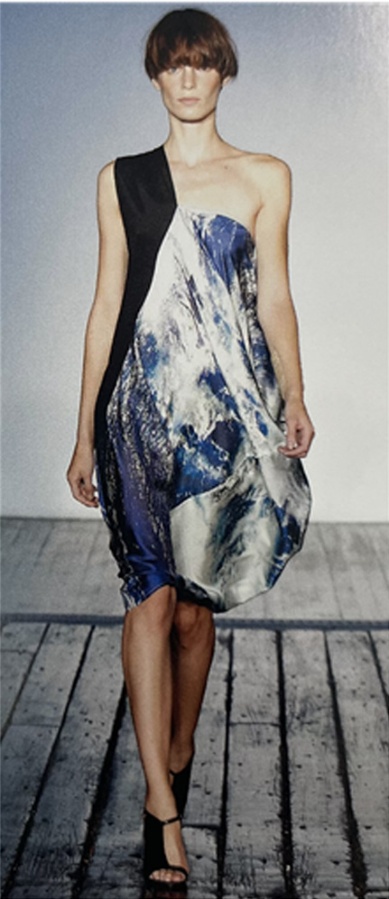
Digital print dress, 2010. Cornejo, 2017, p. 166.
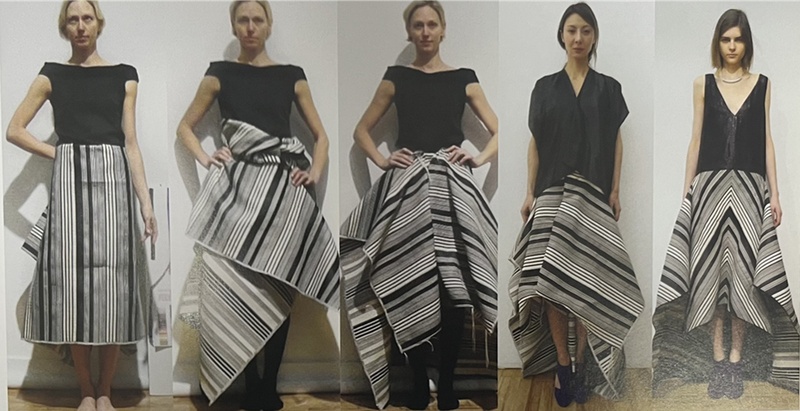
Progression from draped fabric to finished garment, 2011. Cornejo, 2017, p. 171.
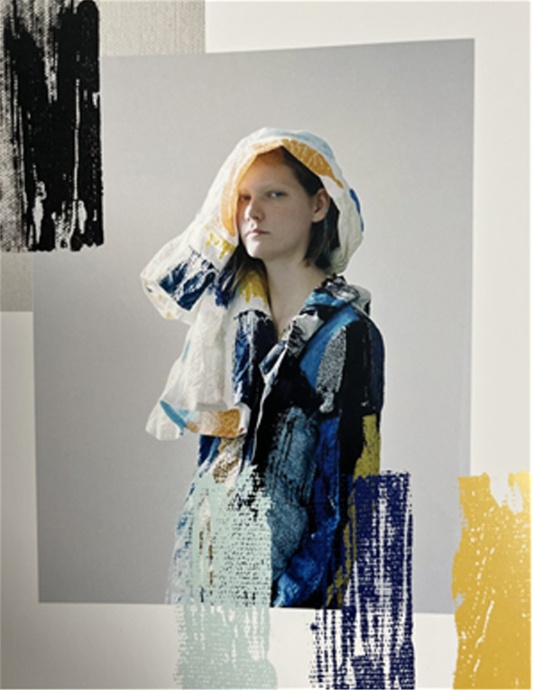
paint-stroke print on poplin in Italy, 2016. Cornejo, 2017, p. 254.
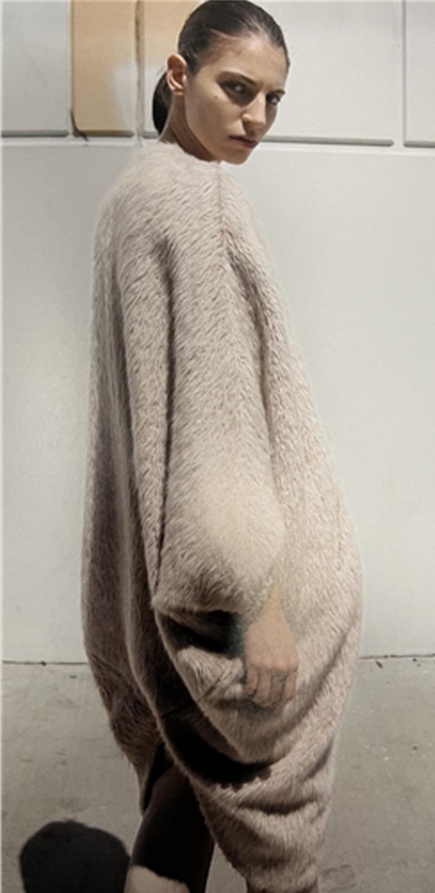
Koya coat, 2016. Cornejo, 2017, p. 271.
From this stage onward, zero-waste demonstrated three-dimensional compositions utilizing drapes and volumes evolved from flat geometric structures, confirming its role as a core brand identity strategy rather than a mere technical experiment. From an industrial perspective, by balancing practicality with aesthetics, it established a pivotal strategy for pursuing the brand's sustainable growth and scalability. Regarding materials, the application of nature-inspired imagery facilitated the development of a content-driven expressive strategy for sustainability. Notably, the adoption of eco-friendly cotton fabrics through "less-water" dyeing methods addressed the inherent limitations of conventional dyeing—often criticized for excessive water consumption—thereby offering a concrete methodology applicable to both production systems and the social responsibility of sustainable fashion brands.
3.4. Golden period: 2017-2023
The period from 2017 onwards is characterized by the expansion of the brand's boundaries beyond fashion design through collaboration with other industries. It marks a phase where the brand's philosophy on sustainability was elevated into a broader social message. The period of her heyday coincides with a time when sustainability began to draw attention from the public, and it is a time when many celebrities wear her clothes and are in the spotlight as a luxury sustainable designer brand in various media. Fig. 16 shows a more advanced form of sustainable design using zero-waste and eco-draped fabric. In particular, the Re:style project, which collaborated with Hyundai Motors in 2019, is the peak of her sustainable fashion, attracting attention from all over the world. The design shown in Fig. 17 is designed for this project and is an upcycling of the leather seat covers of abandoned cars, which are connected to the initial Pioneering period with the design using abandoned car covers.
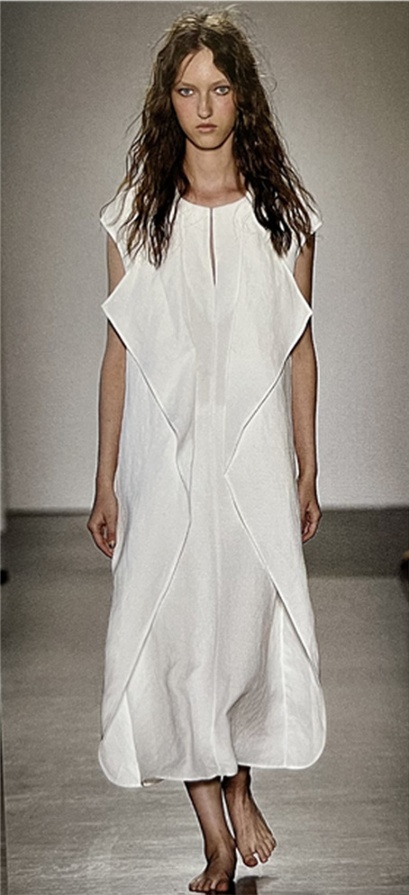
Dress made of eco drape fabric, 2017. Cornejo, 2017, p. 281.
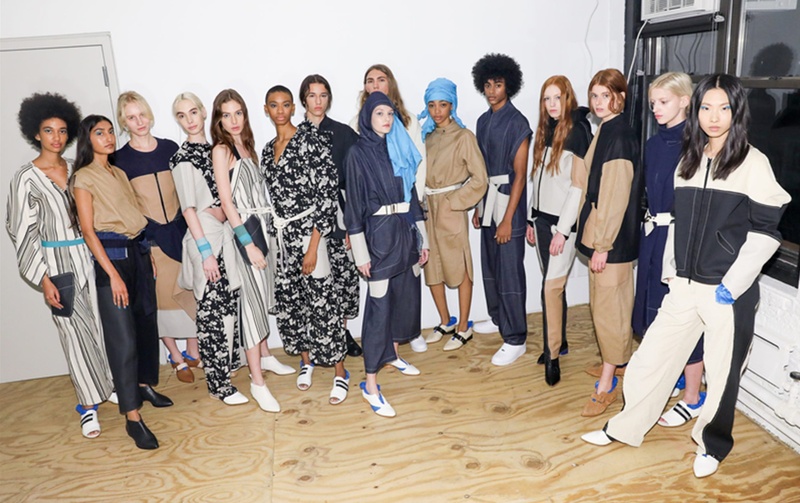
Collaboration with Maria Cornejo and Hyundai Transys, 2019 Re:style Collection. www.forbes.com
The Golden Age marks the period when Maria Cornejo’s sustainability strategy expanded its scope into the social and industrial realms, transcending the level of individual design to practice sustainability in a broader context. In particular, collaborations with other industries and partnerships with resale platforms redefined sustainability as a circular system that extends beyond the production phase, presenting a long-term viability model for sustainable luxury brands. Consequently, during this period, zero-waste and upcycling were no longer confined to formative techniques; instead, they functioned as the brand’s core strategic language, encompassing collaboration, distribution, and resale. Specifically, the circular strategic model established through cross-industry collaboration expanded the scope of sustainability to include post-production systems, and it can be evaluated as having proposed an evolved operational model for sustainable luxury brands.
4. Sustainability in Maria Cornejo's Design
This chapter deals with sustainable design characteristics based on the design analysis covered in the previous chapter, official website contents, and various interview data with her fashion media. And this classification is based on the analysis of previous studies on sustainable fashion (Table 1).
4.1. Using Sustainable Materials
Maria Cornejo aims to design and manufacture in the most purposeful and beautiful way and to create a product that is uncompromising in its respect for quality and value. Dedicated to fostering a company ethos that is just as committed to its social impact as its environmental, she uses ecological and sustainable fabrics wherever possible (“Zero+Maria Cornejo”, n.d.). One significant challenge is sourcing sustainable materials at scale while maintaining quality and affordability. Designers also struggle with limited availability and accessibility of sustainable or organic fabrics and ethical manufacturing options.
Her commitment to sustainability is evident in her conscientious choice of materials and sourcing. Embracing fabrics like organic cotton, Tencel, and up-cycled textiles, Cornejo ensures her collections align with environmentally responsible standards. Her emphasis on using fabrics produced with minimal environmental impact reflects her dedication to reducing the ecological footprint of her designs. Cornejo further prioritizes sourcing practices by partnering with suppliers who adhere to ethical and sustainable standards. This includes working with certified suppliers who employ fair labor practices and prioritize environmental stewardship in their manufacturing processes (“Zero+Maria Cornejo”, n.d.).
Moreover, implementing sustainable practices within the traditional fashion system poses logistical problems, often requiring a reevaluation of established production models and supply chains. In the interview with Carolina O’Neill in Marie Clare, she said “We use fabric that's responsibly sourced from forests in Sweden from trees that are reforested so then they avoid deforestation. We use a recycled cashmere as well—all the ends that would usually get thrown away when the yarn has been spent gets spun into new yarn with new life and another fiber to make it. We also use vegetable dyed leathers on some of our shoes. We're trying to do whatever we can (O’Neill, 2017).”
Having served as a member of the Council of Fashion Designers of America (CFDA) Sustainability Committee since 2003, she was recognized for her pioneering role in sustainable production and responsible industry change, receiving the Fashion Design Award at the 2006 Cooper Hewitt National Design Awards and the Sustainability Award at the 2018 Fashion Group International (FGI) Night of the Stars Gala (Nicole, 2018).
4.2. Ethical & Local Production
The fashion market as a whole, including both consumers and investors, has begun to place significant value on environmental protection and respect for labor rights (Amed et al., 2022), and this shift is centered around sustainable fashion. The brand Maria Cornejo also emphasizes ethical production processes based on humanistic practices throughout the entire manufacturing stage. She said “We produce 85% locally, we reuse 70% leftover stock” (Friedman, 2023). The brand places a strong emphasis on local production, supporting skilled artisans and small-scale manufacturers within the community.
85% of the collection is made in New York City’s Garment District with the exception of a few categories including shoes and knitwear which are made by small, independently owned factories in Italy, Bolivia, Peru and China (“Zero+Maria Cornejo”, n.d.) (Fig. 18, 19). She works with a vertical women's factory there and in Peru. All of these indigenous women are knitting there with their children, to help support them. They make the yarn and also do the knitting, so it's about keeping things local whenever possible (O’Neill, 2017). She is also working with a company in Italy that prints with less water, which just means the dyes get sprayed on with less water (O’Neill, 2017).
Symbol of New York based production. zeromariacornejo.com
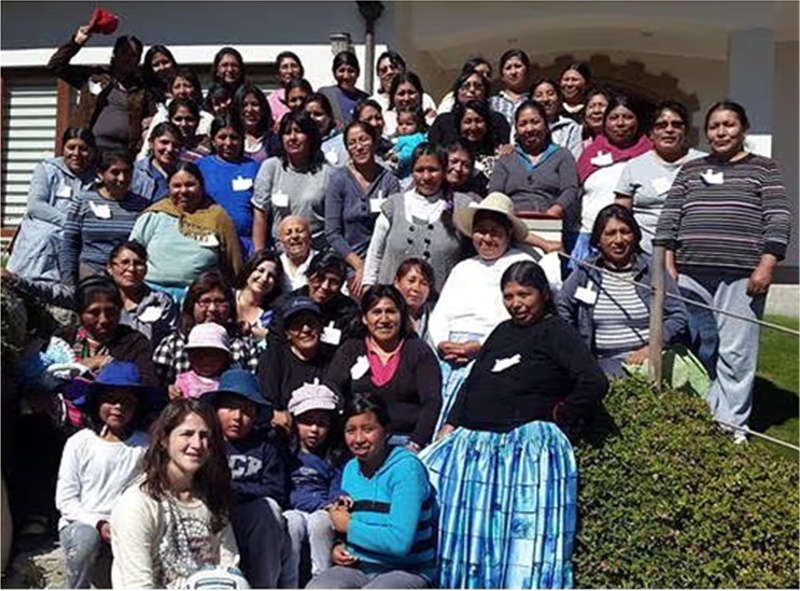
Overseas partners of Zero+Maria Cornejo. zeromariacornejo.com
These production policies contribute to ethical production as well as other reduction issues by saving the local by paying a fair price to small suppliers, especially by providing jobs to underprivileged women. The discovery and use of a wide range of materials, such as the use of sustainable materials, upcycling materials, water-reducing dyeing techniques, and the use of vegan leather, seems to be an area to pay attention to from the perspective of sustainable fashion design.
As a company owned and run by women, her design team continuously look to develop special collaborations with women artisans around the world. In the interview with Marie Claire, she said “People aren't buying blindly anymore, they want transparency. They want to know informed about where their clothes were made (O’Neill, 2017).” Her brand Zero was founded on the idea that she wanted to produce her clothing locally and know exactly who made her garments. Minimizing logistics through regional production and revitalizing the local economy are important tasks that the fashion industry should keep in mind in the future.
4.3. Geometric Zero-waste Cutting & Innovative Design Approaches
Cornejo's innovative design approaches are deeply interlaced with sustainability. Beyond creating aesthetically beautiful garments, she focuses on designing versatile and timeless pieces that transcend seasonal trends. Her designs prioritize longevity, encouraging consumers to cherish and rewear their garments over time, thereby mitigating the cycle of fast fashion (Mercer, 2023). Moreover, Cornejo incorporates modularity and multifunctionality into her designs, allowing pieces to be styled in diverse ways, extending their lifespan and reducing the need for excessive consumption (Aurrecoechea, 2021). Additionally, embracing the zero-waste, Cornejo implements innovative pattern cutting methods to minimize fabric waste, utilizing every inch of material to create her designs. In the interview with Marie Claire, she said “I began with four geometric shapes—circles, triangles, squares, and rectangles—and thought about what those shapes can do on the body. The idea was to have something wearable that fit with my reality, which was being a mom with two young kids and not always wanting to wear jeans (O’Neill, 2017).”
The future of sustainable luxury fashion is poised for continued innovation and transformation, spurred by emerging trends and innovative design practices (Salonga, 2020). Cornejo’s design practices not only the use of sustainable materials and regional production, but also zero-waste cutting and slow fashion that can be worn regardless of women's body shape and age. She also said “Creating clothes that are timeless, that don't have a season, that to me is always the goal. To make things that are really well designed so you can keep them forever and pass them on (Zero+Maria Cornejo”, n.d.).” In Fig. 20, 21 you can see dresses with triangular pattern, and the clothes are designed to be worn regardless of the woman's body shape, age and season, which is a long-lasting garment and slow fashion.
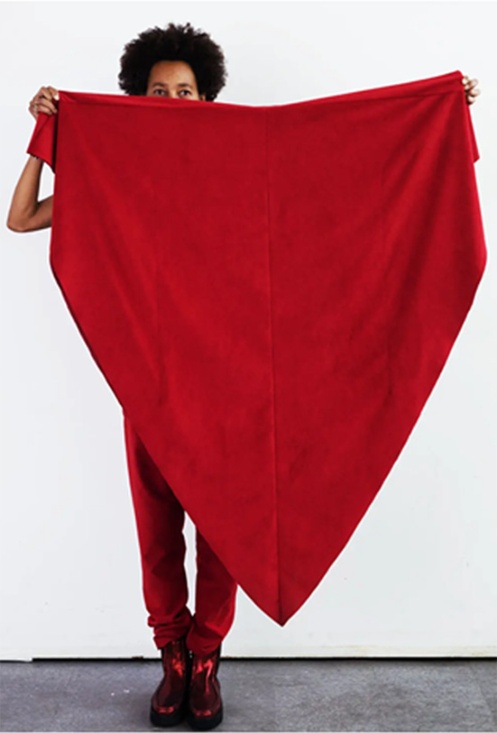
Triangular dress, Maria Cornejo. www.nytimes.com
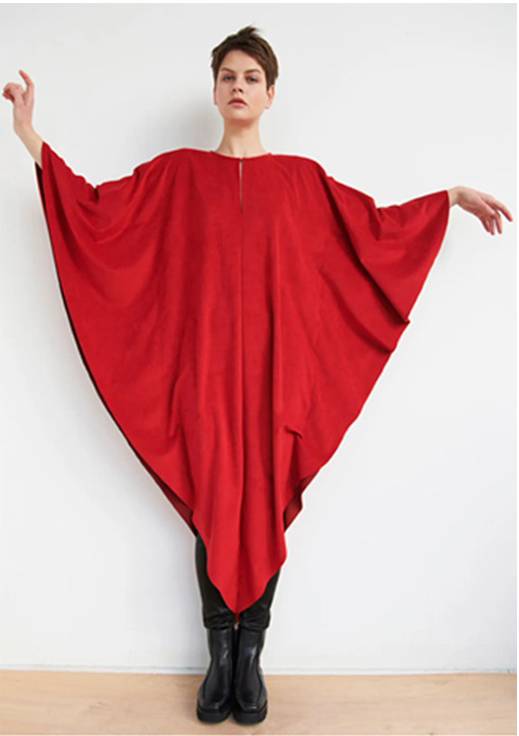
Triangular dress wearing status, 2023. www.wwd.com
4.4. Collaboration with Other Fields
Maria Cornejo's collaborations and innovative approaches have catalyzed a broader connection, emphasizing that luxury and sustainability can coexist harmoniously. Cornejo’s collection with Hyundai motors in 2019 was crafted from materials, sourced from used cars (“Re:Style with Maria Cornejo”, n.d.). Hyundai motors hosted their New York Fashion Week event Re:Style in collaboration with Zero+Maria Cornejo during which they debut their capsule collection crafted from up-cycled Hyundai Motors car seat leather (Fig. 22).
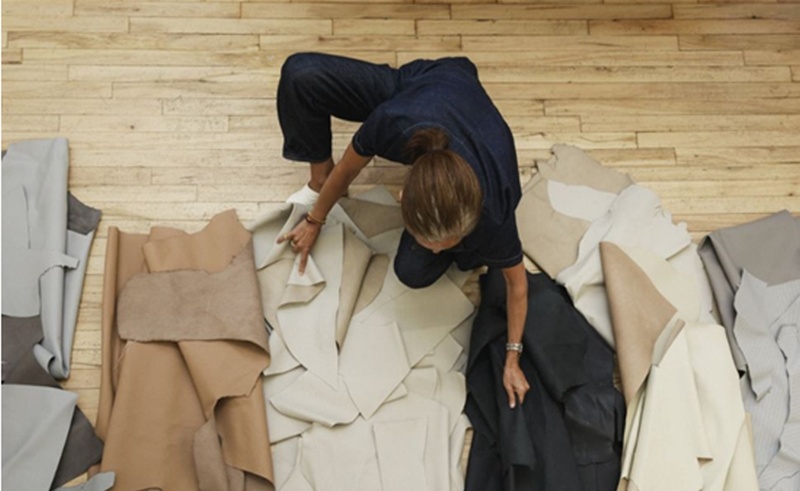
Up-cycled materials and Maria Cornejo in 2019 Re:Style Collection by Hyundai motors. www.hyundai.com
The 15-piece collection was designed by Maria Cornejo. The materials used in the collection utilized up-cycled car seat leather, as well as up-cycled Zero + Maria Cornejo leftover fabrics, including a 100% organic cotton Certified Gold Dylan denim (Fig. 23). By collaborating in this way, she could help play her part in boosting the voice of sustainability, something she is keen to continue with on the launch of IONIQ (“Re:Style with Maria Cornejo”, n.d.).
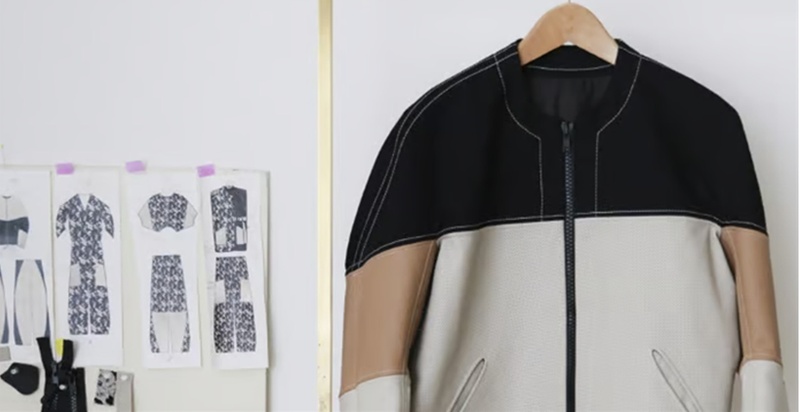
Upcycled materials and design from the 2019 Re:Style Collection. www.hyundai.com
Fig. 24 is a Maria Cornejo garment being sold on ‘The RealReal’, a luxury resale platform. This case demonstrates her commitment to retaining responsibility beyond the initial sale and into the post-consumer stage through resale. It can be viewed as a practical action to implement sustainability by extending the product's lifespan, thereby reducing apparel waste, a chronic issue in the fashion industry, and promoting resource circularity. The Sustainability Calculator on ‘The RealReal’ sales page records the amount of water and carbon saved by purchasing this garment. Furthermore, it includes a message designed to raise consumer awareness regarding sustainability ‘By purchasing this item, you’re contributing to a more sustainable fashion future (Fig. 25)’.
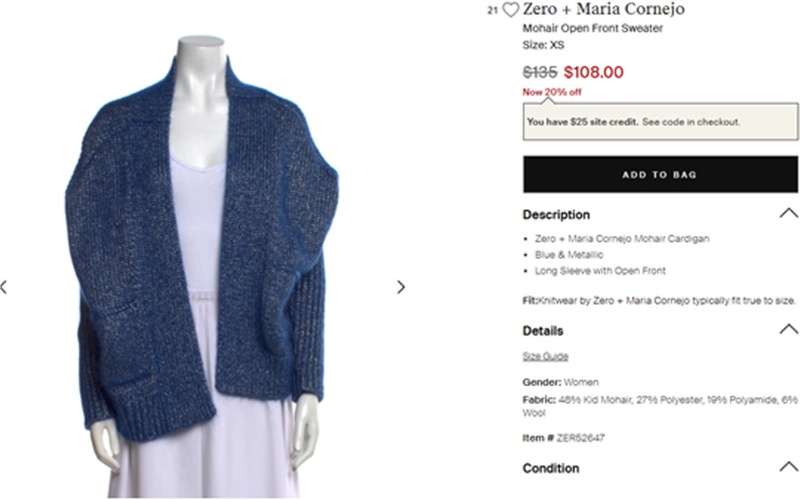
Clothing by Zero + Maria Cornejo sold on the resale platform The RealReal. www.therealreal.com
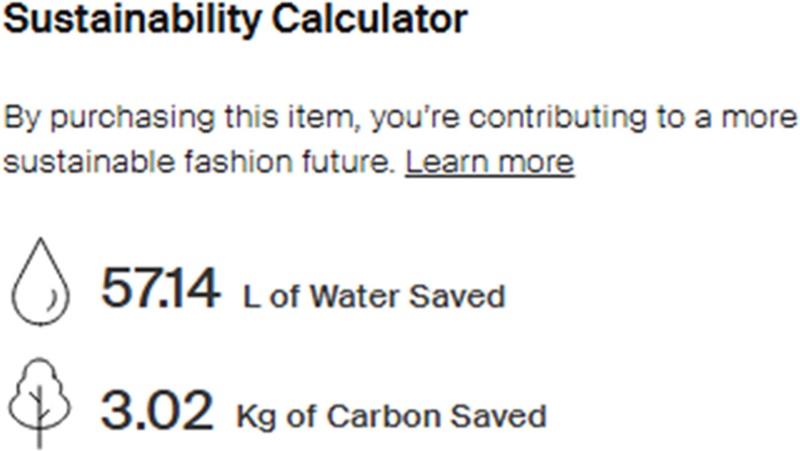
Sustainability calculator on The RealReal’s product page. www.therealreal.com
Cornejo's brand Zero actively supports and contributes to initiatives focused on sustainable material sourcing, ethical manufacturing, and environmental conservation in fashion. Those partnerships extend beyond mere endorsements, often involving collaborative projects, initiatives, or financial support, reinforcing the brand's dedication to sustainability. Those collaborations serve as powerful platforms to reach broader audiences, fostering awareness and advocacy for sustainable fashion practices (Roshitsh, 2019). The influence of Maria Cornejo’s sustainable design extends beyond sales figures, shaping consumer attitudes towards responsible consumption.
Table 3 synthesizes the analysis results of this study and presents an integrated and evolutionary strategic model of Maria Cornejo’s sustainable design practices, illustrating the relationships between strategic elements and their long-term progression. The findings indicate that Cornejo’s design system is built upon the ethical foundation of local production, with the unique design logic of geometric zero-waste forming the central axis. This structure is further supported and amplified by sustainable materials and cross-industry collaborations. This demonstrates that Cornejo’s sustainability is not a mere collection of fragmentary techniques but is conceptualized as a long-term brand strategy that has evolved over time.
Integrative and evolutionary strategy model of Maria Cornejo’s sustainable design
The innovative design based on geometric zero-waste, which lies at the heart of this framework, functions as the structural foundation of her sustainability strategy throughout all periods. Examining the strategic evolution shown in the table, zero-waste design originated in the Pioneering Stage as a formative logic to overcome material constraints. It then evolved into systematic pattern-based experimentation during the experimental stage. In the developmental stage, it expanded from two-dimensional structures to three-dimensional wearability, eventually becoming established as the brand’s core identity in the Maturity Stage. This progression shows that zero-waste does not remain a simple technical method but operates as a high-level design logic that governs aesthetic and functional decision-making.
This design logic is physically manifested through material strategies, where the use of sustainable materials functions as an implementation mechanism to realize the design logic rather than being a mere environmental choice. In terms of materials, the study highlights a transition from the experimental use of upcycled materials to the introduction of mixed materials using digital printing, the application of certified eco-friendly materials, and finally, the systematization of material strategies. This implies that in Cornejo’s design, materials are not symbolic eco-friendly markers but active means of execution that translate core design logic into actual products.
Ethical and local production serves as the contextual condition for maintaining the brand’s sustainability over the long term. The maintenance of small-scale, atelier-based production and local manufacturing processes in New York formed the basis for the brand’s consistent ethical and environmental responsibility. As this expanded into a stage of enhanced transparency and responsible production, ethical production transitioned from a simple moral practice to a structural condition that enables sustainable brand operation.
Finally, collaboration with other fields is presented as a strategic expansion of scope, extending sustainability beyond the realm of fashion. Starting with initial collaborations in technology and materials and evolving into strategic partnerships with the automotive industry and resale platforms, this process demonstrates that Cornejo’s sustainability strategy is crossing the boundaries of fashion design to foster the dissemination of sustainable values and the construction of a circular ecosystem across industries. Consequently, the structural model presented in this study provides significant implications as a multi-layered strategic guideline for future sustainable fashion brands to follow.
5. Conclusion
In the realm of sustainable luxury fashion, Maria Cornejo's unwavering commitment to sustainability has redefined the narrative of luxury fashion, inspiring a paradigm shift towards ethical practices and environmental responsibility. As a result of the study, Coenejo's design was analyzed by dividing it into four stages: pioneering period (1997-2004), experimental period (2005-2009), developing period (2006-2017), and gold period (2018-2023), and the results are as follows.
In the pioneering period, zero-waist and upcycling were implemented at the same time, and K-mart blankets and used car covers were up-cycled in a zero-waste pattern. Next, in the experimental period, the geometric zero-waste pattern is developed more elaborately, and digital technology is added to it, and experimental design is attempted so that various styles can be designed according to the intention of the wearer. In the developing period since 2010, as her sustainable design enters the development stage, patterns that digitally printed nature and attempts of various drapes appear, and in particular, advanced designs that can be transformed in various ways with a single geometric pattern appear. Finally, Golden period, which began in 2017, is a time when sustainability is attracting attention from the public and is in the spotlight as a luxury sustainable designer brand in various media. In particular, the Re:style project, which collaborated with Hyundai Motors in 2019, was the peak of her sustainable fashion with the world's attention for its upcycling leather seats of used cars and leftover fabrics from Zero.
Through this case analysis, the following four sustainable design characteristics were derived. Firstly, her emphasis on using sustainable fabrics produced with minimal environmental impact reflects her dedication to reducing the ecological footprint of her designs. Secondly, Cornejo further prioritizes sourcing practices by partnering with suppliers who adhere to ethical and sustainable standards. 85% of the collection is made in New York City with the exception of a few categories including shoes and knitwear which are made by small, independently women owned factories in Italy, Bolivia, Peru and China. She also works with a vertical women's factory to help support them. She is also working with a company in Italy that prints and dyeing with less water. Third, the zero-waste geometric pattern, Cornejo implements innovative pattern cutting methods to minimize fabric waste, utilizing every inch of material to create her designs. Finally, Cornejo's collaborations and innovative approaches have a broader connection, emphasizing that luxury and sustainability can coexist harmoniously. Cornejo’s collection with Hyundai motors in 2019 was crafted from leather materials sourced from used car seats and leftover fabrics from Zero.
Through the design analysis, official data, and media interviews, it is evident that Cornejo has established a profound legacy in the fashion industry by integrating sustainable sourcing, ethical local production, and innovative geometric cutting into her collections for over 25 years. Her collaborations, partnerships, and advocacy efforts have amplified the conversation around responsible fashion, inspiring designers and brands to embrace a more conscious approach to luxury fashion.
The trajectory of sustainable luxury fashion is at a pivotal juncture, shaped by Maria Cornejo's pioneering efforts and the collective industry shift towards sustainability. As the industry evolves, the fusion of luxury and sustainability becomes increasingly intertwined, paving the way for innovative solutions, technological advancements, and a redefined notion of luxury. Sustainable luxury fashion embodies not just elegance and opulence but also ethical responsibility, catering to the discerning consumers of future. It is considered to be significant in research as a good model of future fashion design to respond to future environmental changes and we look forward to changing future designs to get rid of the stigma of fashion companies that cause a lot of environmental pollution in the world.
In conclusion, this research holds significant academic value by systematizing the chronological development of sustainable luxury fashion, a perspective often overlooked in previous studies. However, as this study focuses on the single case of a specific designer, there is a limitation in universally generalizing the derived strategic model to all luxury brands. Nevertheless, the integrated analytical framework presented in this study is expected to contribute to the fashion industry shedding its stigma as a major environmental polluter and evolving into a future-oriented industry where artistry and responsibility coexist, as exemplified by Maria Cornejo.
References
- Amed, I., Balchandani, A., Berg, A., Hedrich, S., Jensen, J. E., & Rölkens, F. (2022, November 29). The State of Fashion 2021: In search of promise in perilous times. McKinsey & Company. Retrieved December 11, 2023, from https://www.mckinsey.com/industries/retail/our-insights/state-of-fashion-archive#section-header-2021
- Aurrecoechea, M. (2021, October 9). Maria Cornejo Slow Fashion & Sustainability Talks at Google [Video file]. YouTube. Retrieved December 18, 2023, from https://www.youtube.com/watch?v=H5TL_oGrUtM
- Bae, S. J., & Jung, K. H. (2018). Up-cycling fashion design for sustainable fashion design. Gwangju: Chonnam National University Press.
-
Claxton, S., & Kent, A. (2020). The management of sustainable fashion design strategies: An analysis of the designer’s role. Journal of Cleaner Production, 268, 122112.
[https://doi.org/10.1016/j.jclepro.2020.122112]

- Cornejo, M. (2017). Zero 1997-2017+. New York: Rizzoli.
- Cornejo, M., & Bothwick, M. (2023). Back to Zero. New York: Dashwood Books.
-
Dogan, O., Seo, M. H., & Lee, Y. H. (2022). Zero-waste fashion design using Sophia Vyzoviti’s folding technique. The Research Journal of the Costume Culture, 30(4), 513-528.
[https://doi.org/10.29049/rjcc.2022.30.4.513]
- Fletcher, K. (2008). Sustainable fashion and textiles: Design journeys. London: Earthscan.
- Friedman, V. (2023, November 26). The Survivor; For 25 years, Maria Cornejo has been designing things her way. But independence has a cost. The New York Times. Retrieved December 7, 2023, from https://www.nytimes.com/2023/11/26/style/maria-cornejo-zero.html
- Garcia-Furtado, L. (2023, November 2). On the podcast: Maria Cornejo and Vera Wang get top honors at the CFDA fashion award. Vogue. Retrieved December 7, 2023, from https://www.vogue.com/article/on-the-podcast-maria-cornejo-vera-wang-cfda-fashion-awards
-
Gwilt, A., & Rissanen, T. (Ed.). (2011). Shaping sustainable fashion changing the way we make and use clothes. London: Routledge.
[https://doi.org/10.4324/9780203126172]
-
Jang, N. K. (2013). Product development process for ethical fashion design: Fair trade system approach. Journal of the Korean Society of Costume, 63(1), 16-26.
[https://doi.org/10.7233/jksc.2013.63.1.016]
-
Kim, G. H. (2020). A study on zero-waste fashion design and upcycling item using waste knit clothing. Fashion and Knit, 18(3), 94-102.
[https://doi.org/10.35226/kskd.2020.18.3.94]
-
Kim, H., & Na, H. (2023). Pattern-cutting design for zero-waste fashion practice. The Research Journal of the Costume Culture, 31(1), 18-33.
[https://doi.org/10.29049/rjcc.2023.31.1.18]
-
Kim, J. H., & Kim, H. Y. (2018). A study on zero waste fashion design with puzzle cutting techniques. Journal of The Korean Society of Fashion Design., 18(1), 37-55.
[https://doi.org/10.18652/2018.18.1.3]
-
Kim, M., & Lee, K. (2022). A case study on re:design collaboration for sustainable fashion industry revitalization. Journal of Fashion Business, 26(4), 136-153.
[https://doi.org/10.12940/JFB.2022.26.4.136]
-
Kim, Y.-K. (2025). A study on the sustainable fashion industry: Focusing on LA, USA. Contents and Industry, 7(1), 213-220.
[https://doi.org/10.55387/JCI.2025.07.01.31]
- Lee, J. (2019, September 10). Korean motor company, Hyundai, debuts a capsule collection during New York Fashion Week, Forbes. Retrieved December 6, 2025, from https://www.forbes.com/sites/jenniferlee/2019/09/10/korean-motor-company-hyundai-debuts-a-capsule-collection-during-new-york-fashion-week
-
Li, L., & Kim, S. (2025). A study on sustainable fashion design through upcycling of waste paper. Journal of The Korean Society of Fashion Design, 25(3), 81-97.
[https://doi.org/10.18652/2025.25.3.5]
- Manufacturing. (n.d.). Zeromariacornejo. Retrieved December 6, 2025, from https://zeromariacornejo.com/pages/manufacturing
- Maria Cornejo. (n.d.). In Wikipedia. Retrieved December 4, 2023, from https://en.wikipedia.org/wiki/Maria_Cornejo
- Mercer, E. (2023, November 2). Fashion designer Maria Cornejo talks 25 years in business. WWD. Retrieved December 5, 2023, from https://wwd.com/fashion-news/fashion-features/fashion-designer-maria-cornejo-25-years-michelle-obama-cfda-1235912359
-
Moon, H. J., Baek, J. H., & Bae, S. J. (2024). Development of deconstructive upcycling fashion design using the design method of Christopher Nemeth. Journal of Fashion Business, 28(3), 1-15.
[https://doi.org/10.12940/jfb.2024.28.3.1]
- Nicole, P. (2018, October 15). Zero + Maria Cornejo Resort 2019. Vogue. Retrieved December 6, 2025, from https://www.vogue.com/fashion-shows/resort-2019/zero-maria-cornejo
- O’Neill, C. (2017, April 12). Designer Maria Cornejo talks fashion's effect on the environment and how the way you shop can help. Marie Claire. Retrieved December 8, 2023, from https://www.marieclaire.com/fashion/news/a26402/maria-cornejo-on-sustainable-fashion
- Phelps, N. (2018, June 21). Maria Cornejo celebrates 20 years with a family night. Vogue. Retrieved December 4, 2023, from https://www.vogue.com/article/zero-maria-cornejo-20-anniversary-party-new-york-city
- Re:Style with Maria Cornejo. (n.d.). Hyundai USA. Hyundai. Retrieved November 7, 2023, from https://www.hyundai.com/worldwide/en/brand-journal/lifestyle/restyle-w-maria-cornejo
- Roshitsh, K. (2019, September 6). New lease on leather, Zero+Maria Cornejo, Hyundai collaborate for NYFW. WWD. Retrieved December 18, 2023, from https://wwd.com/fashion-news/fashion-scoops/sustainable-nyfw-hyundai-zero-maria-cornejo-1203253924
- Salonga, B. (2020, August 18). Sustainable fashion pioneer, Maria Cornejo, finds a new home in the Hamptons. Forbes. Retrieved December 6, 2023, from https://www.forbes.com/sites/biancasalonga/2020/08/18/sustainable-fashion-pioneer-maria-cornejo-finds-a-new-home-at-the-hamptons/?sh=275149744928
- Zero + Maria Cornejo mohair open front sweater. (n.d.). Therealreal. Retrieved December 6, 2025, from https://www.therealreal.com/products/women/clothing/knitwear/zero-maria-cornejo-mohair-open-front-sweater-sa7no
- Zero + Maria Cornejo RTW Fall 2023. (n.d.). WWD. Retrieved December 6, 2025, from https://wwd.com/fashion-news/shows-reviews/gallery/zero-maria-cornejo-rtw-fall-1235526672/zero-maria-cornejo-rtw-fall-2023-2
- Zero+Maria Cornejo. (n.d.). Zero+Maria Cornejo. Zeromariacornejo. Retrieved December 4, 2023, from https://zeromariacornejo.com/pages/maria-cornejo