Nursing Attire Suitable for Breastfeeding by Hospitalized Postpartum Mothers and Breast Care by Midwives
 ; Hisae AOKI2)
; Miwako KOMATSU3)
; Shigeko SHOYAMA1)
; Hisae AOKI2)
; Miwako KOMATSU3)
; Shigeko SHOYAMA1)
©2025 The Korean Fashion and Textile Research Journal(KFTRJ). This is an open access journal. Articles are distributed under the terms of the Creative 52 Commons Attribution Non-Commercial License (http://creativecommons.org/licenses/by-nc/4.0), which permits unrestricted use, distribution, and repro-duction in any medium, provided the original work is properly cited.
Abstract
This study aimed to propose nursing attire that enhances the quality and efficiency of breast care provided by midwives while ensuring that postpartum mothers can breastfeed comfortably and safely during hospitalization. This study compared the responses of 78 midwives and 63 postpartum mothers regarding nursing attire. In terms of the ease of breast exposure for breast care, “full front opening” and “yukata style” were rated highly by both groups. Nursing attire samples that postpartum mothers rated significantly higher were those with “nursing access.” A similar rating tendency was observed for the ease of breastfeeding. “Ease of breast exposure” was the most common choice in both groups as a factor they seek in nursing attire. Furthermore, both groups selected “snap buttons” as the suitable breastfeeding opening type, and “plastic slide fasteners” and “hook-and-loop fasteners” were selected as opening types that pose a risk to infants. Postpartum mothers preferred smaller breastfeeding openings compared with those preferred by midwives. This difference may be due to postpartum mothers’ sense of modesty and midwives’ need for ease of breast care. To meet the needs of both groups, future nursing attire designs should include adjustable breastfeeding openings.
Keywords:
nursing attire, design, midwives, postpartum mothers, maternal nursing1. Introduction
Based on vital statistics for Japan in 2023, the total fertility rate, which indicates the mean number of children a woman gives birth to, dropped to 1.20, the lowest since statistics began to be collected(Ministry of Health, Labour and Welfare[MHLW], 2019), and this decline is attributed to recent trends such as late marriage and late childbirth.
There have also been changes in the environment surrounding pregnant and parturient women, including increased isolation among parenting mothers. To address such a situation, prenatal and postnatal support projects are being promoted, with midwives providing counseling and support before and after childbirth(MHLW, 2019). Among these, postnatal care projects focus on midwives who provide breastfeeding guidance and breast care support to ensure that pregnant and parturient women, as well as infants, can lead healthy lives with a sense of security(Friends of WHO Japan, 2021).
The public interest incorporated association Friends of WHO Japan recommends initiating breastfeeding within one hour of birth, exclusively breastfeeding for the first six months, and continuing breastfeeding for at least two years. These practices help protect children from malnutrition that may lead to debilitation and obesity.
One essential item for breastfeeding is the nursing attire worn by mothers. Specifically, nursing attire for hospitalized postpartum mothers(postpartum mothers) should be designed to facilitate smooth breastfeeding by postpartum mothers and breast care by midwives.
Previous studies on nursing attire include a report by Endo (2016), who developed a slit-type nursing attire with a breastfeeding opening to minimize skin exposure during breastfeeding, and a study by Ito et al.(2014) on the impression and functionality of nursing attire for outdoor use. However, no studies have examined nursing attire from the perspectives of both postpartum mothers and midwives providing breast care.
Therefore, we investigated the current status of nursing attire from the perspective of midwives providing breast care(Nakanishi et al., 2023). The results showed that the midwives prioritize “ease of breast exposure” and “clothing comfort” in nursing attire, with a strong demand for designs that facilitate breast exposure, suggesting that midwives require nursing attire with a breastfeeding opening of appropriate size that allows easy breast care.
We also examined the current status of nursing attire from the perspective of postpartum mothers(Nakanishi et al., 2024), and found that these mothers focus on “ease of breast exposure”, “clothing comfort”, “texture”, and “dress length” when selecting nursing attire.
Furthermore, key features of nursing attire for easy breastfeeding included “appropriate breastfeeding opening size to facilitate breast exposure”, “coverage to prevent the lower body from being overly exposed”, and “adjustable designs to minimize breast exposure”.
On the other hand, these studies revealed discrepancies between the factors prioritized by midwives and postpartum mothers regarding nursing attire, highlighting the necessity of designs that meet the requirements of both groups. Therefore, the purpose of this study was to propose nursing attire that enhances the quality and efficiency of breast care by midwives while ensuring that postpartum mothers can breastfeed comfortably and safely during hospitalization. The study compared midwives’ and postpartum mothers’ responses regarding nursing attire.
[Definition of terms]
Breast care: Observation of lactation status and care to promote lactation(Nakajima, 2022).
Nursing attire: Clothing worn by postpartum mothers for breastfeeding.
Hospitalized postpartum mothers: Mothers in obstetric wards from childbirth until discharge.
2. Methods
1) Study location: Five hospitals with obstetric wards located in Fukuoka Prefecture, Japan.
2) Participants: Seventy-eight midwives working in the study hospitals with experience of performing breast care (response rate: 60.0%) and 63 postpartum mothers hospitalized in the obstetric wards of those hospitals (52.5%).
3) Study period: May to September 2021.
4) Methods to request cooperation and collect responses
We sought consent from nursing managers to conduct the study at their facilities. Consenting nursing managers distributed cooperation request documents and questionnaires to midwives and postpartum mothers, and explained the purpose and methods of the study. For postpartum mothers, we initiated requests from the second day postpartum and collected responses by the time of discharge. Responses were voluntary and anonymous, using a self-administered format. We set up a collection box and collected responses using the leaving method.
5) Study items
(1) Basic attributes of the participants
We asked midwives about their age, the mean number of breast cares performed per week, and their years of work experience, and postpartum mothers about their age and the number of childbirths they had experienced.
(2) Evaluation in terms of the “ease of breast exposure for breast care” and “ease of breastfeeding”
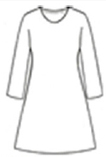
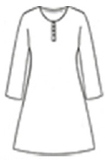
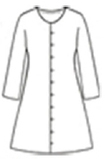
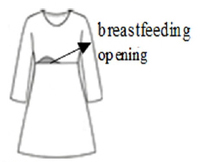
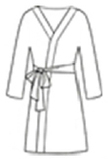
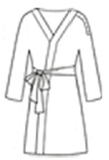
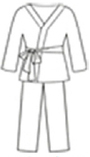
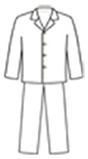
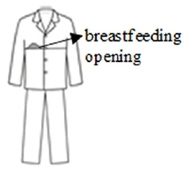
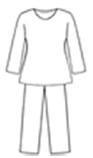
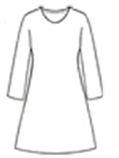
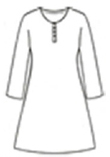
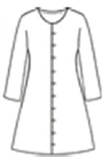
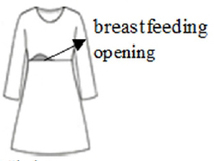
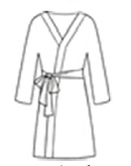
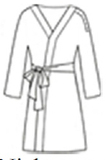
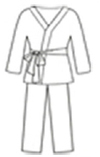
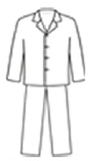
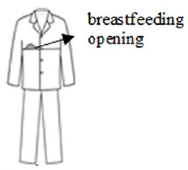
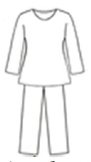
The 2 groups evaluated impressions of 10 different types of nursing attire using sample illustrations (Fig. 1) in terms of the ease of breast exposure for breast care and “ease of breastfeeding” on a four-point scale: “Good”, “Somewhat Good”, “Slightly Poor”, and “Poor”. The 10 designs of nursing attire were the basic types of nightgowns and pajamas, which were selected because they were commonly worn by postpartum women during hospitalization. The nightgown designs included six variations (no front opening, upper front opening, full front opening, nursing access, yukata style, and yukata style + shoulder opening), while the pajama designs included four variations (yukata style, full front opening, full front opening + nursing access, and no front opening).
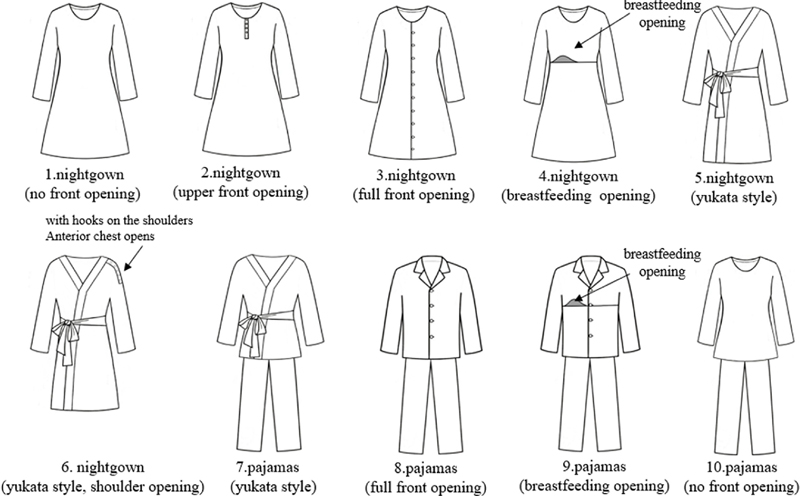
Illustrations of the 10 nursing attire samples.
The names of the samples follow JISL0215:198S.
(3) Factors midwives/postpartum mothers seek in nursing attire
To identify the factors midwives and postpartum mothers seek in nursing attire, we referred to the criteria for generally comfortable clothing defined by Harada(1999) and the requirements for nursing uniforms worn in hospitals classified by Shoyama et al.(2013). Based on these references, we examined the following aspects: texture, elasticity, durability, absorbency, antifouling properties, and moisture retention, along with dress length and hem width. As the nursing attire is intended for postpartum mothers to wear as sleepwear, we also added “heat retention”, resulting in a total of 10 aspects. Then, we asked the participants to rate the importance of these aspects as factors they seek in nursing attire on a four-point scale: “Not important”, “Not so important”, “Somewhat important”, and “Important”.
(4) Necessity of a breastfeeding opening in nursing attire and its preferred size
We asked midwives about the necessity of a breastfeeding opening in nursing attire from the perspective of breast care, and postpartum mothers about it from the perspective of breastfeeding on a four-point scale: “Not necessary”, “Not so necessary”, “Somewhat necessary”, and “Necessary”.
Regarding the size of the breastfeeding opening, we asked both groups to choose one of four sizes, based on breast anatomy: 10 × 10 cm (nipple and areola), 15 × 15 cm (1/2 of the breast), 20 × 20 cm (breast base), and 25 × 25 cm (entire breast-axilla).
(5) Design of the breastfeeding opening
Concerning the design of the breastfeeding opening, we asked the 2 groups to choose types suitable for breastfeeding openings and those that pose a risk to infants from 6 designs (multiple choices allowed): plastic slide fasteners, snap buttons, hook-and-loop fasteners, kimono (cache-coeur)-style tops, tube top bras, and breastfeeding capes.
6) Analysis
- For the midwives’ age, the mean number of breast cares performed per week, and their years of work experience, as well as the postpartum mothers’ age and the number of childbirths they had experienced, simple aggregation was conducted. Additionally, the age was compared between the groups using the Mann-Whitney U test.
- The impressions of the nursing attire samples in terms of the “ease of breast exposure for breast care” and “ease of breastfeeding” were quantified based on the midwives’ and postpartum mothers’ responses on a four-point scale to calculate the median, mean, and standard deviation. Differences between the 2 groups were examined using the Mann-Whitney U test.
- The midwives’ and postpartum mothers’ ratings of the 10 aspects as factors they seek in nursing attire on a four-point scale were quantified to calculate the median, mean, and standard deviation. Differences between the 2 groups were examined using the Mann-Whitney U test.
- For the necessity of a breastfeeding opening in nursing attire and its preferred size, simple aggregation was conducted, and differences between the midwives and the postpartum mothers in the preferred size were examined using Fisher’s exact test.
- For types suitable for breastfeeding openings and those that pose a risk to infants, simple aggregation was conducted, and differences between the midwives’ and postpartum mothers’ choices were examined using the chi-square test. When more than 20% of the cells had an expected frequency of less than 5, Fisher’s exact test was conducted instead.
The data aggregation and analysis were conducted using the statistical analysis software SPSS ver. 28.
7) Ethical considerations
The study was approved by the Fukuoka Gakuen Ethics Committee (approval number: 543).
3. Results
3.1. Participants
The midwives’ mean age was 42.7 ± 10.4 (median:43). The most common range of the mean number of breast cares performed per week was 10 to less than 20 cases (30 participants;38.5%), followed by 5 to less than 10 cases (21;26.9%) and fewer than 5 cases (15; 19.2%). All the midwives had experience of performing breast care. The mean length of work experience was 17.3 ± 10.3 years, with 73 (93.6%) having more than 5 years of experience, including 56 (71.2%) with over 10 years. Only 5 (6.4%) had less than 5 years of experience.
The postpartum mothers’ mean age was 31.8 ± 5.9 (median:32): 31.6 ± 6.1 for primiparas and 32.1 ± 6.7 for multiparas. The mean number of childbirths was 1.6, with 36 (57.1%) primiparas.
The Mann-Whitney U test showed that the midwives were significantly older than the postpartum mothers (p<0.05).
3.2. Evaluation in terms of the ease of breast exposure for breast care
We calculated the median, mean, and standard deviation representing the impressions of the 10 samples rated by the midwives and postpartum mothers on a 4-point scale in terms of the ease of breast exposure for breast care (Table 1). Both the midwives and the postpartum mothers most highly rated 4 samples, “nightgown (full front opening)”, with a median of 4. Conversely, they most poorly rated “nightgown (no front opening)”, with a median of 1.

Evaluation in terms of the ease of breast exposure for breast care
The Mann-Whitney U test showed significant differences between the groups in the impressions of 7 samples. The midwives rated 2 samples, “pajamas (full front opening)” (p<0.05) and “nightgown (yukata style + shoulder opening)” (p<0.05), significantly higher than the postpartum mothers.
In contrast, the following 5 samples were rated significantly higher by the postpartum mothers than the midwives: “pajamas (full front opening + nursing access)” (p<0.001), “nightgown (nursing access)” (p<0.001), “nightgown (upper front opening)” (p<0.001), “pajamas (no front opening)” (p<0.05), and “nightgown (no front opening)” (p<0.001).
3.3. Evaluation in terms of the ease of breastfeeding
We calculated the median, mean, and standard deviation representing the impressions of the 10 samples rated by the midwives and postpartum mothers on a 4-point scale in terms of the ease of breastfeeding (Table 2).
Ease of breastfeeding
Both groups most highly rated 2 samples, “nightgown (full front opening)” and “pajamas (full front opening)”, with a median of 4, and most poorly rated “nightgown (no front opening)”, with a median of 1.
The Mann-Whitney U test revealed significant differences between the groups in the impressions of 5 samples.
The following 5 samples were rated significantly higher by the postpartum mothers than the midwives: “pajamas (full front opening + nursing access)” (p < 0.001), “nightgown (nursing access)” (p < 0.001), “nightgown (upper front opening)” (p < 0.001), “pajamas (no front opening)” (p < 0.05), and “nightgown (no front opening)” (p < 0.001).
3.4. Factors the midwives/postpartum mothers seek in nursing attire
We calculated the median, mean, and standard deviation representing the 10 aspects rated by the midwives and postpartum mothers on a 4-point scale as factors they seek in nursing attire (Table 3).
Important factors in nursing attire
In both groups, the median was 3 or higher for all 10 aspects. Specifically, both groups regarded “ease of breast exposure”, “texture”, and “clothing comfort” as the most important factors, with a median of 4.
The Mann-Whitney U test showed significant differences between the groups in 4 aspects, as the midwives rated “moisture and water absorption” (p < 0.01), “durability against washing” (p < 0.05), and “heat retention” (p < 0.001) significantly higher, whereas the postpartum mothers rated “dress length” (p < 0.001) significantly higher.
3.5. Necessity of a breastfeeding opening in nursing attire and its preferred size
We asked the midwives about the necessity of a breastfeeding opening in nursing attire from the perspective of breast care, and the postpartum mothers about it from the perspective of breastfeeding.
Fifty-two (66.7%) midwives and 55 (87.3%) postpartum mothers answered “Necessary” or “Somewhat necessary”, while 22 (28.2%) midwives and 8 (12.7%) postpartum mothers answered “Not so necessary” or “Not necessary” (Table 4).
Necessity of a breastfeeding opening in nursing attireUnit: n(%)
Next, focusing on the 52 midwives and 55 postpartum mothers who answered “Necessary” or “Somewhat necessary”, we asked about the preferred size of the breastfeeding opening in nursing attire. For the midwives, “25 × 25 cm” (28;53.9%) was the most preferred, and then “20 × 20 cm” (20;38.3%). For the postpartum mothers, “20 × 20 cm” (31;56.3%) was the most preferred, and then “15 × 15 cm” (12;21.8%) (Table 5).
Size of a breastfeeding openingUnit: n(%)
Fisher’s exact test revealed a significant difference between the groups in responses regarding the preferred size of the breastfeeding opening (p < 0.001), as “15 × 15 cm” and “20 × 20 cm” were the most common choices among the postpartum mothers, whereas it was “25 × 25 cm” among the midwives.
3.6. Design of the breastfeeding opening
We also asked the 52 midwives and 55 postpartum mothers who answered “Necessary” or “Somewhat necessary” for the necessity of a breastfeeding opening in nursing attire about its design. They selected types suitable for breastfeeding openings and those that pose a risk to infants from 6 designs, with multiple choices allowed.
As types suitable for breastfeeding openings, “snap buttons” (25;48.1%) was the most common choice among the midwives, and then “hook-and-loop fasteners” (23;44.2%). Among the postpartum mothers, it was “snap buttons” (31;56.4%), and then “tube top bras” (19;34.5%) (Table 6).
Types that allow easy opening/closing of a breastfeeding opening
There was a significant difference between the 2 groups in responses for “hook-and-loop fasteners”, as this design was a significantly more common choice among the midwives (p<0.001). In contrast, “tube top bras” was a significantly more common choice among the postpartum mothers (p ≒ 0.05).
As types that pose a risk to infants, “plastic slide fasteners” (38;73.1%) and “hook-and-loop fasteners” (21;40.4%) were the most common choices among the midwives. These designs were also the most common choices among the postpartum mothers, with 37 (67.3%) and 23 (41.8%), respectively, revealing no significant differences in responses regarding this issue between the 2 groups (Table 7).
Types that pose a risk to infants
4. Discussion
4.1. Characteristics of the participants
Among the midwives included in this study, the mean length of work experience was approximately 17 years, with 73 (93.6%) having more than 5 years of experience, and among them, 56 (71.2% of the total) having over 10 years. As nurses with 3 to 5 years of experience are generally thought to be mid-career(Benner, 1984/2005), about 94% of the midwives in this study can be considered mid-career or more advanced professionals. Additionally, these midwives regularly practiced breast care and provided breastfeeding guidance, suggesting that they were adept at selecting designs for nursing attire that facilitate breast care and make breastfeeding easier for postpartum mothers.
As for the postpartum mother group, primiparas accounted for 57.1%, and the mean age was about 32. According to the Japanese Ministry of Health, Labour, and Welfare’s Vital Statistics(2022), the mean age of primiparas was 31.0 in 2020 confirming that the primiparas in this study were an average group of this population.
4.2. Evaluation in terms of ease of breast exposure for breast care and ease of breastfeeding
As shown in Table 1, both midwives and postpartum mothers highly rated “nightgown (full front opening)”, “pajamas (full front opening)”, “pajamas (yukata style)”, and “nightgown (yukata style)” in terms of the ease of breast exposure for breast care. The reason for selecting these types might be that the front opens fully, which makes it easier for midwives to observe the entire breast, and easier for postpartum mothers to receive breast care. On the other hand, both midwives and postpartum mothers poorly rated “nightgown (no front opening)”, presumably because this type does not allow the front to open, forcing postpartum mothers to remove the nightgown entirely, and midwives to cover their body with a towel or similar item to proceed with breast care.
The samples rated significantly higher by midwives than postpartum mothers were “pajamas (full front opening)” and “nightgown (yukata style + shoulder opening)”. This is likely because these types allow for a wide area of the breast to be observed, making them more suitable for breast care.
As shown in Table 2, both the midwives and postpartum mothers highly rated “nightgown (full front opening)” and “pajamas (full front opening)” in terms of the ease of breastfeeding. However, the yukata-style samples, which were highly rated for the ease of breast exposure during breast care, received lower ratings. The reason might be that the yukata style tends to expose a wide anterior chest, and “nightgown (yukata style)”, in particular, also exposes the lower limbs. “Nightgown (no front opening)” may have been poorly rated by both the midwives and postpartum mothers for the same reason they evaluated the impressions in terms of the ease of breast exposure for breast care, as the front does not open, making breastfeeding less convenient.
The nursing attire samples rated significantly higher by the postpartum mothers than the midwives were “pajamas (full front opening + nursing access)”, “nightgown (nursing access)”, “nightgown (upper front opening)”, “pajamas (no front opening)”, and “nightgown (no front opening)”. The reason for selecting samples with a “nursing access” might be that the postpartum mothers with a sense of modesty prefer types that minimize breast exposure. On the other hand, they also selected “nightgown (upper front opening)”, “nightgown (no front opening)”, and “pajamas (no front opening)”, presumably because postpartum mothers lacking breastfeeding experience viewed these samples with no front opening as similar to everyday clothing, and this highlights the necessity of guidance for postpartum mothers provided by midwives from the perspective of maternity nursing.
4.3. Factors midwives/postpartum mothers seek in nursing attire
Both the midwives and postpartum mothers rated all 10 aspects as important factors they seek in nursing attire. Specifically, “ease of breast exposure”, “clothing comfort”, and “texture” were most highly rated by both groups (Table 3). The reason for selecting “ease of breast exposure” might be that this aspect influences breast care and the ease of breastfeeding. They also selected “texture”, presumably because both infants with sensitive skin and postpartum mothers with delicate skin due to hormonal instability(Takagi, 2023) require products with less irritation.
The aspects rated significantly higher by the midwives than the postpartum mothers were “moisture and water absorption”, “durability against washing”, and “heat retention”, and this may be explained by the midwives’ consideration of the necessity of “moisture and water absorption” and “heat retention” from the perspective of temperature regulation for postpartum mothers, who are prone to increased metabolism and cooling due to perspiration (Takahashi, 2016), as well as the importance of “durability against washing” to withstand frequent laundering from a hygiene standpoint.
The aspect rated significantly higher by the postpartum mothers was “dress length”. This is likely related to their preference and ease of movement. However, as there were no questions to clarify which part of the dress they focus on, further analysis could not be performed. This aspect should be examined in detail in future studies.
4.4. Necessity of a breastfeeding opening in nursing attire and its preferred size
Approximately 70% of the midwives required a breastfeeding opening in nursing attire for breast care, while approximately 90% of the postpartum mothers answered that they need it for breastfeeding (Table 4). This is likely influenced by the ease of breast exposure, which was highly rated by both the midwives and postpartum mothers as a factor they seek in nursing attire.
Regarding the preferred size of the breastfeeding opening, “25 × 25 cm” was the most common choice among the midwives, whereas “15 × 15 cm” and “20 × 20 cm” were the most common choices among the postpartum mothers (Table 5). This difference is thought to stem from the midwives’ need for a larger area to provide comprehensive breast care, while postpartum mothers prefer to minimize breast exposure due to modesty.
Given the differences in the preferred size of the breastfeeding opening between the midwives and the postpartum mothers, it is necessary to propose designs with adjustable breastfeeding openings and evaluate them.
4.5. Design of the breastfeeding opening
As types suitable for breastfeeding openings, “snap buttons” and “kimono (cache-coeur)-style tops” were the most common choices among both the midwives and the postpartum mothers (Table 6). The reason for selecting “snap buttons” is likely due to their ease of opening and closing. Similarly, “kimono (cache-coeur)-style tops” were likely preferred because they allow easy breast exposure by simply adjusting the front fabric. The selection rate for “hook-and-loop fasteners” was significantly higher among the midwives than the postpartum mothers, and this may be attributed to the common use of hook-and-loop fasteners in patient gowns for surgical procedures in general hospitals, which are designed for ease of opening and closing. In contrast, the postpartum mothers had a higher selection rate for “tube top bras”, presumably because camisole-style bra tops are commonly worn as daily undergarments, and the similar design of tube top bras was preferred.
Regarding types that pose a risk to infants, both midwives and postpartum mothers frequently selected “plastic slide fasteners” and “hook-and-loop fasteners” (Table 7). Both groups may have considered the possibility of these designs entangling with the infants’ hair and skin, injuring their skin, and causing discomfort due to the noise generated when opened.
“Kimono (cache-coeur)-style tops” and “tube top bras” were not selected as types that pose a risk to infants, but these designs raise concerns about other issues. For example, the fabric of the nursing attire may rub against the mother’s nipples during opening and closing, potentially causing nipple abrasions and increasing the risk of mastitis(Japan Midwifery Association, Japan Academy of Midwifery; 2021, Satsumoto et al.; 2017). “Breastfeeding capes” may also be unsafe due to obstructed visibility of the infant’s face from the mother, making it difficult for her to monitor the infant’s breathing condition. Moreover, “snap buttons” carry the risk of accidental ingestion if they come loose due to infant sucking; however, as they have the advantage of being easy to attach and detach, it is expected that the embedded type, which is integrated with the fabric and has no risk of coming off, can be used safely.
From the perspective of maternal nursing, breastfeeding is recommended to foster the bond between mother and child. It has been reported that breastfeeding helps mothers develop a sense of connection with their infants and builds maternal confidence, which positively influences subsequent parenting (Fetherston; 1998, Nishimiya; 2024, Takeda et al.; 2013, Tanaka; 2022). Therefore, nursing attire that allows postpartum mothers, who are often at their most fatigued after childbirth, to breastfeed comfortably and safely is essential.
Future efforts should focus on designing and evaluating nursing attire with adjustable breastfeeding openings, taking into account the ease of breastfeeding and breast care, as well as infant safety.
5. Conclusion
(1) In terms of the ease of breast exposure, “nightgown (full front opening)” and “pajamas (full front opening)” were highly rated, and “nightgown (no front opening)” was poorly rated by both the midwives and postpartum mothers. “Nightgown (nursing access)”, “nightgown (upper front opening)”, and “nightgown (no front opening)” were rated higher by the postpartum mothers, while “nightgown (yukata style + shoulder opening)” was rated higher by the midwives. A similar rating tendency was observed for the ease of breastfeeding, although “pajamas (full front opening + nursing access)” were rated higher by the postpartum mothers than the midwives.
(2) Among the factors midwives and postpartum mothers seek in nursing attire, “ease of breast exposure” was the most common choice in both groups, with the midwives placing importance on “moisture and water absorption”, “durability against washing”, and “heat retention”, and the postpartum mothers focusing on “dress length”.
(3) There was a significant difference between the midwives and postpartum mothers in the preferred size of the breastfeeding opening, as the midwives’ selection rate was the highest for “25 × 25 cm”, whereas the postpartum mothers’ selection rate was the highest for “15 × 15 cm” and “20 × 20 cm”. Based on this, to meet the needs of both groups, future designs of nursing attire should include adjustable breastfeeding openings.
(4) Both groups selected “snap buttons” as the type that allows easy opening/closing of the breastfeeding opening, and “plastic slide fasteners” and “hook-and-loop fasteners” as types that pose a risk to infants. However, “snap buttons” also pose potential safety concerns for infants, and require careful consideration from a safety perspective.
Acknowledgments
We would like to thank all the midwives and Postpartum mothers for their cooperation in this study.
Funding
This work was supported by JSPS KAKENHI Grant Number JP-21K12576.
Declaration of interest
The authors have no competing interests to disclose.
References
- Agency for Children and Families (2024).Prenatal and Postpartum Support Project Guidelines Postpartum Care Project Guidelines.1-30. https://www.cfa.go.jp/assets/contents/node/basic_page/field_ref_resources/d4a9b67b-acbd-4e2a-a27a-7e8f2d6106dd/c9cfc841/20241030_policies_boshihoken_tsuuchi_2024_80.pdf, (ref 2024-11-01)
- Benner, P. (2005). From Novice to Expert: Excellence and Power in Clinical Practice. (Ibe, T. Trans.) Tokyo: Igaku-Shoin Ltd. (Original work published 1984),23-26.
- Endo,M. (2016). Potential of Social Enterprises Rooted in the Community: A Case Study of Breastfeeding Clothing Development. Tokai Gakuin University Bulletin.10, 97-105.
-
Fetherston C. (1998). Risk factors for lactation mastitis. Journal of Human Lactation. 14(2), 101109.
[https://doi.org/10.1177/089033449801400209]

- Friends of WHO Japan. (2021). Protect Breastfeeding. https://japan-who.or.jp/news-releases/2108-6/, (ref 2024-11-01)
-
Harada, T. (1999). Engineering Approaches to “Comfort” and “Sensibility” in Clothing. Journal of the Society of Fiber Science and Technology. 55(8), 276-282.
[https://doi.org/10.2115/327610.2115/fiber.55.8_P276]
-
Ito, K.& Yamato, A. (2014). Evaluation of Appearance and Functionality of Breastfeeding Clothing: By Female College Students, Mothers, and Pregnant Women. Journal of Fiber Science and Technology. 55(12), 942-948.
[https://doi.org/10.11419/senshoshi.12_942]
- Japan Midwifery Association, Japan Academy of Midwifery. (2021). Guideline for Mastitis 2020, 2nd Edition. 28-30.
- Ministry of Health, Labour and Welfare. (2019). Study Group on the Revision of the Guide for Supporting Breastfeeding and Weaning: Trends in Recent Maternal and Child Health Policies, Guide for Supporting Breastfeeding and Weaning.1-60. https://www.mhlw.go.jp/content/11908000/000496257.pdf, .(ref 2024-11-01)
- Nakajima, H. (2022). Support for Breastfeeding During Postpartum Hospitalization. Perinatal Care. 41(1),10-16.
-
Nakanishi, M., Aoki, H., Kubota, K., Shoyama, S., & Komatsu, M. (2023). A Study on the Design of Breastfeeding Clothing During Postpartum Hospitalization: Elements of Ease of Breastfeeding from the Perspective of Postpartum Women. Journal of Fiber Science and Technology.37(2),185-193.
[https://doi.org/10.3418/jjam.JJAM-2022-0028]
-
Nakanishi, M., Aoki, H., Shoyama, S., & Komatsu, M. (2024). A Study on the Design of Breastfeeding Clothing During Postpartum Hospitalization: Elements of Ease of Breastfeeding from the Perspective of Postpartum Women. Journal of Fiber Science and Technology. 65(9), 29-36.
[https://doi.org/10.11419/senshoshi65.9_639]
- Nishimiya, Y. (2024). Q & Good Answer in Health Guidance: Evidence and Techniques for Effective Communication in Common Guidance, Including Breastfeeding. Perinatal Care. 43(5), 46-52.
-
Satsumoto, Y., Maruta, N., Saito, H., & Morooka, H. (2017). Effects of Age, Body Features and Type of Brassiere on the Comfort in Movement. Journal of Fiber Science and Technology. 58(1), 80-89.
[https://doi.org/10.11419/senshoshi.58.1_80]
-
Shoyama, S., Aoki, H., Kubota, K., & Tochihara, H. (2013). A Nationwide Survey on Nursing Uniforms for Women in Japan. The Japan Research Association for Textile End-Uses. 54(2), 164-171.
[https://doi.org/10.11419/senshoshi.54.2_164]
-
Takagi, Y., Hanahara, K., & Tachioka, Y. (2023). A Cross-Sectional Study of Actual Sleep Conditions in Women from Late Stage-Pregnancy to Three Months after Childbirth and Associated Minor Symptoms. Journal of the Japan Society of Maternal Nursing. 23(2), 32-38.
[https://doi.org/10.32305/jjsmn.23.2_32]
- Takahashi, Y., Ogawa, H., Miyauchi, K., & Harada, M. (2016). The Literature Review of The Effects of Nursing on Postpartum Fatigue. Journal of the Tokyo Women’s Medical University Nursing Society. 11(1), 12-18.
-
Takeda, E., Kobayashi, Y., & Yuge, M. (2013). The Intentional Interaction of Nurses to Allay Anxiety in Postpartum Mothers: What Nurses Say to Postpartum Mothers about Anxiety. Journal of International Nursing Research. 36(4), 11-18.
[https://doi.org/10.15065/jjsnr.20130801002]
-
Tanaka, M., J Sei, J., & Minai, J. (2022). Factors Associated with Breastfeeding at One Month Postpartum: Focus on Nursing Guidance and Mothers’ Breastfeeding Behavior. Japanese Society of Hygiene.77, 1-8.
[https://doi.org/10.1265/jjh.21010]
- The Japan Statistical Association for Health and Welfare. (2022). Trends in National Health 2022/2023. 69(9), 49-53.