Product Research for Digitization of Hawaiian Local Fashion Products: Focusing on Shirts and Dresses

©2024 The Korean Fashion and Textile Research Journal(KFTRJ). This is an open access journal. Articles are distributed under the terms of the Creative 52 Commons Attribution Non-Commercial License (http://creativecommons.org/licenses/by-nc/4.0), which permits unrestricted use, distribution, and reproduction in any medium, provided the original work is properly cited.
Abstract
In the current era of rapid digitization of the fashion industry, this study aims to facilitate the digitization of local Hawaiian fashion products. The research compares and analyzes the patterns and colors of digital clothing products sold on Zepeto, a metaverse platform, and those of physical products sold both, online and offline, by six specialized brands with stores in Honolulu, Hawaii, or Hawaiian signature clothing products. The following results were obtained: First, physical products generally display various patterns, such as animals, plants, geography, regions, and beaches. However, the pattern diversity of digital products is relatively limited, with a tendency to focus on plant and animal designs, which are Hawaii’s signature patterns. Second, the color analysis results demonstrate that chromatic color groups, such as blue and red, were the most popular in physical products, whereas digital products used mostly green and neutral colors. Considering that physical products are sold both, online and offline, this is presumed to be due to differences in expression techniques and customer responses to digital and physical products, rather than market differences. To facilitate the digitization of Hawaiian local fashion products, a library that accommodates physical products in a variety of patterns and colors must be secured, and continuous modifications must be made to match the overall fashion trends.
Keywords:
Aloha shirt, Hawaiian local signature fashion product, Digitize, Zepeto1. Introduction
From the past to the present, the fashion industry has continuously changed and evolved from clothing production to marketing and sales methods, always quickly adapting to new trends and technologies and developing (Kim, 2023). The 4th industrial revolution in the modern fashion industry is developing data-driven intelligence technology tailored to individual situations based on digitalization through the intensive development of cutting-edge science and information and communication technology (Shin, 2022). Through digital transformation, the fashion industry has shifted to being based on e-commerce, direct-to-consumer selling and drop-shipping have become common, and designs of 3D digital versions can be updated without inventory and products can be manufactured immediately once sold. The digital transformation of the fashion industry is expected to appeal as a big advantage to small brands. Now that contact points with consumers are rapidly becoming digital, it is time to respond from a practical perspective to transition to an efficient infrastructure system (“Focus on innovation and practicality in the fashion industry”, 2023).
Today, Hawaiian local signature fashion products, including the so-called ‘Aloha shirt’ or ‘Hawaiian shirt’, are produced and sold by a variety of local Hawaiian manufacturers and global brands, including designers and retailers. The Hawaiian shirt originally started as a local product in Hawaii, but since the 1950s, it has developed into a resort look, and is now constantly being planned as a S/S season product with new details from luxury brands to SPA brands. Hawaiian shirts are known for their vibrant prints and comfortable fit made of lightweight materials, but in recent years, they have been produced in a variety of ways, including long sleeves, resort wear, and formal wear, rather than being limited to the traditional short-sleeved button-up style, establishing themselves as a clothing item for the summer. The origins of the aloha shirt date back to the early 20th century when Japanese and Filipino immigrant workers in Hawaii began making and wearing shirts using colorful fabrics with bold floral patterns, while some local manufacturers still focus on traditional designs today. Other manufacturers sell a variety of accessories in addition to men’s, women’s, and children’s clothing, including modern elements and patterns to appeal to different consumer preferences.
Recently, there has been a change in the silhouette and design of Hawaiian shirts to attract younger generations and new customers. Hawaiian shirts have been restyled with form-fitting, slim silhouettes and somewhat non-traditional patterns and design patterns (Bahng & Reilly, 2018). Prada introduced Hawaiian shirts on the Milan runway for the 2014 Spring/Summer collection, and at the 2018 Men’s Fashion Week Spring/Summer Fashion Week, Balenciaga, Dries van Noten, Paul Smith, Louis Vuitton, etc. presented chic and luxurious Hawaiian shirts. presented (Bahng & Reilly, 2018). Looking at previous research on Hawaiian shirts, Lee (2007) investigated the birth, development process, and design characteristics of Hawaiian shirts, and Suh (2008) classified the types of hibiscus patterns on Hawaiian shirts into formative classification, compositional classification, and The patterns were analyzed separately by arrangement. Additionally, Bang and Reilly (2018) examined the validity of the assumption that tourists and natives have different tastes for Hawaiian shirts.
In this study, as part of the digitalization of Hawaiian local signature fashion products, which have become one of the fashion items at a time when the field of digital fashion design is expanding, we conducted a survey of actual products being sold online and in local offline stores in Hawaii during the research period. did. In addition, in order to digitize Hawaiian local signature fashion products, which is the purpose of this study, a product survey of Hawaiian shirts sold on Zepeto, one of the Metaverse platforms where digital clothing is currently sold, was conducted in parallel to plan for actual products and digital clothing products. We would like to conduct a comparative analysis of the overall issue.
2. Methods
2.1. Survey of actual products sold online and offline
The Hawaiian shirt, which started as a local product in Hawaii, has now become a representative resort look. Therefore, because the total number of brands producing Hawaiian shirts is too large to be identified, this study selected six brands that meet the following four conditions: 1) Professional brands based on Hawaiian shirts 2) Exposure to tourists around the world 3) Operating an offline store in a local area of Hawaii where possible 4) Operating a website 5) Identifying a brand with high sales and recognition through preliminary interviews with local area managers.
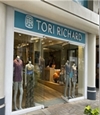
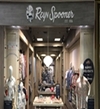
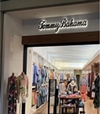
Companies targeted for product research include Tori Richand, Reyn Spooner, Rix Islandwear, Paradise Found, Tommy Bahama, and Kamehameha, which represent Hawaiian local signature fashion. Six representative brands selling products were selected (Table 1). For clothing items, the Hawaiian shirt, a Hawaiian folk costume, was selected as the representative item for men’s clothing, and long-sleeved, short-sleeved, and T-shirts were selected as the representative item. For women’s clothing, one-piece clothing of any length, such as the muumuu, a Hawaiian women’s folk costume, was selected as the representative item. The dress was investigated (Fig. 1). The research method was based on labels attached to clothing and contents presented on the website through local stores in Honolulu, Hawaii and the Internet, and the survey period was conducted from March to December 2023.

Hawaiian local signature fashion brands in this study
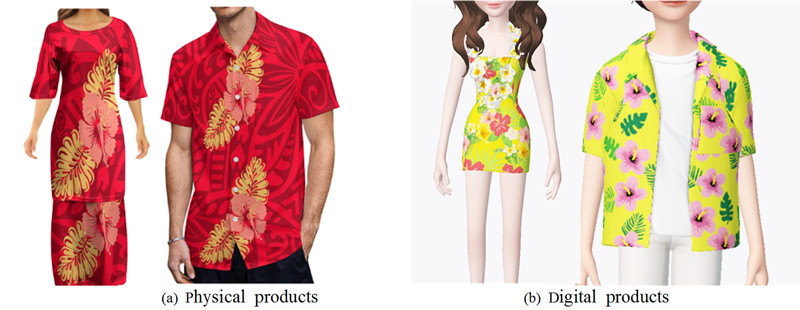
Hawaiian shirts and dresses.
The analysis items were focused on the patterns, colors, and materials of Hawaiian shirts and dresses. The patterns of each product were classified with reference to previous research (Bahng & Reilly, 2018; Lee, 2007), and when various patterns coexisted, the representative patterns were mainly analyzed. As a result, it was divided into a total of 6 patterns, including plant patterns including flowers, leaves, palm trees, and palm trees, beach landscape patterns including sandy beaches, surfing, waves, and beaches, animal patterns including fish and birds, hula, and tiki (Tiki), regional patterns reflecting the region and cultural elements of Hawaii such as volcanoes, geometric patterns using repeated shapes, and others. For each brand, the color of the product was classified based on the color indicated on the label or presented on the internet sales site. For products without any label, the color was classified based on the main color of the product. Materials were classified into natural fibers including cotton, silk, and linen, synthetic fibers including rayon and spandex, and blends including natural fibers and synthetic fibers.
The data analysis method for this study was frequency analysis and cross-analysis of the patterns, colors, and materials of Hawaiian shirts and dresses using IBM SPSS 25.0 program. Even if the design of a shirt or dress is the same, if the colors are different, they are considered separate products.
The survey product items and quantities of the six brands surveyed are as shown in Table 2, and are indicated as A to F in terms of brand information protection.
Number of items used in analysis by Hawaiian fashion brand(Unit: n)
2.2. Digital clothing product research
As a result of a preliminary survey targeting Zepeto, a metaverse platform, to investigate digital clothing products, actual Hawaiian product companies were not digitized, so only shirts and dresses among the digital Hawaiian products posted by Zepeto were surveyed (Table 3).
Number of items used in analysis by Zepeto(Unit: n)
2.3. Compare and analyze physical and digital products
In order to compare and analyze physical and digital products, this study compared the pattern and color appearance ratios of digital clothing products from Zepeto, a metaverse platform, and physical products from Hawaiian specialty brands. The specific method used was to compare by adding the percentages of each pattern and color.
3. Result & discussion
Among the products sold by each of the six brands, men’s research focused on tops such as open shirts, polo shirts, and T-shirts, and women’s research focused on dresses. As a result, a total of 1,573 products were selected, and the patterns, materials, and Color was analyzed. Additionally, as a result of investigating Zepeto’s digital Hawaiian products, a total of 154 products were selected, and since the materials for these products were not provided, the patterns and colors of each product were analyzed.
3.1. Physical products research
As a result of conducting a cross-analysis to determine the distribution of patterns on all products of six brands, 58.7% were plant patterns, 10.6% were beach landscape patterns, 13.0% were regional patterns, 8.4% were geometric patterns, 5.7% were animal patterns, and 4.4% were other hibiscus, the official flower of the territory of Hawaii. Plant patterns, including, accounted for the highest proportion (Fig. 2). Looking at each brand, brand B had the highest proportion of beach landscape patterns at 32.0%, and plant patterns had the highest distribution among all other brands. D brand sells products with a high proportion of plant patterns (97.5%), and F brand, as the first clothing wholesaler in Hawaii, reflects the characteristics of the Hawaiian region in its clothing and displays not only plant patterns but also regional patterns compared to other brands. It seems to be expressed a lot (Table 4). Among the digital Hawaiian products sold at Zepeto, plant patterns account for 79.9%, animal patterns account for 5.8%, beach scenes and geometric patterns each account for 5.2%, and regional patterns appear at 3.9%, with plant patterns being the most representative of Hawaiian products. It was found that it was used the most (Fig. 2). Plant patterns are easy to express Hawaiian patterns by enlarging part of a plant and repeatedly expressing the image of a single flower or fruit, but other patterns require technical elements to express graphic Hawaiian characteristics. Since they must be used in parallel, it is judged that there are limits to expression.
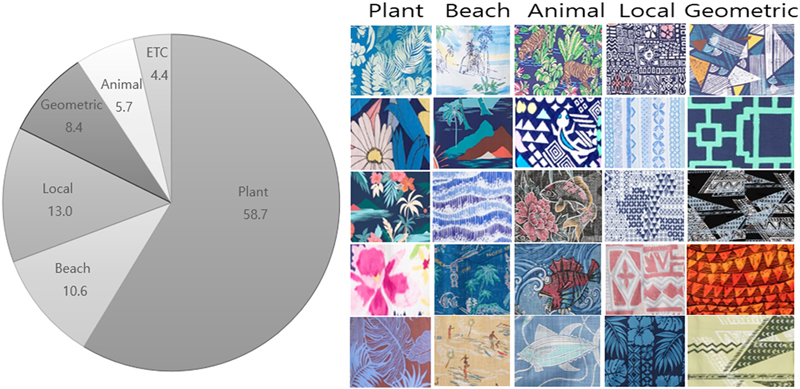
Analysis results patterns of Hawaiian fashion products.
Distribution of patterns by Hawaiian fashion brands(Unit: n(%))
Distribution of color by Hawaiian fashion brands(Unit: n(%))
As a result of cross-analysis to examine the difference in color according to brand, blue series products accounted for 41.6%, red series products 22.0%, products based on achromatic colors 21.7%, and green series products 14.7%, with blue series products accounting for the largest proportion. Looking at each brand, brands A, B, and E had the highest proportion of blue-based products, while brands C and F had the highest distribution of red-based products. On the other hand, brand D showed the highest distribution of neutral colors, showing a difference from other brands.
Cross-analysis was conducted to examine the difference in brightness according to colors for products of the rest of the colors except neutral colors (Table 6). As a result of analyzing the products of each brand, overall, 28.6%, 29.1%, and 20.7% of the products of high brightness, medium brightness, and high reputation were mainly distributed in high reputation and high reputation. By color, Blue-based products showed the most famous products, while Red-based products showed evenly distributed high reputation and high reputation products, showing differences by color.
Brightness distribution by main color of Hawaiian shirt brand products(Unit: n(%))
In addition to silk and cotton, which were used as Japanese kimono fabrics in the 1930s, various fabrics such as polyester, rayon, and blend are used as materials for Hawaiian fashion products. As a result of analyzing the distribution of materials by brand by dividing them into natural fibers, synthetic fibers, and blend, 44.9% of the products were made of synthetic fibers, and 37.4% of natural fibers and 17.7% of mixed fibers were distributed, with products made of rayon showing a high distribution among synthetic fibers. By brand, brand A had the highest proportion of natural fibers in the order of natural fibers, synthetic fibers, and blend, while brand B had a high proportion of 64.0%. On the other hand, brand C produced products only with 100% cotton, brand D produced most of the products corresponding to 97.1% with 100% rayon, and brand E was distributed in the order of synthetic fibers, natural fibers, and blend. In the case of brand F, products were produced evenly only with natural and synthetic fibers rather than blended fibers, so materials were used in various ways for each brand’s characteristics (Table 7).
Distribution of materials by Hawaiian shirt brand(Unit: n(%))
3.2. Digital clothing products research
As a result of analyzing the patterns of shirts and dresses among the digital Hawaiian products sold on Zepeto, plant patterns were 79.9%, animal patterns 5.8%, beach scenes and geometric patterns 5.2% each, and regional patterns 3.9%, showing that plant patterns were the most frequently used patterns to express Hawaiian products (Table 8, Fig. 3). This is similar to the results of a survey on design preferences of native Hawaiians and tourists by Bahng and Reilly (2018), which showed that plant patterns, including hibiscus, accounted for 41.1% of the preference, indicating that plant patterns are representatively used as patterns to express Hawaii compared to other patterns in digital.
Distribution of patterns by Zepeto(Unit: n(%))
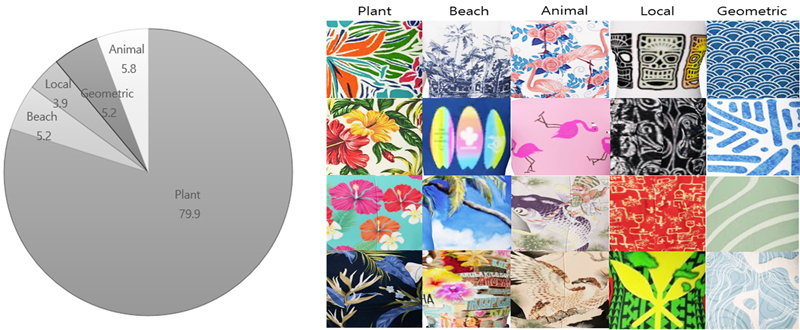
Analysis results patterns of Zepeto digital clothings.
Frequency analysis was conducted to determine the distribution of color and brightness for Zepeto’s digital Hawaiian products. First, as a result of analyzing the distribution of colors, the color distribution was in the order of neural colors at 45.5%, blue series at 20.8%, red series at 18.2%, and green series at 15.6%. The neural series consisting of black and white products accounted for the highest proportion at 45.5% of all products, which is believed to be due to the use of black and white as background colors in digital to effectively highlight the pattern (Table 9).
Distribution of color by Zepeto(Unit: n(%))
As a result of conducting a cross-analysis to examine the difference in brightness according to color of Zepeto’s Digital Hawaiian products (Table 10), the distribution was 63.1% high brightness, 23.8% low brightness, and 13.1% medium brightness, which was expressed as high brightness unlike commercial products. It can be seen that the products are mainly presented.
Brightness distribution by main color of Zepeto’s digital Hawaiian shirts and dresses(Unit: n(%))
3.3 Comparative analysis of physical products and digital products
The results of comparing the appearance percentages of digital clothing products from Zepeto, a metaverse platform, and physical products from six Hawaiian specialty brands in terms of patterns and colors are as follows.
The results of analyzing the patterns of products sold in offline stores and products sold in Zepeto among the Hawaiian signature fashion products analyzed in this study are as shown in Fig. 4. The results show that plant and animal patterns were shown in digital products at a higher percentage than in physical products. Geographical patterns, regional patterns, and beach patterns were shown to be expressed more in physical products than in digital products. Overall, physical products showed a variety of patterns across all patterns, but on the other hand, digital products showed a lack of diversity compared to physical products, and a tendency to focus on representative patterns of Hawaiian signature products.
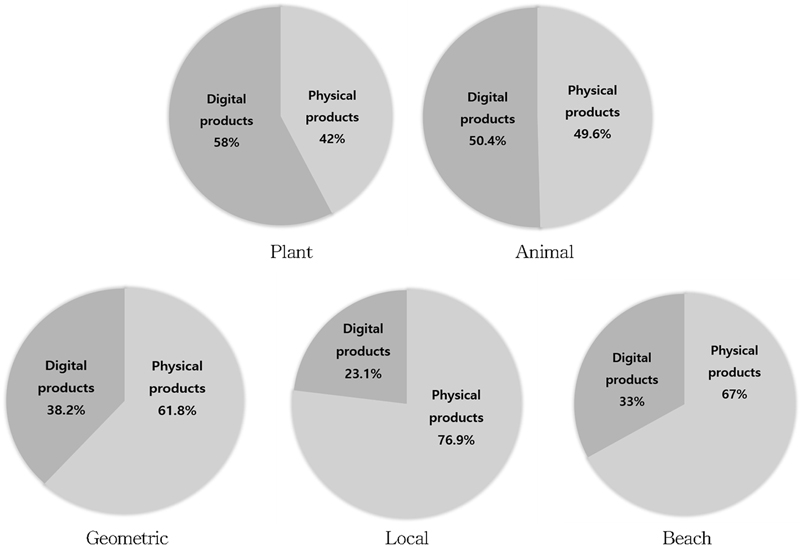
Comparative analysis of patterns between physical and digital products.
As a result of analyzing the colors of physical products sold online and offline and digital products sold only online, the physical products had the most blue and red colors compared to other colors, whereas the digital products had the most green and neutral colors, showing the difference between the physical and digital products (Fig. 5). This is analyzed to be because various color patterns are utilized to express Hawaiian images in digital formats, and neutral colors such as white, black, and gray are expressed on top of the background color to emphasize them, resulting in a high distribution of neutral-colored products.
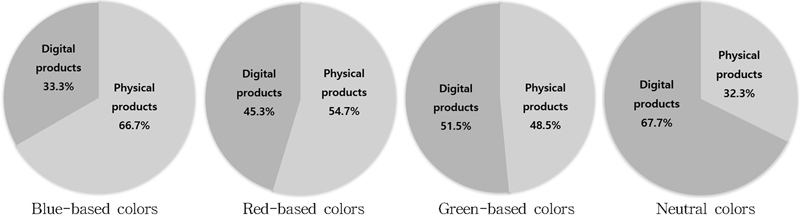
Comparative analysis of color between physical and digital products.
4. Conclusion and suggestion
In order to digitize Hawaiian local signature fashion products, we analyzed the patterns, colors, and materials of Hawaiian fashion brand men’s shirts and dresses, and also investigated and compared Zepeto’s digital Hawaiian products of the same item.
As a result of the pattern analysis, plant patterns appeared in that order at 58.7%, regional patterns at 13.0%, and beach landscape patterns at 10.6%. Plant patterns also appeared at the highest proportion in Zepeto’s digital Hawaiian products, making plant patterns the representative pattern used by all brands. The main colors of Hawaiian fashion products were classified into blue, red, green, and achromatic colors, and classified according to brightness into high brightness, medium brightness, and low brightness. As a result, reflecting the characteristics of the Hawaiian region, blue products accounted for the largest proportion, with 41.6% of blue products and 22.0% of red products, and looking at the difference according to brightness, low-brightness products of blue series were found. On the other hand, the Red and Green series were mainly high-brightness products. In Zepeto’s digital Hawaiian products, achromatic colors accounted for the most distribution, and when looking at brightness, blue-based high-brightness products showed the most distribution, showing a difference from commercial products. There were clear differences in the materials used by each brand for Hawaiian fashion products, with 44.9% of products made entirely from synthetic fibers, followed by 37.4% natural fibers and 17.7% blended fibers, making rayon the most common among synthetic fibers. The products achieved high distribution.
In this study, the pattern and color expression ratio of digital clothing products of Zepeto, a metaverse platform, and physical products of six Hawaiian specialty brands were compared. As a result, plant and animal patterns appeared more frequently in digital products, while geographical patterns, regional patterns, and beach patterns were expressed more frequently in physical products. In general, physical products showed various motifs in all patterns, but digital products showed less diversity compared to physical products and tended to focus on representative patterns of Hawaiian signature products. As a result of color analysis, blue and red appeared the most frequently in physical products, while green and neutral colors appeared the most frequently in digital products, showing differences between physical products and digital products. Considering that physical products are sold in both online and offline markets, this can be expected to be a result of reflecting the expression techniques of digital and physical products and customer responses rather than a difference in the market.
In order to facilitate the digitization of Hawaiian fashion products, a pattern library must be secured due to the nature of items where patterns are important, and continuous modifications must be made in line with overall fashion trends. In addition, the brightness and saturation of the colors are relatively simple, and in terms of texture, the overall drape is mainly composed of synthetic and blended materials, so the scale of material expression can be relatively simplified to about 3 to 4 levels for color and texture. It is believed that there is. Based on this information, it is believed that it will not only provide basic data for the digitalization of Hawaiian fashion products, but also help retailers customize products according to consumer preferences and trends in patterns, colors, and materials.
Acknowledgments
This study was financially supported by Chonnam National University(Grant number: 2023-0096-01).
References
- Bahng, Y., & Reilly, A. (2018). Comparison of design preferences in the Hawaiian Shirt and current market. The Korean Fashion and Textile Research Journal, 20(4), 379-388.
- Brad, W. (2023, December 3). Unique success story. Kamehameha. Retrieved January 15, 2024, from https://kamehamehagarments.com/blogs/blog
- Kim, M. A. (2024). A study on the application of digital clothing software on metaverse platforms [Master’s thesis, Chonnam National University]. Riss, https://www.riss.kr/link?id=T16962350
- Kim, S. J., & Na, Y. H. (2021). A study on the digitization of disappearing fashion design works from the late 20th century, focusing on French fashion designers in the 1980s. Proceeding of the Association Culturelle Franco-Coreenne, Korea, pp. 143-155.
-
Kim, S. R. (2023). A study on the type and case study of the metaverse platform converged with the fashion industry. The Korean Society of Science & Art, 41(5), 33-49.
[https://doi.org/10.17548/ksaf.2023.12.30.33]

- Lee, H. J. (2023, October 16). Focus on innovation and practicality in the fashion industry. Fashionnet. Retrieved January 15, 2024, from https://www.fashionnet.or.kr/innovation/141077/
- Lee, K. H. (2007). Design characteristics and development process of aloha shirt. Journal of the Korea Fashion & Costume Design Association, 9(2), 59-68.
-
Shin, H. K. (2022). Characteristics of application of augmented reality technology according to the digital transformation in the fashion industry. The Journal of the Convergence on Culture Technology, 8(1), 597-603.
[https://doi.org/10.17703/JCCT.2022.8.1.597]
- Suh, M. Y. (2008). A study on the type of hibiscus pattern on aloha shirts. The Korean Fashion and Textile Research Journal, 10(6), 857-863.
- Paradise Found. (2016, December). Paradise Found Boutique. Google. Retrieved December 19, 2023, from https://www.google.co.kr/maps/place/Paradise+Found+Boutique/@19.5708694 ,-155.9615631,3a,75y,140h,90t/data=!3m8!1e1!3m6!1sAF1QipOcFdgzxmmgFwrszdPkPdQqJcZxckGDRB7MXjzP!2e10!3e11!6s https:%2F%2Flh5.googleusercontent.com%2Fp%2FAF1QipOcFdgzxmmgFwrszdPkPdQqJcZxckGDRB7MXjzP%3Dw203-h100-k-no-pi0-ya6.000005-ro-0-fo 100!7i7680!8i3840!4m11!1m2!2m1!1spraradise+found!3m7!1s0x795405e56daf4f97:0x587749e899736a8b!8m2!3d19.570921!4d-155.9619974! 10e5!15sCg5wYXJhZGlzZSBmb3VuZFoQIg5wYXJhZGlzZSBmb3VuZJIBFXdvbWVuc19jbG90aGluZ19zdG9yZeABAA!16s%2Fg%2F1tfqllbc?hl=ko&entry=ttu
- Tommy Bahama. (2022, March 24). Consumers pay full price for brands that make them happy, Tommy Bahama parent says. PYMNTS. Retrieved December 19, 2023, from https://www.pymnts.com/news/retail/2022/consumers-pay-full-price-brands-make-them-happy-tommy-bahama-parent-says/