채우기 밀도별 형상 기억 TPU 3D 프린팅 Re-entrant 스트립의 특성 분석

©2022 Fashion and Textile Research Journal (FTRJ). This is an open access journal. Articles are distributed under the terms of the Creative 52 Commons Attribution Non-Commercial License (http://creativecommons.org/licenses/by-nc/4.0), which permits unrestricted use, distribution, and reproduction in any medium, provided the original work is properly cited.
Abstract
This study proposes to develop a 3D printed re-entrant(RE) strip by shape memory thermoplastic polyurethane that can be deformed and recovered by thermal stimulation. The most suitable 3D printing infill density condition and temperature condition during shape recovery for mechanical behavior were confirmed. As the poisson’s ratio indicated, the higher the recovery temperature, the closer the poisson's ratio to zero and the better the auxetic properties. After recovery testing for five minutes, it appeared that the shape recovery ratio was the highest at 70oC. The temperature range when the shape recovery ratio appeared to be more than 90% was a recovery temperature of more than 50oC and 60oC when deformed under a constant load of 100 gf and 300 gf, respectively. This indicated that further deformation occurred after maximum recovery when recovered at a temperature of 80oC, which is above the glass transition temperature range. As for REstrip by infill density, a shape recovery properties of 100% was superior than 50%. Additionally, as the re-entrant structure exhibited a shape recovery ratio of more than 90%, and exhibited auxetic properties. It was confirmed that the infill density condition of 100% and the temperature condition of 70oC are suitable for REstrips for applying the actuator.
Keywords:
Shape memory thermoplastic polyurethane, auxetic re-entrant, poisson’s ratio, shape recovery property, actuator키워드:
형상 기억 열가소성 폴리우레탄, auxetic re-entrant 구조체, 포아송비, 형상 회복 특성, 액추에이터1. 서 론
Re-entrant(RE) 구조체는 압축될 때 수축하거나 신장될 때 팽창하는 구조체인 auxetic 구조체 중 “보우 타이(bow-tie)” 형태로 내향된 음의 각도를 가지는 두 개의 변을 포함하는 구조이다. 내향된 변들로 인해 신장 시 auxetic 거동을 가진다. 특히 RE 구조체는 다른 구조체 보다 우수한 내압입성, 에너지 흡수성, 강인성 등의 우수한 물성을 나타낸다(Lakes, 2017; Li et al., 2020; Xi et al., 2021). 최근에는 이러한 auxetic 구조체의 특징을 적용하여, 스마트 센서, 액추에이터, 메타물질(metamaterial)에 대한 개발도 진행되고 있다(Ardebili et al., 2018; Ren et al., 2018). Simons et al.(2019)의 연구에서는 소프트 로봇에 적용할 RE구조체를 TPU 필라멘트로 3D 프린팅하여 역학적 평가를 진행하였으며, Jung et al.(2022a) 의 연구에서는 로봇 손의 손동작에 가장 적합한 모델링을 알아보고자 하였다. 캡(cap) 유형과 RE 구조체를 적용한 스트립(strip) 유형 2가지로 손가락 모형을 모델링 하고, 총 네 가지 동작의 손가락 동작 제어 시스템의 프로그래밍을 작성하여 동작기능성 평가를 진행한 바, RE구조체가 적용된 스트립 유형의 손가락 모형이 잡기 손동작에 적합한 것을 확인하였다.
형상 기억 고분자(shape memory polymers, SMP)는 외부자극 요소에 따라 형상 또는 물성을 변화시킬 수 있고 원래 상태로 회복이 가능한 소재로, 최근 스마트 소재나 프로그래머블(programmable) 소재로 명명되기도 한다. 외부 자극 요소는 전기, 자기 자극, 온도, 빛, 유체 압력 등이 있다. 특히 온도 자극에 반응하는 SMP는 특정 온도대 즉, 유리 전이 온도(glass transition temperature, Tg)와 용융 온도(melting temperature, Tm) 사이의 온도대에서 형상 변화 및 회복 현상이 발현된다(Momeni et al., 2017; Wang et al., 2014). 특히, 소프트한 온도 감응형 SMP 개발을 위해 쉽게 제조가 가능하며, 넓은 온도 범위의 Tg에서 형상 변화가 가능하고, 소프트하며 탄성을 가지는 열가소성 폴리우레탄(thermoplastic polyurethane, TPU)을 형상 기억 열가소성 폴리우레탄(shape memory thermoplastic polyurethane, SMTPU)으로 개발하여 적용한 연구가 다양하게 진행되고 있다(Abrisham et al., 2020; Gorbunova et al., 2020; Gu & Mather, 2012). 최근에는 소프트한 액추에이터 또는 센서를 제조하기 위해 SMTPU를 적용하는 연구가 진행되고 있다. Song et al.(2015a, 2015b)에서는 TPU와 PLA(polylactic acid)를 합성하여 액추에이터를 제조하여 온도에 따른 액추에이터 형상 거동을 분석하였고, Ji et al.(2021) 은 TPU와 PLA를 합성해 필름을 제조하여 온도조건에 따라 형상 회복이 가능한 이중 구조체를 개발하였으며, Xu et al.(2018)에서는 TPU와 PCL(polycaprolactone) 및 MWCNTs(multi-wall carbon nanotubes)를 합성하여 70oC 온도 조건에서 회복 가능한 온도 감응 액추에이터를 개발하였다. 특히 Dong et al.(2021)에서는 PLA/TPU/CNT(carbon nano tube)를 합성하여 필라멘트로 제조하고 FDM 공정으로 auxetic chiral 구조체를 출력하여 스마트 디바이스에 적용하고자 하였다. 또한 4D 프린팅 공정에도 SMTPU를 적용하여 다양한 연구가 진행되고 있다. 4D 프린팅은 3D 프린팅 된 사물이 시간에 따라 스스로 물성이나 형상을 변화할 수 있는 기술을 말한다(Nugroho et al., 2021; Sadasivuni et al., 2020; Valvez et al., 2021). Raasch et al.(2015)의 연구에서는 SMTPU를 제조 및 용융 적층 가공(fused deposition modeling, FDM)으로 샘플을 제조하여 형상 기억 특성을 확인하였고, Villacres et al.(2020)의 연구에서는 SMTPU를 다양한 출력 조건으로 3D 프린팅하여 그에 따른 형상 회복 특성을 확인하였다. Kabir et al.(2020)의 연구에서는 sinusoidal 구조체를 적용하여 TPU 및 SMTPU 필라멘트로 출력 후 형상기억 주기에 따른 물리적 특성을 분석하였으며, Kabir and Lee(2020)의 연구는 sinusoidal 구조체를 SMTPU 필라멘트로 출력 후 나일론 직물과 합포하여 형상 기억 특성을 확인한 바 있다.
본 연구팀에서는 SMTPU 소재를 제조하여 이를 적용한 4D 프린팅 메타구조체를 개발하고자 연구 중에 있다. 이를 위한 기초 TPU 관련 선행 연구로는 상업용 칩으로 제조한 4가지 경도 기성 TPU 필라멘트의 기계적 특성 및 이를 사용하여 re-entrant 출력물의 포아송비를 분석한 연구(Kim & Lee, 2020), TPU 필라멘트 4종 및 자체 합성 TPU 필라멘트 2종의 3D 프린팅에서의 사용 가능성을 확인한 연구(Jung et al., 2022b), FDM 3D 프린터용 TPU 필라멘트를 제조한 연구(Shin et al., 2022a; Shin et al., 2022b)를 진행하였다. TPU 및 RE 구조체를 적용한 선행 연구로는 TPU 출력물/텍스타일 복합직물 개발 및 성능 평가를 진행한 연구(Kim et al., 2021; Jung et al., 2021)가 있으며, 앞서 소개한 Kabir et al.(2020) 및 Kabir and Lee(2020)의 연구에서는 SMTPU를사용한 sinusoidal 구조체 출력물의 형상 기억 특성을 확인한 바 있다. 센서 및 액추에이터 제조를 위한 선행 연구로는 4가지 auxetic 구조체를 TPU 필라멘트로 제조 후 CWPU(caster-oil-based waterborne polyurethane)/graphene 용액으로 코팅하여 스트레인 센서를 제조한 연구(Choi et al., 2022) 및 Jung et al.(2022a)에서는 손동작에 적합한 손가락 모델링을 확인하고 RE 구조체 스트립이 적합함을 확인한 연구가 있다. 또한 3D 프린팅 공정 확립을 위해 Jung et al.(2021)의 연구에서는 채우기 패턴 및 채우기 밀도별 소재의 압축 특성을 연구하여 채우기 조건에 따른 3D 프린팅 공정을 확립하고자 하였다.
이에 본 연구에서는 형상 기억 TPU를 사용하여 온도 자극에 변형 및 회복 가능한 RE 구조체 스트립의 액추에이터로 적용 가능성을 확인하고자 하였다. RE 스트립은 채우기 밀도 조건을 50% 및 100%로 3D 프린팅 하였다. 또한, 출력된 RE 스트립은 100 gf 및 300 gf의 하중으로 정하중 변형을 해준 후, 1 g 초하중 조건 하에서 40, 50, 60, 70, 80oC의 5가지 온도 조건을 적용하여 회복 실험을 진행하여, 추후 액추에이터로 적용 시 역학적 거동에 적합한 채우기 조건 및 온도 조건을 확인하고자 하였다.
2. 실험방법
2.1. 재료
REstrip 제조를 위한 재료는 SMTPU 필라멘트 (SMP Technology Inc., Japan)를 사용하였다. SMTPU 필라멘트는 직경 1.75 mm를 가지며 색상은 투명색을 사용하였다. 또한 필라멘트는 유리 전이 온도는 50-75oC 범위 및 용융 온도는 150-175oC 범위에서 나타나며 이는 Fig. 1에 나타냈다.
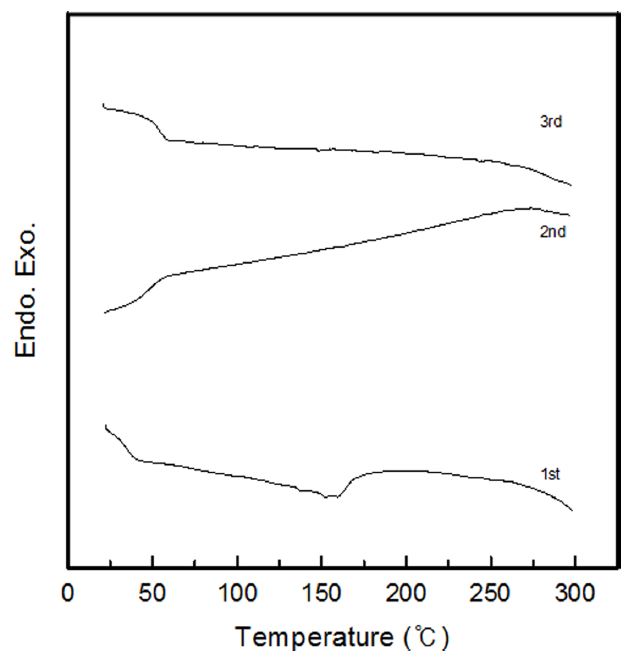
DSC curves of SMTPU filament.
2.2. Re-entrant 스트립의 모델링 및 3D 프린팅 조건
Fig. 2는 RE 스트립의 3D 모델링 및 3D 프린팅 과정의 이미지를 나타낸 것이다. RE 구조체의 한 반복 단위를 가로 및 세로 길이 12.0 × 12.0 mm2로 설계하고, 스트립으로 제조하기 위해 RE 구조체를 15개로 이어 2D 모델링 후 Fusion 360(Autodesk Inc., USA)을 통해 두께를 부여하여 총 12.0 × 178.4 × 2.0 mm3 크기로 3차원으로 모델링 하고 .stl을 생성하였다. 3D 모델링의 출력을 위해 Cubicreator v.4.4 프로그램(Cubicon Co. Ltd., Korea)으로 g-code 파일을 생성하였다. 출력 조건은 노즐 온도 235oC, 베드 온도 상온, 프린팅 속도 50 mm/sec, 채우기 패턴 Zigzag, 채우기 밀도는 50% 및 100%로 설정하였다. RE 스트립은 용융 적층 방식(Fused deposition modeling, FDM)의 3D 프린터(Cubicon single plus, Cubicon Co. Ltd., Korea)에서 0.4 mm 직경의 노즐로 출력되었다. 출력 시간은 16분 40초 및 출력된 샘플 무게는 약 4 g으로 확인하였으며, 샘플 코드는 Table 1에 나타냈다.
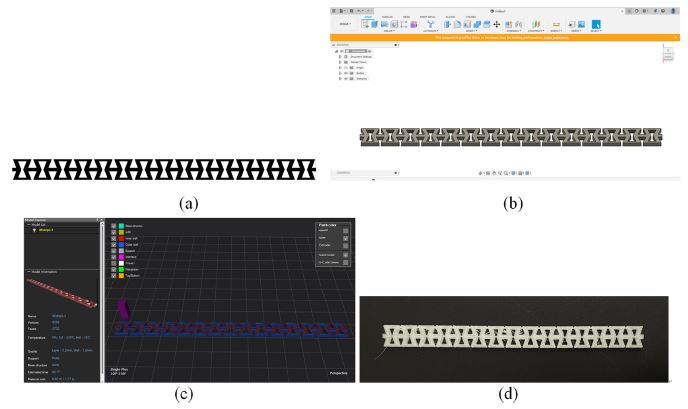
3D printing process image of REstrip; (a) 2D modeling, (b) .stl file, (c) g-code file, and (d) 3D printed REstrip.

Sample code of REstrip
2.3. 형상 회복 시험 조건
채우기 밀도별 REstrip의 형상 회복 시험의 개략도는 Fig. 3에 나타냈으며, 형상 회복 시험 조건은 3단계로 진행하였다. 1단계는 3D 프린팅하여 RE 스트립 액추에이터를 준비하는 단계이다. 2단계는 1단계의 샘플을 열풍 건조기(WOF-155, Daihan Scientific Co. Ltd., Korea)를 사용하여 50oC에서 10분간 정하중 변형하는 단계이다. 정하중 변형은 하중 100 gf 및 300 gf을 부여하여 변형하였다. 정하중 변형된 샘플은 24시간 동안 상온에서 보관하였다. 3단계는 2단계 샘플을 형상 회복하는 단계이다. 형상 회복은 40oC, 50oC, 60oC, 70oC, 80oC 5가지 온도 조건에서 5분간 회복 시험을 진행하였다. 이 때, 초하중 1 g을 적용하였고, 회복된 샘플은 24시간 동안 상온에서 보관하였다.
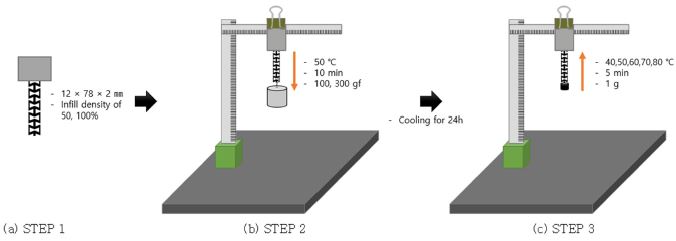
Scheme of shape recovery process of REstrip with various infill density.
2.4. 형상 회복 특성 분석
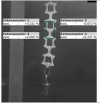
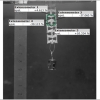
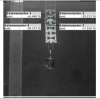
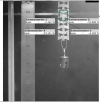
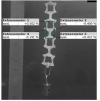
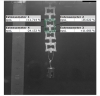
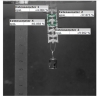
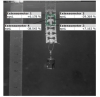
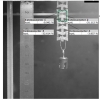
채우기 밀도별 REstrip 샘플의 auxetic 특성을 확인하고자, 포아송비를 측정하였다. 포아송비는 5분간 회복 시험이 진행되는 동안 영상을 촬영하여 얻어진 영상에서 RE 한 단위의 포아송비를 식 (1)으로 계산하였다. 영상은 디지털 카메라(VCXU-123M.K06, Gom, Germany)를 GOM Snap 2D 2020(Gom, Germany) 프로그램에 연결하여 촬영하였고, Gom Correlate 2020(Gom, Germany) 프로그램에서 영상을 변환하여 확인하였다. 측정 위치는 Fig. 4에 나타내었다.
| (1) |
Where, ν : Poisson’s ratio
εt : The average of transverse strain
εl : The average of longitudinal stain
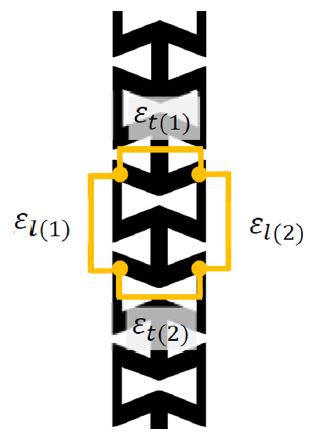
Measurement position of poisson’s ratio of REstrip.
채우기 밀도별 REstrip의 형상 회복 특성은 형상 회복률을 확인하였다. 형상 회복률은 5분간 형상 회복 실험을 완료 후 샘플 길이를 1단계 샘플 길이와 비교하여 식 (2)으로 계산하였다.
| (2) |
Where, R: Shape recovery ratio
ε : the sample length at Step 1
εr : the recovery length at Step 3
또한, 채우기 밀도별 REstrip 샘플의 형상 회복 후 auxetic 성능을 확인하기 위해 회복된 샘플 중 가운데 위치한 RE 구조체 한 단위의 길이를 확인하고, 형상 회복률을 비교하였다. RE 구조체의 형상 회복률은 회복 실험이 완료된 3단계의 RE 구조체 길이를 1단계의 RE 구조체 길이와 비교하였으며, 식 (3)를 통해 계산하였다. 각 길이 측정 위치는 Fig. 5에 나타내었다.
| (3) |
Where, RRE : Shape recovery ratio of RE structure
εRE : : the length of RE structure at Step 1
εr : the recovered length of RE structure at Step 3
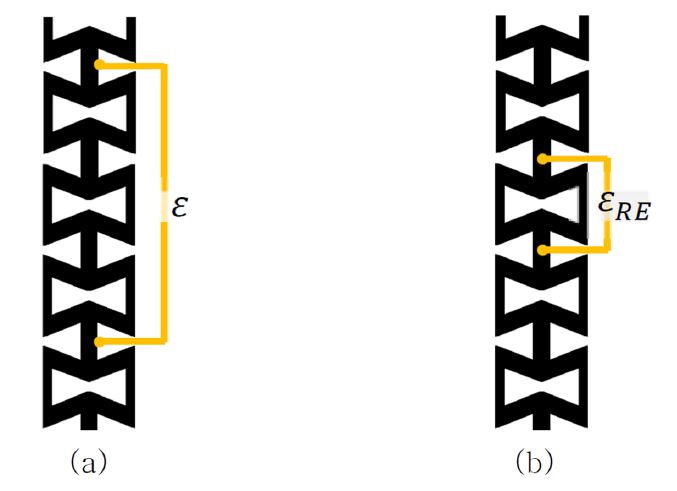
Measurement position; (a) sample length of REstrip and (b) RE structure.
3. 결과 및 고찰
3.1. 채우기 밀도별 REstrip의 포아송비 특성
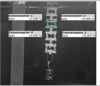
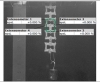
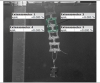
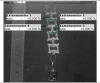
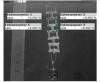
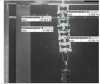
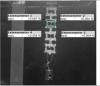
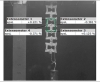
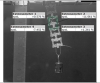
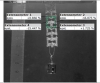
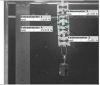
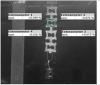
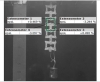
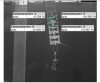
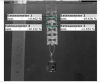
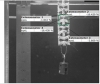
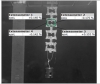
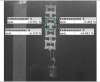
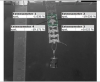
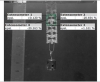
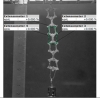
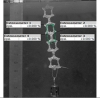
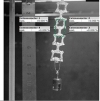
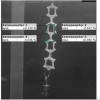
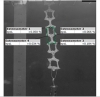
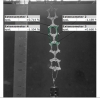
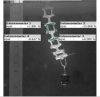
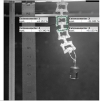
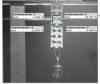
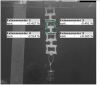
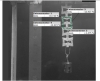
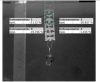
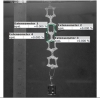
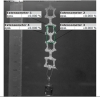
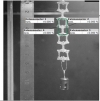
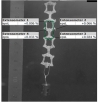
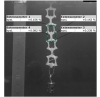
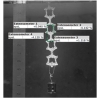
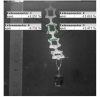
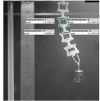
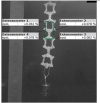
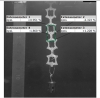
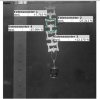
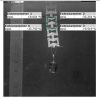
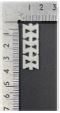
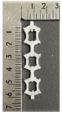
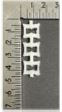
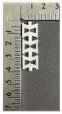
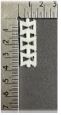
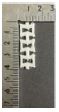
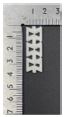
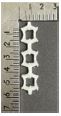
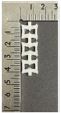
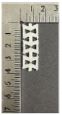
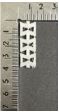
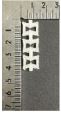
Table 2-5은 채우기 밀도 및 정하중 변형 조건에 따른 REstrip의 형상 회복 거동을 30초 단위로 나타냈으며, Fig. 6은 채우기 밀도별 REstrip의 포아송비를 나타낸 그래프이다. 포아송비는 150초까지 10초 단위로 확인하였다.
Shape recovery images of REstrip-50/100 with various infill densities applied various recovery temperature
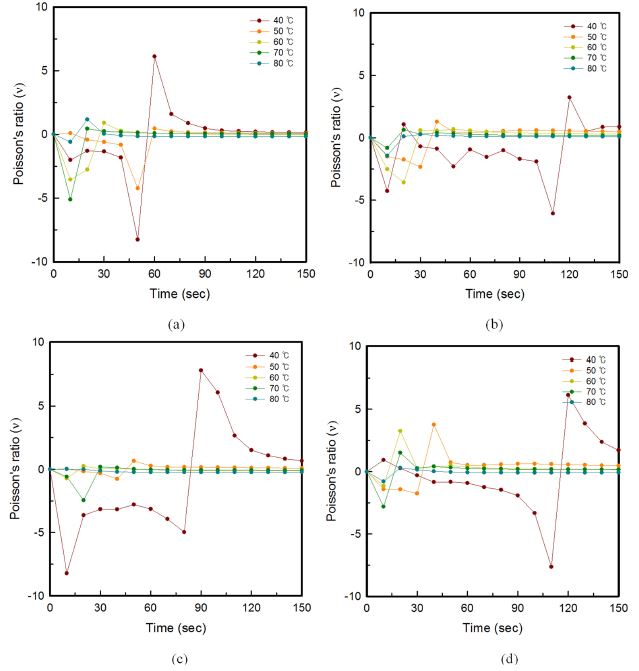
Poisson’s ratio of REstrip with various infill density; (a) REstrip-50/100, (b) REstrip-50/300, (c) REstrip-100/100, and (d) REstrip-100/300.
REstrip의 형상 회복 거동 결과는 다음과 같다. REstrip-50 및 REstrip-100 모두 회복 온도 40oC에서는 형상 회복 거동이 나타나지 않았으며, 회복 온도 50oC에서는 60초에 형상 회복 거동이 나타난 후 120초 이후에는 유사하게 나타났다. 회복 온도 60oC에서는 60초에 형상 회복하여 90초 이후로 유사하였다. 회복 온도 70oC 및 80oC에서는 30초 이상에서 형상 회복 거동을 보이며 60초 이후 유사하였다. 또한 정하중 조건별 형상 회복 거동은 300 gf로 변형된 시료도 형상 회복된 이후에는 100 gf로 변형된 시료와 유사한 결과를 나타내는 것으로 확인하였다.
이에 형상 회복 거동에 따른 포아송비 결과는 다음과 같다. 회복 온도가 40oC인 경우 포아송비는 약 −8에서 8 사이의 범위로 값이 가장 크므로 회복이 되지 못하여 auxetic 특성이 나타나지 않았다. 그러나 REstrip-50/100의 경우 80초 이후, REstrip-50/300은 130초, REstrip-100/100은 130초, REstrip-100/300은 150초 이후 −1에서 1 사이의 범위로 나타나는 것으로 확인하였다. 회복 온도가 50oC인 경우 포아송비는 약 −5에서 5 사이의 범위를 나타냈으며, REstrip-50/100의 경우 60초, REstrip-50/300은 40초, REstrip-100/100은 0초, REstrip-100/300은 60초 이후에서 −0.7에서 7 사이의 범위로 값이 수렴하였다. 60oC와 70oC일 경우에도 약 −5에서 5 사이의 범위로 나타났다. 그러나 모든 샘플이 30초 이후에 값이 −0.5에서 0.5 이내의 값을 나타냈다. 특히, 80℃일 경우에는 −1에서 1 사이의 범위에서 포아송비 값으로 나타나 가장 auxetic 특성이 잘 나타났고, 30초 이후 −0.2에서 0.2 이내의 값을 가지는 것으로 확인하였다. 따라서, 형상 회복 거동과 포아송비는 같은 경향으로 나타나는 것으로 확인하였고, 회복 온도가 높고 회복 시간이 증가할수록, 짧은 시간 내에 음의 값에서 양의 값으로 증가한 후 −0.5에서 0.5 사이의 범위로 안정되어 형태 유지성을 가지는 auxetic 특성을 보이는 경향으로 나타났다. 정하중 조건별 포아송비는 100 gf로 변형한 시료의 경우 100초 이내 및 300 gf로 변형한 시료의 경우 140초 이내에서 포아송비 값이 -1에서 1 사이의 범위로 나타났다. 따라서, 100 gf로 변형한 시료가 300 gf로 변형한 시료보다 짧은 시간에 auxetic 특성을 나타내는 것으로 확인하였다.
Shape recovery images of REstrip-50/300 with various infill densities applied various recovery temperature
Shape recovery images of REstrip-100/100 with various infill densities applied various recovery temperature
Shape recovery images of REstrip-100/300 with various infill densities applied various recovery temperature
3.2. 채우기 밀도별 REstrip의 형상 회복률
Table 6은 5분간 회복 시 형상 회복 특성을 나타낸 표이며, Fig. 7은 형상 회복률을 나타낸 그래프이다.
Sample images of shape recovered REstrip with various infill densities
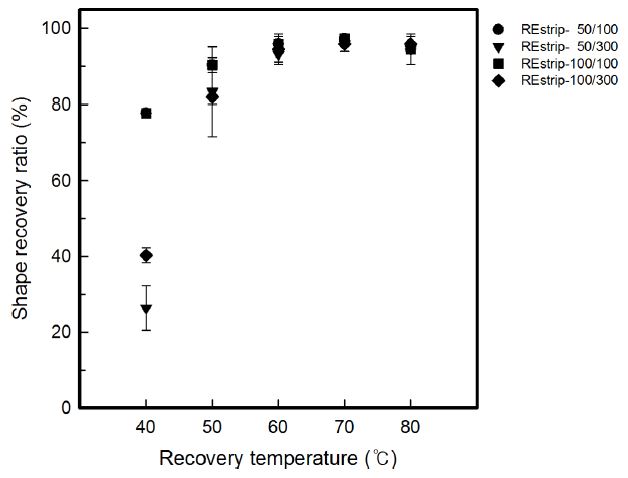
Shape recovery ratio of REstrip with various infill density.
형상 회복 실험 후의 샘플 길이는, 40oC에서 80oC로 회복 온도가 증가할수록, 채우기 밀도 50% 샘플의 경우, REstrip-50/100은 44.0 ± 0.0 mm, 39.5 ± 0.7 mm, 37.5 ± 0.7 mm, 37.0 ± 0.0 mm, 38.0 ± 0.0 mm, REstrip-50/300은 62.5 ± 2.1 mm, 42.0 ± 4.2 mm, 38.5 ± 0.7 mm, 37.5 ± 0.7 mm, 38.0 ± 1.4 mm로 회복되었다. 다음으로 샘플의 채우기 밀도가 100%의 경우 REstrip-100/100은 REstrip-50/100과 동일하게 44.0 ± 0.0 mm, 39.5 ± 0.7 mm, 37.5 ± 0.7 mm, 37.0 ± 0.0 mm, 38.0 ± 1.4 mm로 회복되었으며, REstrip-100/300은 57.5 ± 0.7 mm, 42.5 ± 0.7 mm, 37.5 ± 0.7 mm, 37.5 ± 0.7 mm, 37.5 ± 0.7 mm으로 회복되었다. 채우기 밀도별 REstrip은 5분간 회복시험 후 회복된 샘플 길이는 모두 70oC에서 가장 짧은 것으로 확인되었다.
회복된 길이의 형상 회복률은 채우기 밀도 50% 및 100% 모두 정하중 100 gf로 변형된 REstrip-50/100 및 REstrip-100/100이 동일하게, 77.8%, 90.3%, 95.8%, 97.2%, 94.4%로 나타났다. 정하중 300 gf로 변형된 REstrip-50/300은 26.4%, 83.3%, 93.1%, 95.8%, 94.4% 및 REstrip-100/300은 40.3%, 81.9%, 94.4%, 95.8%, 95.8%로 나타났다. 따라서, 채우기 밀도 별 REstrip은 회복 온도가 증가할수록 증가하는 경향을 보였으며, 모두 형상 회복률이 회복 온도 70oC에서 가장 우수하게 나타났다. 형상 회복률은 100 gf로 정하중 변형할 경우 회복 온도 50oC 이상에서, 300 gf로 정하중 변형할 경우 회복 온도 60oC 이상에서 90% 이상 형상 회복률이 나타나 1단계 길이와 유사하게 회복이 가능한 것으로 확인하였다. 또한 정하중 100 gf로 변형할 경우, 채우기 밀도 별 샘플의 형상 회복률은 차이를 나타내지 않았지만, 정하중 300 gf로 변형할 경우 REstrip-100/300이 REstrip-50/300보다 더 높은 회복률을 나타냈다. 형상회복률은 70oC에서 가장 우수한 것으로 나타났다. TPU는 유리 전이 온도와 용융온도 사이의 온도를 가할 경우 소프트 세그먼트 뿐만 아니라 하드 세그먼트 영역도 반결정화(semi-crystalline) 상태가 되므로 형태변형이 가능하며, 해당 온도대에서 온도가 증가할수록 원 상태로의 회복도 용이해지게 된다(Drobny, 2014). 그러나 80oC는 SMTPU의 유리 전이 온도 피크가 나타나는 온도 범위인 50-75oC 이상으로 REstrip의 점도가 낮아져, 5분 회복시간 동안 REstrip의 길이가 최대 회복 후 늘어나 변형된 것으로 확인된다.
3.3. 채우기 밀도별 REstrip의 re-entrant 구조체 형상 회복률
Re-entrant 구조체의 형상 회복 특성은 5분간 회복 후 한 반복단위의 길이 변화를 통해 확인하였다. Table 7은 회복 시험 후 형상 회복된 RE 구조체의 이미지를 나타낸 표이며, Fig. 8은 형상 회복률의 그래프이다.
Sample images of shape recovered REstrip with various infill densities
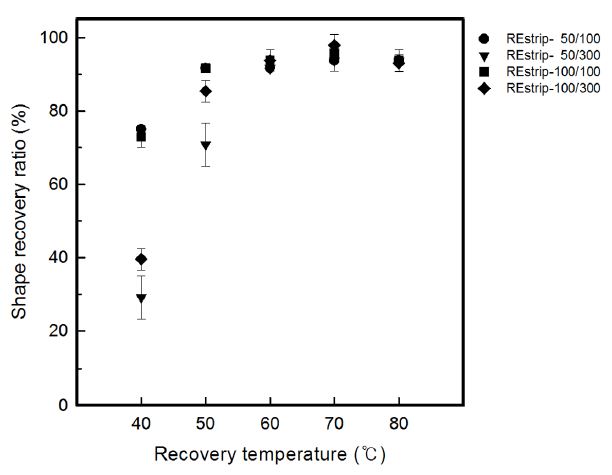
Shape recovery ratio of RE structure of REstrip with various infill density.
REstrip 1단계의 RE 구조체는 12.0 mm로 모두 동일하게 확인되었다. 정하중 변형된 2단계의 RE 구조체는 채우기 밀도 50% 샘플의 경우, REstrip-50/100 및 REstrip-50/300이 각각 15.0 ± 0.0 mm 및 22.0 ± 0.0 mm로 변형되었으며, 채우기 밀도 100% 샘플도 동일한 경향으로, REstrip-100/100 및 REstrip-100/300이 각각 15.0 ± 0.0 mm 및 22.0 ± 0.0 mm로 변형된 것을 확인하였다.
3단계에서 RE 구조체의 길이는, 40oC에서 80oC로 회복 온도가 증가할수록, 채우기 밀도 50%의 REstrip-50/100의 경우 15.0 ± 0.0 mm, 13.0 ± 0.0 mm, 13.0 ± 0.0 mm, 12.5 ± 0.7 mm, 12.5 ± 0.0 mm, REstrip-50/300은 20.5 ± 0.7 mm, 15.5 ± 0.7 mm, 13.0 ± 0.0 mm, 12.8 ± 0.4 mm, 12.8 ± 0.4 mm로 회복되었다. 다음으로 샘플의 채우기 밀도가 100%인 REstrip-100/100은 15.3 ± 0.4 mm, 13.0 ± 0.0 mm, 12.8 ± 0.4 mm, 12.5 ± 0.0 mm, 13.3 ± 0.4 mm로 회복되었으며, REstrip-100/300은 19.3 ± 0.4 mm, 13.8 ± 0.4 mm, 12.8 ± 0.4 mm, 12.3 ± 0.4 mm, 12.8 ± 0.3 mm으로 회복되었다. 앞서 채우기 밀도별 REstrip의 5분간 회복시험 후 회복된 샘플 길이와 동일한 경향으로 모두 70oC에서 가장 짧은 것으로 확인되었다.
이를 1단계의 RE 구조체와 형상 회복률을 계산한 결과로, 회복 온도가 증가할수록REstrip-50/100은 75.0-93.8%, REstrip-50/300은 29.2-93.8%, REstrip-100/100은 72.9-95.8%, REstrip-100/300은 39.6-97.9% 범위로 나타났다. 따라서, REstrip의 형상 회복 특성과 동일한 경향으로 나타나, 채우기 밀도가 100%의 경우 50%일 때보다 RE 구조체의 형상 회복률이 더 우수한 것으로 나타났다. 또한 RE 구조체가 90% 이상 회복가능한 온도 범위는 100 gf로 정하중 변형할 경우에는 50oC 이상 및 300 gf로 정하중 변형할 경우에는 60oC 이상으로 나타남을 확인하여, REstrip은 정하중 변형 후 회복 시 auxetic 특성을 가지는 것으로 확인하였다.
4. 결 론
본 연구에서는 온도 자극에 변형 및 회복 가능한 SMTPU로 출력한 REstrip을 액추에이터로 적용 가능성을 확인하고자 하였으며, 회복 거동에 가장 적합한 3D 프린팅 채우기 밀도 조건, 형상 회복 시 온도 조건을 확인하고자 하였다. 형상 회복 특성은 포아송비, 형상 회복률을 측정하였다. 결과는 다음과 같이 요약할 수 있다.
형상 회복 시 포아송비는 회복 시간이 증가할수록, 음의 값에서 양의 값으로 증가 후 −0.5에서 0.5 사이의 값으로 안정되는 경향을 가졌다. 또한 회복 온도가 높을수록 0에 가까운 포아송비 값을 나타내어 회복 온도가 높을수록 auxetic 특성이 잘 나타나는 것으로 확인했다.
형상 회복률은 70oC에서 형상 회복률이 가장 높은 것으로 확인하였고, 형상 회복률이 90%이상 나타나는 온도 범위는 100 gf로 정하중 변형할 경우 회복 온도 50oC 이상 및 300 gf로 정하중 변형할 경우 회복 온도 60oC 이상으로 나타났다. 이는 유리 전이 온도가 나타나는 범위보다 높은 온도 80℃에서 회복할 경우 최대 회복 후 추가 변형이 일어남을 확인하였다. 또한 채우기 밀도별 REstrip은 REstrip-100이 REstrip-50보다 형상 회복률이 우수하였다.
RE 구조체의 형상 회복률은 70oC에서 가장 높고, 100 gf로 정하중 변형할 경우 회복 온도 50oC 이상 및 300 gf로 정하중 변형할 경우 회복 온도 60oC 이상에서 형상 회복률이 90% 이상 나타났다. 따라서 REstrip은 auxetic 특성을 나타내는 것을 확인하였다.
따라서, 채우기 밀도 조건은 100% 및 온도 조건은 70oC가 액추에이터로 적용 시 적합한 조건이며, 제조된 REstrip은 auxetic 특성을 나타냄을 확인하였다. 추후 연구에서는 채우기 밀도 조건 100%를 적용하여 REstrip을 제조하고 형상 회복 시 적용 하중 조건을 다양하게 설정하고, 회복력의 정량적 측정을 진행하고자 하며, 신체에 적합한 온도에서 회복가능한 SMTPU를 확인하고자 한다.
Acknowledgments
본 연구는 정부(과학기술정보통신부)의 재원으로 한국연구재단의 지원을 받아 수행된 연구임(NRF-2021R1A4A1022059).
References
-
Abrisham, M., Panahi-Sarmad, M., Mir Mohamad Sadeghi, G., Arjmand, M., Dehghan, P., & Amirkiai, A. (2020). Microstructural design for enhanced mechanical property and shape memory behavior of polyurethane nanocomposites - Role of carbon nanotube, montmorillonite, and their hybrid fillers. Polymer Testing, 106642.
[https://doi.org/10.1016/j.polymertesting.2020.106642]

-
Ardebili, M. K., Ikikardaslar, K. T., Chauca, E., & Delale, F. (2018). Behavior of soft 3D-printed auxetic structures under various loading conditions. Proceedings of the ASME 2018 International Mechanical Engineering Congress and Exposition, Pittsburgh, Pennsylvania, USA, pp. V009T12A027.
[https://doi.org/10.1115/IMECE2018-87859]
-
Choi, H. Y., Shin, E. J., & Lee, S. (2022). Design and evaluation of 3D-printed auxetic structures coated by CWPU/graphene as strain sensor. Scientific Reports, 12, 7780.
[https://doi.org/10.1038/s41598-022-11540-x]
-
Dong, K., Panahi-Sarmad, M., Cui Z., Huang, X., & Xiao, X. (2021). Electro-induced shape memory effect of 4D printed auxetic composite using PLA/TPU/CNT filament embedded synergistically with continuous carbon fiber - A theoretical & experimental analysis. Composites Part B - Engineering, 220, 108994.
[https://doi.org/10.1016/j.compositesb.2021.108994]
-
Drobny, J. G. (2014). Handbook of thermoplastic elastomers. Amsterdam: Elviser
[https://doi.org/10.1016/B978-0-323-22136-8.00013-2]
-
Gorbunova, M. A., Anokhin, D. V., & Badamshina, E. R. (2020). Recent advances in the synthesis and application of thermoplastic semicrystalline shape memory polyurethanes. Polymer Science, Series B, 62(5), 427-450.
[https://doi.org/10.1134/S1560090420050073]
-
Gu, X., & Mather, P. T. (2012). Entanglement-based shape memory polyurethanes - Synthesis and characterization. Polymer, 53(25), 5924-5934.
[https://doi.org/10.1016/j.polymer.2012.09.056]
-
Ji, X., Gao, F., Geng, Z., & Li, D. (2021). Fabrication of thermoplastic polyurethane/polylactide shape-memory blends with tunable optical and mechanical properties via a bilayer structure design. Polymer Testing, 97, 107135.
[https://doi.org/10.1016/j.polymertesting.2021.107135]
-
Jung, I., Kim, H., & Lee, S. (2021). Characterizations of 3D printed re-entrant pattern/aramid knit composite prepared by various tilting angles. Fashion and Textiles, 8, 44.
[https://doi.org/10.1186/s40691-021-00273-6]
-
Jung, I., Park, Y., Choi, Y., Kim, J., & Lee, S. (2022a). A study on the motion control of 3D printed fingers. Textile Science and Engineering, 24(3), 333-345.
[https://doi.org/10.5805/SFTI.2022.24.3.333]
-
Jung, I., Shin, E., & Lee, S. (2022b). Morphological characteristics according to the 3D printing extrusion temperature of TPU filaments for different hardnesses. Textile Science and Engineering, 59(1), 36-46.
[https://doi.org/10.12772/TSE.2022.59.036]
-
Jung, I., & Lee, S. (2022). Compressive properties of 3D printed TPU samples. Journal of the Korean Society of Clothing and Textiles, 46(3), 481-493.
[https://doi.org/10.5850/JKSCT.2022.46.3.481]
-
Kabir, S., & Lee, S. (2020). Study of shape memory and tensile property of 3D printed sinusoidal sample/nylon composite focused on various thicknesses and shape memory cycles. Polymers, 12(7), 1600.
[https://doi.org/10.3390/polym12071600]
-
Kabir, S., Kim, H., & Lee, S. (2020). Physical property of 3D-printed sinusoidal pattern using shape memory TPU filament. Textile Research Journal, 90(21-22), 2399-2410.
[https://doi.org/10.1177/0040517520919750]
-
Kim, H., & Lee, S. (2020). Mechanical properties of 3D printed re-entrant pattern with various hardness types of TPU filament manufactured through FDM 3D printing. Textile Science and Engineering, 57, 166-176.
[https://doi.org/10.12772/TSE.2020.57.166]
-
Kim, H., Kabir, S., & Lee, S. (2021). Mechanical properties of 3D printed re-entrant pattern/neoprene composite textile by pattern tilting angle of pattern. Journal of the Korean Society of Clothing and Textiles, 45(1), 106-122.
[https://doi.org/10.5850/JKSCT.2021.45.1.106]
-
Lakes, R. S. (2017). Negative poisson’s ratio materials - Auxetic solids. Annual Review of Materials Research, 47, 63-81.
[https://doi.org/10.1146/annurev-matsci-070616-124118]
-
Li, T., Liu, F., & Wang, L. (2020). Enhancing indentation and impact resistance in auxetic composite materials. Composites Part B - Engineering, 108229.
[https://doi.org/10.1016/j.compositesb.2020.108229]
-
Momeni, F., Liu, X., & Ni, J. (2017). A review of 4D printing. Materials and Design. 122, 42-79.
[https://doi.org/10.1016/j.matdes.2017.02.068]
-
Nugroho, W. T., Dong, Y., Pramanik, A., Leng, J., & Ramakrishna, S. (2021). Smart polyurethane composites for 3D or 4D printing - General-purpose use, sustainability and shape memory effect. Composites Part B - Engineering, 223, 109104.
[https://doi.org/10.1016/j.compositesb.2021.109104]
-
Raasch, J., Ivey, M., Aldrich, D., Nobes, D. S., & Ayranci, C. (2015). Characterization of polyurethane shape memory polymer processed by material extrusion additive manufacturing. Additive Manufacturing, 8, 132-141.
[https://doi.org/10.1016/j.addma.2015.09.004]
-
Ren, X., Das, R., Tran, P., Ngo, T. D., & Xie, Y. M. (2018). Auxetic metamaterials and structures - A review. Smart Materials and Structures, 27(2), 023001.
[https://doi.org/10.1088/1361-665X/aaa61c]
- Sadasivuni, K. K., Deshmukh, K., Al-Maadeed, M. A. S. (2020). 3D and 4D printing of polymer nanocomposite materials: processes, applications, and challenges. Amsterdam: Elsevier.
-
Shin, E. J., Jung, Y. S., Chio, H. Y., & Lee, S. (2022a). Synthesis and fabrication of biobased thermoplastic polyurethane filament for FDM 3D printing. Applied Polymer, 139(40), e52959.
[https://doi.org/10.1002/pen.26075]
-
Shin, E. J., Park, Y. Y., Jung, Y. S., Choi, H. Y., & Lee, S. (2022b). Fabrication and characteristics of flexible thermoplastic polyurethane filament for fused deposition modeling three-dimensional printing. Polymer Engineering and Science, 62(9), 2947-2957.
[https://doi.org/10.1002/pen.26075]
-
Simons, M. F., Digumarti, K. M., Conn, A. T., & Rossiter, J. (2019). Tiled auxetic cylinders for soft robots. Proceedings of the 2019 2nd IEEE International Conference on Soft Robotics (RoboSoft), Seoul, Korea, pp. 62-67.
[https://doi.org/10.1109/ROBOSOFT.2019.8722742]
-
Song, J. J., Chang, H. H., & Nagui b, H. E. (2015a). Biocompatible shape memory polymer actuators with high force capabilities. European Polymer Journal, 67, 186-198.
[https://doi.org/10.1016/j.eurpolymj.2015.03.067]
-
Song, J. J., Chang, H. H., & Naguib, H. E. (2015b). Design and characterization of biocompatible shape memory polymer(SMP) blend foams with a dynamic porous structure. Polymer, 56, 82-92.
[https://doi.org/10.1016/j.polymer.2014.09.062]
-
Valvez, S., Reis, P. N. B., Susmel, L., & Berto, F. (2021). Fused filament fabrication-4D-printed shape memory polymers - A review. Polymers, 13(5), 701.
[https://doi.org/10.3390/polym13050701]
-
Villacres, J., Nobes, D., & Ayranci, C. (2020). Additive manufacturing of shape memory polymers - Effects of print orientation and infill percentage on shape memory recovery properties. Rapid Prototyping Journal, 26(9), 1593-1602.
[https://doi.org/10.1108/RPJ-09-2019-0239]
-
Wang, Y., Zheng, Z., Ding, X., & Peng, Y. (2014). Relation between temperature memory effect and multiple-shape memory behaviors based on polymer networks. RSC Advances, 4(39), 20364.
[https://doi.org/10.1039/c4ra02600d]
-
Xi, H., Xu, J., Cen, S., & Huang, S. (2021). Energy absorption characteristics of a novel asymmetric and rotatable re-entrant honeycomb structure. Acta Mechanica Solida Sinica, 34(4), 550-560.
[https://doi.org/10.1007/s10338-021-00219-x]
-
Xu, X., Fan, P., Ren, J., Cheng, Y., Ren, J., Zhao, J., & Song, R. (2018). Self-healing thermoplastic polyurethane(TPU)/polycaprolactone (PCL)/multi-wall carbon nanotubes (MWCNTs) blend as shape-memory composites. Composites Science and Technology, 168(10), 255-262.
[https://doi.org/10.1016/j.compscitech.2018.10.003]