Fit and Pressure Analysis of Cycling Short Sleeve Tops Using a 3D Virtual Garment System

© 2021 (by) the authors. This article is an open access article distributed under the terms and conditions of the Creative Commons Attribution license (http://creativecommons.org/licenses/by/3.0/), which permits unrestricted use, distribution, and reproduction in any medium, provided the original work is properly cited.
Abstract
This study aims to analyze short sleeve cycling tops from three brands for a change in garment fit and pressure depending on the static and cycling postures. To this end, it used a 3D virtual garment system to virtualize the garments. Further, a cross-section of the 3D virtual garment data was obtained, and the space length was measured in the design-X program to prove the objectivity of the 3D virtual garment. The results indicated that three brands had a large space length at the front than the back because of the bent posture in cycling. Therefore, appropriate ease was required for the waist and abdomen. Although there were various cutting lines of the bodice panel by brand, the design of the cutting lines should consider the changes in the surface to reflect the bent posture in cycling. The results of this experiment confirmed that the wrinkles present in the 3D virtual garment were reflected in the cross-section and that the space length was small in the high-stress area, as shown in red. Therefore, it was proven the stress of the 3D virtual garment could be used for 3D virtual garment evaluation.
Keywords:
virtual garment simulation, 3D avatar, cycling wear, garment pressure1. Introduction
According to the Korea Bicycle Federation, high school cyclists and team registrations account for the largest percentage of participants. At the 27th Track Asia Junior Championships, both male and female students won 8 gold medals, 7 silver medals, and 1 bronze medal in both short and medium-long distances (Korea Cycling Federation [KCF], n. d.), and high school cyclists are looking forward to more high-performance results in the future. Despite the activities of high school cyclists, most cycling wear that is being developed is adult-branded, so it is necessary to develop cycling wear for the adolescent.
The stand collar, tight-fitting style, raglan sleeve, and sealing zipper are applied to the cycling wear design to keep out wind, reduce air resistance, and to move more freely (Liu et al., 2016). For long-distance cycling, cyclists wear cycling clothing that separates the top and bottom. The big difference between regular sportswear and cycling wear is that the shoulder slope angle is small, the center back length is long, and the center front length is short, because cycling is performed with a bent back.
Cycling wear is usually made of elastic material to apply appropriate pressure to the body, in order to increase the exercise performance of the athlete (Jeong, 2005). Furthermore, elastic garments for sportswear have been providing comfortable movement, minimizing the risk of injury or muscle fatigue, and reducing friction between body and clothing (Jariyapunya & Sutdaen, 2017). Forces generated during dynamic interactions between a garment and the human body induce pressure sensations. Garment fit and pressure comfort have been identified as important attributes (Zhang et al., 2002). Therefore, garment fit and pressure comfort play an important role in clothing comfort, especially in tight-fitting sportswear (Wong et al., 2004).
Recently with the advancement of 3D computer technology and the demand of made-to-measure garment, extending the 2D garment CAD into 3D has become a major trend in the garment industry and computer technology (Ancutienė & Sinkevičiūtė, 2011). Garment simulation makes it easy for designers, pattern makers, and apparel manufacturers to present style decisions, test the fit of a garment, and create accurate and visually stunning samples in less time and share them instantly, without expensive sewing and shipping costs (Olaru et al., 2012). In terms of production, the 3D virtual garment system has the advantage of enabling the garment fit to be analyzed by garment pressure, perspective view, contact point, etc. (Hong et al., 2015). However, most expert fashion designers analyze these measured ease allowances based on their own empirical knowledge to evaluate garment fit (Liu et al., 2017).
Previous studies using a 3D virtual garment system have mainly focused on subjective and image evaluation of casual clothes or bodice pattern development (Kim et al., 2014; Kim et al., 2015; Jeon, 2019; Seong & Kim, 2020), and there is a lack of research that objectively analyzes 3D virtual data on sportswear for adolescents.
Therefore, the purpose of this study is to analyze the change in garment fit and pressure depending on the static posture and the cycling posture of each brand by virtualizing the cycling wear top using the 3D virtual garment system. We intend to prove objectivity by measuring the space length for each area in the design-X program, so that the stress distribution shown in the 3D virtual garment system can be used for actual clothing evaluation. Furthermore, this study aims to provide the basic data necessary for the development of cycling wear for adolescent cyclists.
2. Methods
2.1. Experimental garment
The experimental garments are the cycling short sleeve tops of three brands selected as a result of a cycling wear brand preference survey targeting high school male cyclists in a prior study (Park, 2018). They consisted of different sleeves: brand A has raglan sleeves, brand B has set-in sleeves with gusset in the armpit for activity, and brand C has epaulet sleeves (Fig. 1). In CLO 3D Modelist ver.5.2, a 3D virtual garment program, the purpose of this study is to examine the changes in garment fit and garment pressure according to the cycling posture from the static posture, by examining the patterns of brands with different cutting lines and sleeves. Additionally, a total of 12 product sizes were measured to compare the 3D virtual garment fit of the three brands.
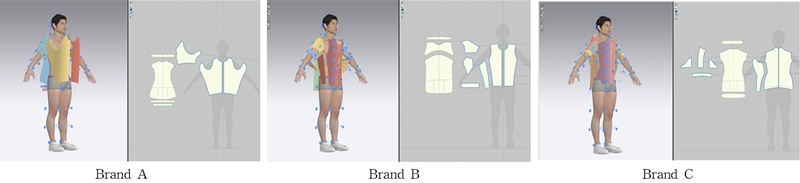
Cycling wear patterns in the CLO program.
2.2. 3D virtual fit and pressure
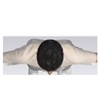
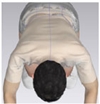
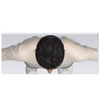
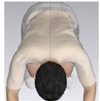
In this study, in order to form a 3D virtual avatar, the default avatar of MV1_Dario.avt of Male_V1 provided in the CLO 3D Modelist ver.5.2 was loaded, and set as the representative size out of 111 measurements of high school male cyclists by referring to previous study (Park, 2018). Table 1 presents the representative sizes of the high school male cyclist, and the sizes of the avatar were input in the order of stature and circumference, height, circumference, and length. In the CLO program, it is impossible to set the avatar by entering the angle when changing the avatar’s motion, so the avatar cannot be accurately controlled. Therefore, the static posture with spread arms and the cycling posture for 3D virtual garment simulation were set to the back, shoulders, and bent arm postures.

Input data for making the avatarUnit: cm
In this study, three patterns of cycling wear brands were converted into dxf files in the YUKA CAD for 3D virtual garment simulation, and then applied to the avatar created in the CLO program. When simulating virtual garments, the results of the garments may be different depending on the operation of the operator, so the garments were arranged using the arrangement points in the program, and virtual sewing. The material was Knit_jersey provided by the CLO program (Table 2).
Physical properties of fabric in the CLO program
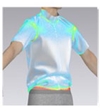
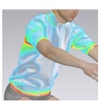
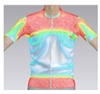
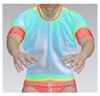
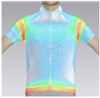
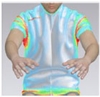
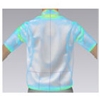
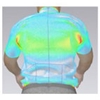
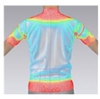
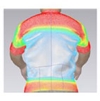
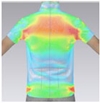
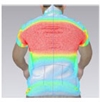
The analysis of 3D virtual garment was performed by comparing and analyzing garment fit and pressure change according to the cycling posture in the static posture, focusing on the transparency and stress. In 3D virtual garment, the stress refers to the degree of pressure on the body when the garment is simulated on the avatar. Areas with high stress with kPa values close to 100 appear in red, while areas with low stress appear in blue.
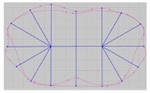
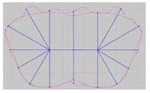
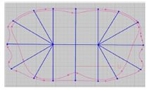
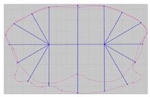
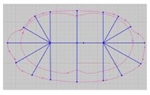
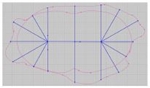
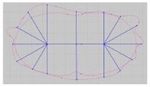
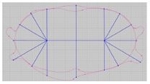
In this study, 3D virtual garment data was saved as an obj file in the CLO program, and it was imported from the Design-X program. Then, cross-section of the chest and the waist were obtained, and the space length measured to verify the 3D virtual garment program. Fig. 2 shows the measurement method of space length set up on the baseline, and the distance between the body and the garment was then measured. The measurement angle of each area was measured by dividing the center front (F), diagonal front right (FR0°, FR30°, FR60°), diagonal front left (FL0°, FL30°, FL60°), side right (SR90°), side left (SL90°), center back (B), diagonal back right (BR0°, BR30°, BR60°), and diagonal back left (BL0°, BL30°, BL60°), at 30° intervals.
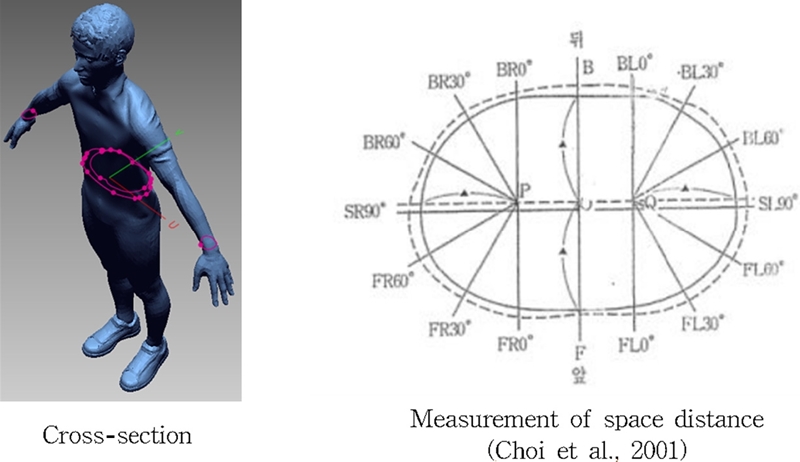
Cross-section and space distance.
3. Results and Discussion
3.1. Pattern size analysis
Table 3 shows the pattern sizes of the experimental garment that were measured from the product sizes. The neck width was found to be the largest in the order brand C > brand A > brand B. Brand B is the smallest shoulder drop, and it was judged to reflect the shoulder line rises during cycling. In both shoulder point to point and chest at 1" from armhole show that the upper chest is the largest in the order brand C > brand A > brand B. On the other hand, for the waist, brand A is the largest in the order brand A > brand C > brand B. In the front and back length from HPS, brand C is the longest, and the difference between the front and back length was found to be large. For the sleeve length, brand A is the longest in the order brand A > brand C > brand B, and brand B is the smallest in the sleeve opening bottom of the sleeve band. Additionally, the bicep across 1" seam showed no significant difference in sleeve width.
Product sizes of cycling wear topsUnit: cm
3.2. Results of 3D virtual fit and pressure analysis
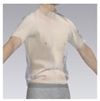
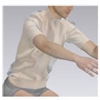
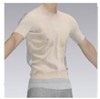
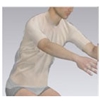
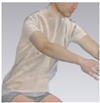
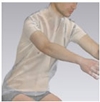
In this study, there was a difference between the size items of the CLO program, and the size items measured based on Size Korea, so the same size items were input, and those with different or no items were not input. The position of the height and the chest circumference were checked in the avatar editor, and as a result, they correspond to the stature and the bust circumference, so the basic shape of the avatar was completed by inputting them. Additionally, in order to compare and analyze the results of 3D virtual garment according to the cycling posture in the static posture, the static posture with the arms spread and the cycling posture with an arm bend angle of 150°, and a shoulder and arm bend angle of 90° were set (Fig. 3).
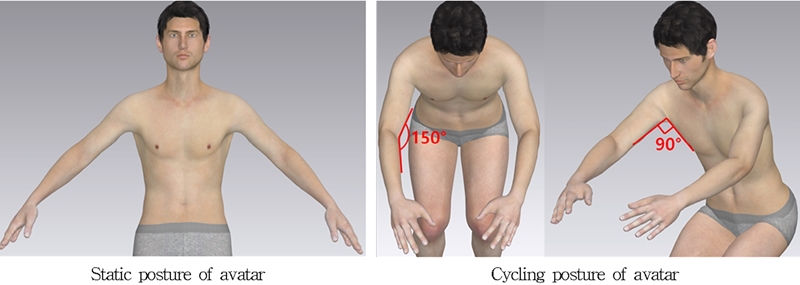
3D avatar.
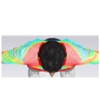
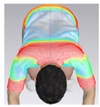
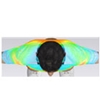
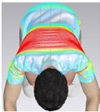
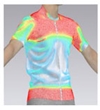
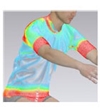
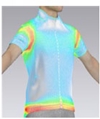
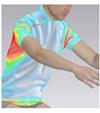
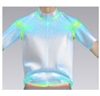
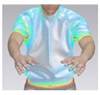
In this study, the results of the stress distribution according to the static and cycling postures by brand using the 3D virtual garment system were shown in Table 4. Although the stress distribution of the 3D garment pressure presented in this study does not exactly match the actual garment pressure value, it is possible to understand the change in garment pressure according to the difference between the movement of the human body, and the garment pattern.
Stress distribution of 3D virtual garment pressure presented in this study
3.2.2.1. Top and Side view
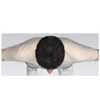
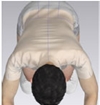
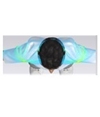
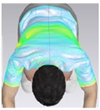
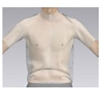
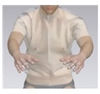
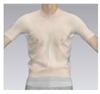
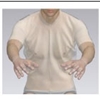
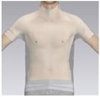
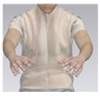
When viewed from the side, brand A’s bottom was rounded, so it flowed down toward the hip. When viewed from the top, there was no stress on the shoulder areas, and a lot of wrinkles appeared. In a static posture, there was red stress on the armpits, and a lot of ease on the abdomen. Brand B showed diagonal wrinkles on the side lines in both the static and cycling postures, resulting from the low shoulder slope, as shown the size of the shoulder drop. The ease of the waist and the abdomen were the smallest of the three brands, and were close to the body. When viewed from the top, strong stress appeared on the neck and the shoulder areas in the cycling posture, but through transparency, it was found to be close to the body without ease. Brand C’s high-neck collar did not close to the back neck, so it had a lot of ease, and appeared as blue stress. When viewed from the top, the shoulder straps of the epaulet sleeves were close to the body in the static posture, which appeared as green stress; but in the cycling posture, there was a lot of wrinkle, and weak blue stress. In the cycling posture, the sleeves were wrinkled, and the sleeves bands were made of a band, as for brand B, but they did not show strong stress, because they narrowed toward the opening band, and the length of the band was longer. Additionally, the back length from HPS was 68 cm, which was the longest of the brands, covering the hip.
3.2.2.2. Front view
Brand A had diagonal wrinkles on the shoulder and the armhole of the static posture. However, the size of the shoulder point to point was in the order Brand C > Brand A > Brand B. Therefore, it was judged that there was a lot of ease generated from the curve of the body panel sewing the raglan sleeves, rather than the shoulder width. It was confirmed through transparency that in the cycling posture, there was a lot of ease on the shoulders. The side lines were straight silhouettes, so there was a lot of ease on the waist, appearing as blue stress. Additionally, it was confirmed that Brand A had the largest waist size at 42.2 cm in the order Brand A > Brand C > Brand B from the waist measurements. In the static posture, red stress appeared on the front armpit of the sleeve, and weak yellow stress appeared on the hem of the sleeve. It was expected that the arm motion would be active without a feeling of pressure, because the hem of the sleeve was folded and sewn without a band. Brand B showed tight silhouettes on the neck and upper chest, appearing as strong red stress in the static posture. Whereas, the chest areas appeared as weak blue stress in the cycling posture. Brand B was the smallest at 38.0 cm in the order Brand A > Brand C > Brand B for the waist measurements. Brand B had side lines, so the ease of the side lines appeared smaller when virtualized. In the static posture, strong red stress appeared on the armpit, but in the cycling posture, strong stress appeared on the sleeve band. The reason was that the size of the sleeve opening bottom was the smallest in the order Brand C (14.2 cm) > Brand A (14.0 cm) > Brand B (12.5 cm). It was expected that the sleeve band would pull a lot, and interfere with cycling exercise. Additionally, strong stress was shown on the bottom of the bodice panel, because it was sewn with elastin inside, without a band. Brand C had a lot of ease on the side neck and the front neck in the static posture, and there was a lot of wrinkle in the cycling posture. This is because the high-neck collar was not close to the neck, and the neck width was the largest in the order Brand C (16.1 cm) > Brand A (13.5 cm) > Brand B (11.5 cm). Brand C is a design with an epaulet sleeve, and it was confirmed that while riding a cycle, the front small panel of the epaulet sleeve presses the body more. The shoulder point to point and chest at 1" from armhole sizes were 36.0 cm and 45.5 cm, respectively, which were the largest of the three brands, and it was confirmed that a lot of wrinkle was generated on the shoulder and chest area. To reflect the cycling posture, the front and back panels were princess line starting from the armhole. There was a lot of ease for the side line, because the front and back panels were connected, and the side line was straight.
3.2.2.3. Back view
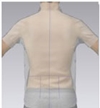
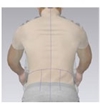
Brand A was able to confirm by the transparency that the shoulder areas were raised in the cycling posture. The back area appeared as blue stress in the static posture, but as green or yellow stress in the cycling posture. The chest at 1" from armhole’s size was in the order Brand C > Brand A > Brand B; but among the three brands, the loose fit and weak stress on the back area are based on the body’s natural curves ranging from the shoulders, waist and hem, which were judged to reflect the bent posture of cycling. Additionally, the size of the bottom width relaxed was 33.5 cm, which was same as Brand B, but it felt larger, because of round pattern of the bottom of the pocket. Brand B appeared as strong stress on the back neck circumference in the static posture, and strong stress on the back neck circumference and the back yoke in the cycling posture. Accordingly, the size of the shoulder point to point was the smallest in the order Brand C (36.0 cm) > Brand A (34.5 cm) > Brand B (33.5 cm), and showed strong stress, due to the yoke cutting line of the back panel in the cycling posture. Additionally, it was found that the stress on the bottom of bodice panel showed a strong red stress in the static posture, but the stress was weakened by showing a yellow stress in the cycling posture. Brand C showed strong red stress on the upper back in the static posture, and red stress showed greater width and stress in the cycling posture. The armhole of the drop shoulder was small, and it was sewn with the front and back panel of the epaulet sleeve, and pulling occurred. Additionally, horizontal wrinkles generated on the back area due to the tightness of the armhole in the cycling posture.
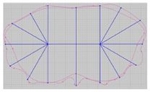
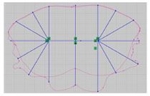
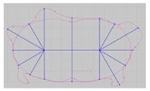
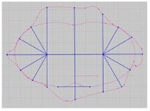
In this study, the 3D virtual garment data of the CLO program was analyzed by acquiring the cross-section of the chest and waist area in the Design-X program, and measuring the space length. The cross-sections and the space lengths according to the chest and waist of each brand were shown in Table 5, and the changes of the space length according to posture were shown in Fig. 4.
Cross-section and space length according to areaUnit: cm
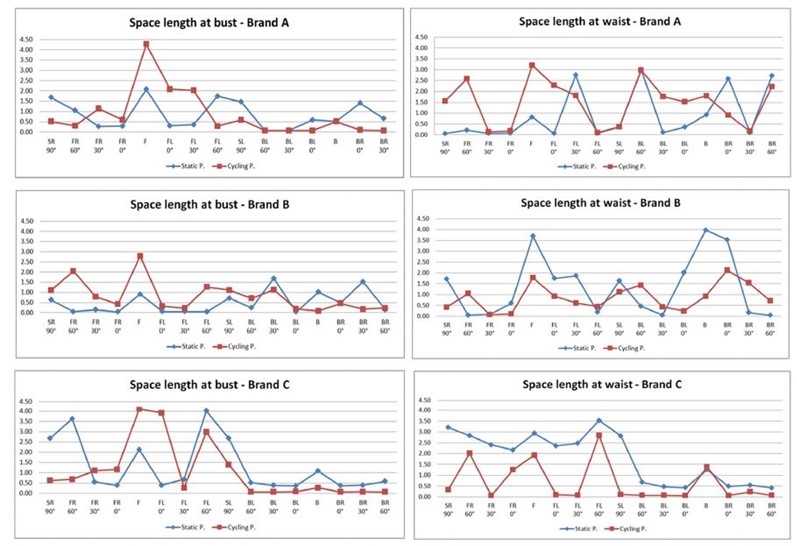
Space lengths of each area according to posture.* Vertical axis; space length(cm), Horizontal axis; measurement angle of space length for cross-section* p.:posture
3.2.3.1. Analysis of chest space length by brand
Brand A showed overall even distribution of space length in the static posture. In the cycling posture, the space length of SL 90° – SR 90° of the back area showing green stress was small (Fig. 4). It was found that the space length was large on the front showing as weak stress, especially, at F, FL O°, and FL 30° of the cycling posture. Brand B had a low shoulder slope, resulting in diagonal wrinkles, which showed the cross-section of the back in the static posture was to be particularly uneven. As shown in the graph of Fig. 4, it was confirmed that the space length of SL 90° – SR 90° of the back was measured irregularly. The front showed strong red stress in the static posture, and blue stress in the cycling, it was confirmed that in the static posture, the space length of SR 90° – SL 90° of the front was small, but in the cycling posture, the space length was large around the front chest. Brand C showed a lot of ease of the side line in 3D virtual garment, because the side lines were almost straight silhouette. The space lengths of FR 60° and FL 60° showed a large space length of 3.62 cm and 4.01 cm in the static posture, showing a rectangular cross-section. As shown in Fig. 4, it was found that the space length on the back was the smallest of the three brands in both the static and the cycling postures. This is the same result as the strong stress shown on the back of the 3D virtual garment. Additionally, in the cycling posture, the ease of the side lines was moved to the FR 0°, F, and FL 0° positions, resulting in a large space length in these areas.
3.2.3.2. Analysis of waist space length by brand
Brand A showed cross-section with partially large space lengths due to the bountiful shape of the back bottom, and the wrinkle of the front in the static posture. In particular, it was confirmed that the space lengths were large at 3.00 cm and 2.73 cm in the static posture, and 2.98 cm and 2.23 cm in the cycling posture, at BL 60° and BR 60°, respectively. Brand B’s space lengths of F and B were larger at 3.69 cm and 3.98 cm in the static posture, and the space length was smaller in the cycling posture. Accordingly, it was also confirmed in the cross-section of Table 4. Although there was no stress on the waist area of 3D virtual garment, transparency showed that it was closer to the body than other brands. Brand C had a larger space length of the front than the back in the static posture, and a larger space length of the side, except for FR 0° and F in the cycling posture. The diagonal wrinkles of the side lines due to the cycling posture of raised arms formed a convex cross-section, at FR 60° and FL 60°, and it was confirmed that the space lengths were large at 2.01 cm and 2.98 cm, respectively. Additionally, overall, it was found that the space length was smaller in the cycling posture than in the static posture
4. Conclusions
In this study, we compared and analyzed the garment fit and pressure of cycling short sleeve tops of domestic and overseas brands according to the cycling posture and the static posture, by virtual representation of the garments being worn on an avatar using the 3D virtual garment system. In addition, in order to prove the objectivity of the 3D virtual garment, a cross-section of the 3D virtual garment data was obtained, and the space length was measured. The results of the study are as follows.
Brand A showed green stress on the back in the cycling posture, and the space length was small. In the front, there was a lot of ease on the front in the cycling posture, so there was no stress in the 3D virtual fitting, and the space length was large. The waist size was the largest, which was confirmed by measuring the cross-section and space length, so that many wrinkles generated due to the weak blue stress and a ease in the 3D virtual garment. Although the chest width measurement of brand A was in the order Brand C > Brand A > Brand B, the weak blue stress is considered to be the result of the princess line, reflecting the changes of body of the cycling motion, which starts from the armhole of the back panel. Consequently, it is considered that the cutting line did not affect the cycling motion, because the cutting lines of the bodice panel were smaller than those of the other brands. Therefore, the blue stress shown on the shoulder and abdomen confirmed the large space length, and an appropriate ease was required for these areas. The raglan sleeve and the rounded curve of the shoulder should be designed to fit the body more closely without wrinkles, taking into account the motion of the arm.
Brand B showed green stress on the chest area in the static posture, but blue stress in the cycling posture. It was confirmed that the space length was small in the static posture, while the space length was larger in the cycling posture. Additionally, the slope of the shoulder line was the lowest among brands, resulting in diagonal wrinkles, which was confirmed in the cross-section, and blue stress also appeared on the side line, so it was judged that the shoulder slope should be increased. This brand shows strong stress on the neck, because its neck width is smaller than that of the other brands, and this can be a disturbing factor during cycling. Additionally, in order to reflect the bent posture of cycling, the yoke cutting line of the back panel shows strong stress on the shoulder and back, so it is a matter to be considered when manufacturing such cycling wear.
Brand C showed that the front and back panels are princess lines to reflect the bent posture of cycling, and the side lines are straight silhouettes, so there is a lot of ease on the side lines. In the cycling posture, the ease of the side line was concentrated toward the front center, and there was no stress in the 3D virtual garment, and this was confirmed in the cross-section. Therefore, appropriate ease was required for the waist and abdomen. In addition, strong red stress on the back area appeared a small space length in both the static and cycling postures. The princess line on the back shows strong pressure on the entire back in the cycling posture, and the cutting line should be designed in consideration of the bent posture. The areas with large air resistance during cycling are the neck and shoulder areas, but the design of this brand’s high neck collar is not close to the body, so it can be confirmed that it is most reasonable to design with the aero-collar design of most cycling wear brands.
According to this study, the three brands had larger space length at the front than the back, because of the bent posture of cycling. In order to reflect the bent posture of cycling, there were various cutting lines of the bodice panel by brand, but the design cutting lines should be designed in consideration of changes in the surface of the body. The result of this experiment confirmed that the wrinkles shown in the 3D virtual garment were reflected in the cross-section, and that the space length was small in the area where the stress was red. It was proven that the stress of the 3D virtual garment could be used for the 3D virtual garment evaluation.
References
-
Ancutienė, K., & Sinkevičiūtė, D. (2011). The influence of textile materials mechanical properties upon virtual garment fit. Materials Science, 17(2), 160-167.
[https://doi.org/10.5755/j01.ms.17.2.486]

- Choi, H. S., Park, J. H., Lee, K. M., Do, W. H., & Kim, E. K. (2001). Active sportswear design. Seoul: Suhaksa.
- Hong, E. H., Uh, M. K., & Kim, K. A. (2015). Comparative analysis of the patterns for men's jean pants by 3D virtual garment simulation evaluation. Journal of the Korea Fashion and Costume Design Association, 17(2), 223-237.
- Jariyapunya, N., & Sutdaen, J. (2017). Construction simulation 3D of tight-fitting sportswear to evaluate tension distribution of elastic fabric. Journal of Engineering, RMUTT, 2, 69-76.
- Jeon, S. (2019). Development of the high school girls bodice pattern using virtual garment simulation. Fashion & Textile Research Journal, 21(2), 189-202.
- Jeong, Y. H. (2005). Pattern development of cycling pants from 3D human scan data considering the moving posture and the curvature plot for comfortable pressure sensation. Unpublished doctoral dissertation, Chungnam National University, Daejeon.
-
Kim, K. A., Hong, E. H., & Uh, M. K. (2014). Comparative analysis of men's slim pants patterns-Using a 3D CLO virtual garment system. The Research Journal of the Costume Culture, 22(4), 605-618.
[https://doi.org/10.7741/rjcc.2014.22.4.605]
- Kim, M. K., Nam, Y. J., & Kim, K. S. (2015). A comparative study on fit and appearance for the applicability of mass customization of a 3D virtual garment system. Korean Society of Basic Design & Art, 16(6), 77-87.
- Korea Cycling Federation [KCF], (n. d.) Cyclenews. Retrieved February 08, 2021, from http://cycling.or.kr/news/news/?mode=view&nid=20191118153504585&page=2&sTour=&sPart=&field=&keyword=
-
Liu, K., Kamalha, E., Wang, J., & Agrawal, T. K. (2016). Optimization design of cycling clothes’ patterns based on digital clothing pressures. Fibers and Polymers, 17(9), 1522-1529.
[https://doi.org/10.1007/s12221-016-6402-2]
-
Liu, K., Zeng, X., Bruniaux, P., Wang, J., Kamalha, E., & Tao, X. (2017). Fit evaluation of virtual garment try-on by learning from digital pressure data. Knowledge-Based Systems, 133, 174-182.
[https://doi.org/10.1016/j.knosys.2017.07.007]
- Olaru, S., Filipescu, E., Filipescu, E., Niculescu, C., & Salistean, A. (2012). 3D fit garment simulation based on 3D body scanner anthropometric data. In 8th International DAAAM Baltic Conference on Industrial Engineering. Estonia, 146.
- Park, H. J. (2018). Development of tight-fit tights and sizing system of cycle wear for male highschool cyclist. Unpublished doctoral dissertation. Chonnam National University, Gwangju.
-
Seong, O. J., & Kim, S. J., (2020). Building up the foundation for the elderly apparel industry through the development on shirt sloper of elderly obese males-Applying CLO 3D program. The Research Journal of the Costume Culture, 28(3), 299-312.
[https://doi.org/10.29049/rjcc.2020.28.3.299]
-
Wong, A. S., Li, Y., & Zhang, X. (2004). Influence of fabric mechanical property on clothing dynamic pressure distribution and pressure comfort on tight-fit sportswear. Sen'i Gakkaishi, 60(10), 293-299.
[https://doi.org/10.2115/fiber.60.293]
-
Zhang, X., Yeung, K. W., & Li, Y. (2002). Numerical simulation of 3D dynamic garment pressure. Textile Research Journal, 72(3), 245-252.
[https://doi.org/10.1177/004051750207200311]