
Research Trends on Healthcare Wearables Published in Korean Journals

© 2020 (by) the authors. This article is an open access article distributed under the terms and conditions of the Creative Commons Attribution license (http://creativecommons.org/licenses/by/3.0/), which permits unrestricted use, distribution, and reproduction in any medium, provided the original work is properly cited.
Abstract
Health care wearables are devices that are attached to or combined with the human body to improve the health care capabilities of the human body that can be safely and adjustable according to preference. This study provided direction for future research on healthcare wearables in the field of clothing science, considering trends observed in this field from 2010 to 2019. Over the last 10 years, 812 studies have been conducted on healthcare wearables in Korea. Research has increased significantly since 2015, with a large number of articles published in this field. The research for this study was broken down into the following categories: technology development, marketing analysis, and technology analysis. The results according to the research method demonstrated that development and production methods were used most frequently, followed by trend analysis, experiment and evaluation, and survey. An analysis of keywords in the articles studied revealed that device, healthcare, big data (biometric data and database), and healthcare convergence technologies were trending. Similarly, detailed research on healthcare wearable devices and related technologies was actively being conducted. However, focusing on fiber, textiles, design, and clothing articles, in relation to the field of clothing in healthcare wearables, only 81 articles were found on this topic (10.0%), which was low compared to other studies. Therefore, it was determined that more research on healthcare wearables is necessary in the field of clothing.
Keywords:
healthcare, wearable device, sensor, research trend, domestic journal, article1. Introduction
As the population ages, medical expenses are rapidly increasing. Similarly, a worldwide trend toward well-being, interest in personal healthcare, and prevention of diseases is also increasing (Jeong, 2017). Furthermore, the medical technology convergence market, which utilizes Information Communication Technology (ICT) due to the rising demand for high-tech healthcare in the medical industry, is expected to grow significantly as it moves toward core business (Park, 2018). In particular, internet of things (IoT) healthcare services are being developed as core services related to IoT convergence, with personal custom services using IoT platforms, and wearable devices in the spotlight, along with the evolution of network and sensor technologies. The healthcare market is traditionally focused on disease treatment in regard to ICT, focusing on personal health, and the prevention and transformation of disease. Wearable devices offer the user a convenient and effective solution (“Market Trends and Prospects”, 2019) and are receiving attention in various fields. In fact, wearable devices, especially in healthcare, are predicted to be the fastest growing sector on average from 2017 to 2022 (Ahn et al., 2018). Wearable devices enable users to enter their own information and then provide feedback on users’ physical condition to the user and doctors (Lim, 2017). Healthcare wearable devices are a combination of displays, sensors, software, networks, and processes. They are based on wireless body area networks, which are primarily being used in healthcare to connect wireless devices worn on the body to measure and transmit biometric information (Park, 2018). Healthcare wearable devices are expected to evolve from ‘potable’ to ‘attachable’, wherein the device is attached to or integrated with fabric; and then evolve to ‘eatable’, utilizing biocompatible circuits. Eventually, it is expected that various activities in the body will be monitored, utilizing biocompatibility through embedded devices in the body (Lee & Shin, 2016). The market share of wearable devices in 2018 was 58.2% for smart watches, 37.1% for wristbands, 2.2% for earwear, 0.6% for modular wearable robots, and 0.2% for other wearables. The market forecast for wearable devices for 2022 predicted a market share of 53.3% for smart watches, 24.7% for wristbands, 4.8% for smart clothes, 0.3% for modular robots, and 0.1% for the overall market, which is forecast to expand into the market for smart clothing and industry growths.
Recently, wearable devices that incorporate miniaturization and lightening technology, and which can respond in real time to users’ reactions and situations, have been reported on (Lee, 2017). The importance of more advanced research and development is emerging as it is applied to a wide range of industries, such as healthcare, medical services, games, and fashion, such that the scope and potential of use are also infinite (Keum et al., 2017).
The Ministry of SMEs and Startups announced the ‘Technical Roadmap for Small and Medium Businesses (2018-2020)’, which presented strategic investment directions for small and medium enterprises in 2018. Specifically, it focused on 15 areas and 122 themes as response technologies corresponding to the fourth industrial revolution, of which selected wearables were included as a focus area (Kwon & Im, 2019). In 2017, the healthcare wearable device market was forecasted to grow from 115 million units shipped to 109.8 million units shipped in 2022, whereas the domestic healthcare wearable device market was forecasted to grow from approximately 50 million units in 2017 to more than 99 million units in 2022 (“Ministry of SMEs Technology Roadmap 2019-2021”, 2019).
Research on trends in healthcare wearable devices in Korea requires interdisciplinary convergence for the successful application of healthcare in an aging society (Baik & Lee, 2014). To emphasize the need for cooperation, we analyzed the following studies that focused on technology trends in a silo: analysis of healthcare research in Korea using topic modeling (Kim & Kim, 2019), a study on research framework and trends in the healthcare information technology area (Lee et al., 2014), research trend analysis on smart healthcare by using topic modeling and ego network analysis (Yoon & Suh, 2018), a meta-analysis on domestic research trends of healthcare design (Lee et al., 2019), and domestic research trends in IT fashion (Choo et al., 2012). While these studies garnered interesting information on wearable devices, they lacked a comprehensive analysis of the latest trends in healthcare wearable devices.
Recently, there has been a considerable amount of research performed on the convergence between state-of-the-art inno-vations in various academic fields (Yoon & Suh, 2019). New innovations developed through these hybrid studies are creating new business models throughout the industry. These changes are on the verge of growth in the healthcare wearable industry, in conjunction with the development of convergence technologies, such as, improved fashion design of wearable devices, development of batteries with flexible longevity, development of new materials, and 3D printing (Park et al., 2016).
This study aimed to collect and analyze the trends and characteristics of healthcare wearable research that was con-ducted in Korea over the last 10 years. The purpose was to provide information on areas where research is needed in the field of clothing studies in Korea, and to present basic data on the future development direction of healthcare wearable research.
2. Method
2.1. Data collection
To examine the research trends of healthcare wearables in Korea, we extracted articles that were found with the keywords “healthcare”, “wearable devices”, and “sensors”, from 2010 to 2019. Out of 1,002 articles extracted from academic paper search sites, such as Korea Research Index (KCI), Regional Information Sharing System, and Date Base pia (DBPIA), 812 articles (excluding those related to space, housing, and law) were analyzed to determine research trends for healthcare wearables.
2.2. Data classification and analysis method
This study attempted to analyze the trend of domestic research on overall healthcare wearables by examining the distribution over a specified research period, academic field, research subject, research method, and keyword. For analysis, the field of study was classified according to the classifi-cation system for academic research by the KCI, and the research was classified into six subjects: technology development, technology analysis, design development, design analysis, marketing development, and marketing analysis. The research methods were classified into development and production, trend analysis, experimentation, and keyword analysis in each paper (Table 1). The data classification method was included in the field, based on the article title, or the main content of the entire article.

Classification of healthcare wearables article
Each data was expressed as a frequency and percentage according to the study period, research category, research subject, research method, and keyword distribution. Finally, all of the data were analyzed using SPSS 25.0.
3. Results and discussion
3.1. Analysis based on the research period
From 2010 to 2019, 812 studies on healthcare wearables were conducted year-by-year, to analyze the direction in which they changed over time and understand the research flow. The distribution of each healthcare wearable-related study, according to the year, is depicted in Fig. 1. According to the year-by-year trend, approximately 50 articles were published steadily from 2010 to 2013. Then, the figure repre-sented a 34% on-year increase in 2014. Since 2015, approxi-mately 100 articles have been published, with 120 of them published in 2017, demonstrating that steady research is underway to date. The results reveal that 72.4% of the total published articles in 2014 have been active in healthcare wearables since then. In December 2013, the Ministry of Industry, Commerce, and Energy announced the 6th Industrial Technology Innovation Plan (2014-2018). This plan focused on developing wearable computer technologies in the medical and entertainment fields. Because of this plan, global ICT companies launched more advanced wearable devices than before, and competition in the wearable device market was in full swing, especially in the healthcare sector (Lee & Shin, 2016).
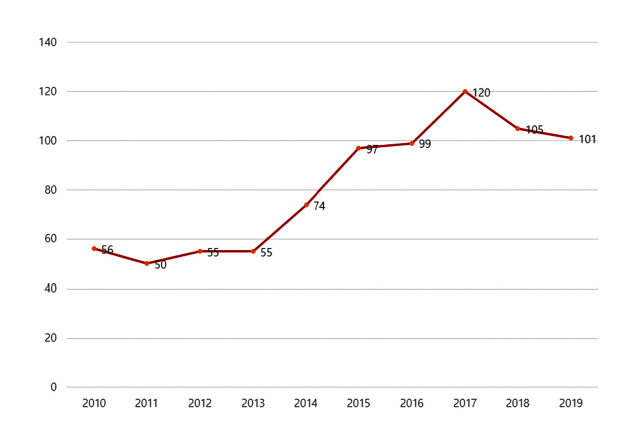
Number of healthcare wearable articles by year.
3.2. Analysis according to main research category
According to the system of classification by KCI, the 812 research articles in this study were categorized into five disciplines: engineering, interdisciplinary studies, arts and kinesiology, social sciences, and natural sciences. The breakdown, depicted in Fig. 2, was as follows: engineering 376 (46.3%), interdisciplinary studies 188 (23.2%), arts and kinesiology 139 (17.1%), 64 (7.9%) in social sciences, and 45 (5.5%) in natural sciences. Engineering was identified as the most active research category for healthcare wearables. This demonstrates that healthcare wearables are designed based on technology, yet they have a multidisciplinary and convergence character.
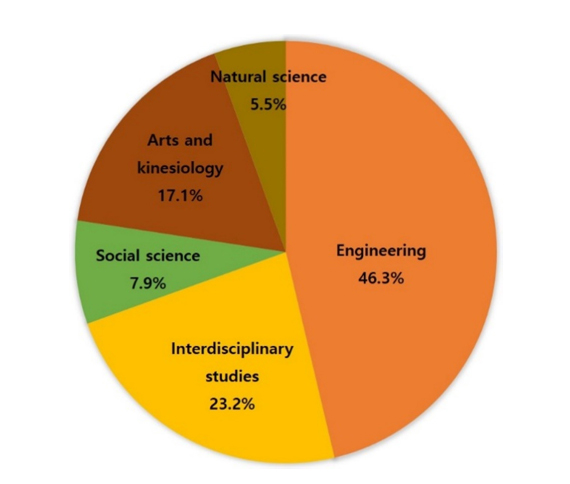
Distribution of research articles by discipline (main category).
In terms of the research discipline (main category), 59 journals were included in the field of engineering, with 40.4% of the articles focused on electronic information and communication engineering, among 12 divisions. In the field of interdisciplinary studies, 26 journals were included, and 52.1% of the articles focused on interdisciplinary research, among five divisions. In the field of social sciences, 38 journals were included, with 43.8% of the articles focused on business management, among 15 divisions. In the field of arts and kinesiology, 31 journals were included, with 59.7% of the articles focused on design, among six divisions. In the field of natural sciences, 12 articles were included, with 88.9% focused on life science, among five divisions (Table 2).
Number of research journals and articles by discipline (main category) and sub-category (middle category)
The trend of year-by-year presentations across the main categories is depicted in Fig. 3. In the field of engineering, more than 30 articles were published annually from 2010 to the present, and with 91 articles (24.8%) published between 2016 and 2017, we deemed that the most active research was conducted that year. In the field of interdisciplinary studies, more than 10 articles were published annually since 2013, and 64.4% of the articles in the field were published since 2016, indicating activity until recently. In social science, 26 articles (40.6%) were published between 2009 and 2019. In the field of art and kinesiology, 31 articles were published in 2015, and the number of publications decreased since then, indicating that the most active research year was 2015 for this field. The field of natural science has shown a very low level of research in regards to healthcare wearables in comparison with other fields; however, the publication of 17 articles (37.8%), between 2018 and 2019. indicated an increasing trend recently.
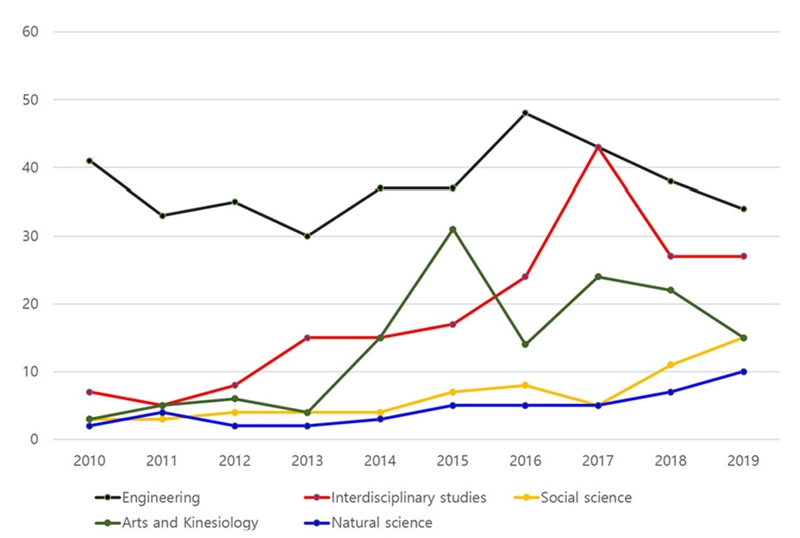
Distributions of articles by discipline (main research category) from 2010 to 2019.
In summary, healthcare wearable research has been studied broadly across various disciplines (main categories), suggesting that healthcare and wearables have different influences on human life as a whole, are impacted by social changes, and are influenced by changes within science and communication technologies.
3.3. Categorization by research subject
Research trends were analyzed by classifying them into six subjects: technology development, technology analysis, design development, design analysis, marketing development, and marketing analysis. Research involving the development of healthcare-related systems, development of apps or mobile content, development of healthcare wearable devices and products, and development of major technologies applied to healthcare wearable devices were all classified as technical development. This study investigated experiments, literature, and cases for these technologies, which were then classified as technical analysis. Design development included a conceptual proposal and design of clothing and products for healthcare wearable device functions, presenting visual information design, and design guidelines, such as display design. The design analysis focused on articles that analyzed the design of these products, through examples or literature. Marketing development included research on non-visual outcomes related to assessment criteria, service scenarios, strategy development, and proposals. Finally, the marketing analysis focused on articles related to the assessment of the developed program, service, or system, either through surveys or experiments.
When analyzing the percentage distribution of the overall paper by research subject, 46.6% of the research focused on technology development, followed by 23.0% for marketing analysis, 14.5% for technology analysis, 7.3% for design development, 4.6% for marketing development, and 4.1% for design analysis (Fig. 4).
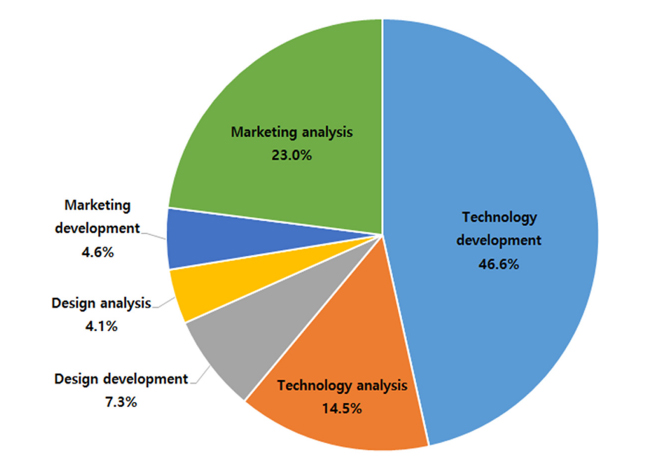
Distribution of articles by research subject.
Table 3 presents the results of categorizing specific sub-topics for each research subject. In the area of technology development, healthcare wearable device technical development stood out as a primary research topic with 152 articles (40.2%) focused on healthcare wearables, such as sensing technology, output technology, processing technology, and power technology. Similarly, 59 articles (15.6%) studied mobile content and/or application development. There were 49 articles (13.0%) and 41 articles (10.8%) that studied healthcare system development and security/certification system development, respectively.
Distribution of specific sub-topics for each research subject
Regarding the topic of technical analysis, 65 articles (55.1%) were studies to evaluate and analyze the performance of technologies needed to develop wearable devices and medical devices, whereas 23 articles (19.5%) were focused on technology analysis and research trends. In the subject of design development, 46 articles (83.1%) focused on the design development of healthcare wearables, whereas 25 articles (75.8%) were published on the design analysis subject, which was deemed to have been analyzed according to design development. Regarding the topic of marketing development, 46.8% of the respondents suggested policies and strategies for healthcare services. While 72 articles (38.5%) analyzed consumer behavior for healthcare wearables, 71 articles (38.0%) analyzed consumer behavior for healthcare services.
By looked at the trends year-to-year, it was observed that the subject of technology development was the most actively researched since 2010. Despite a slowdown in publication in 2015, the resurgence in the number of article announcements since 2016 indicated that steady research on technology development has been underway for the past decade. Research on technology analysis was indicated to be a growing trend from 2014 onwards, indicating that analysis of existing technologies was being conducted. Design development and design analysis began in earnest in 2014, and the highest number of articles was published in 2017, despite having slowed down in recent years. While research on marketing development exhibited an extremely poor performance over the last 10 years in comparison with other topics, the marketing analysis topic, which analyzed consumer behavior for the developed products and services, demonstrated that research in this area has been active since 2015, in parallel to the subject of technology analysis (Fig. 5).
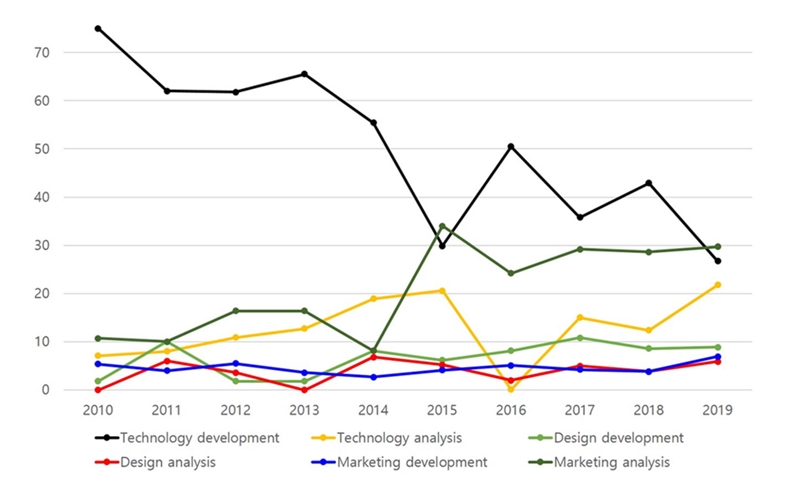
Distributions of research articles by subject from 2010 to 2019.
3.4. Categorization by research method
For this study, the methodology characteristics of healthcare wearable studies were analyzed by developing and producing research methods, trend analysis, experimentation, and survey. If more than one method was found to apply in an article, it was multi-treated. As a result, 35.9% of the research conducted was classified as development and production methods, including product development and production, system development, content proposal, protocol or algorithm development, and performance evaluation guidelines. The literature survey for case studies and research trend analysis was classified as a trend analysis method, and 22.4% of the articles were categorized as this class; 24.8% were classified as experiments and evaluations, including experiments or developments for technology development, and evaluation methods for verification of manufactured products and systems. The use of a survey was classified as a survey method, including those analyzed through surveys, in-depth interviews, reviews and interviews to analyze consumer behavior, and service and product reviews. This method accounted for 16.9% of the total distribution (Fig. 6).
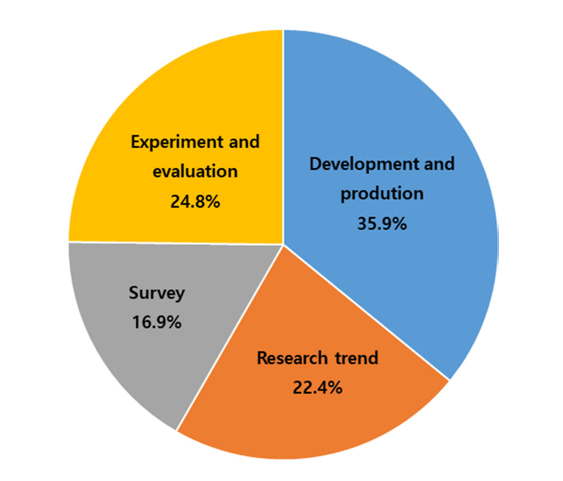
Distributions of articles by research method.
The distribution of research methods used for each research subject is depicted in Fig. 7. In the case of technology development, 63.3% focused on development and production, and 31.3% focused on experiments and evaluations that were found to confirm the results of prior studies. Technology analysis demonstrated that 47.6% of the articles analyzed the technology through literature or examples, and 50.0% of the articles focused on experimentation. Design development revealed that 43.2% of the respondents suggested or produced the final product immediately, whereas 28.4% used various research methods for trend analysis through literature or case studies, 17.3% utilized experimentation, and 11.1% used the survey. The design analysis confirmed that 79.5% of the articles focused on studies through literature or case studies, and 20.5% of the articles presented a survey on trends, as well as an evaluation of questionnaires, interviews, and designs. In the case of marketing development, 59.6% of the researchers conducted a trend analysis, whereas 29.8% suggested an evaluation guideline, or strategies and policies. Marketing analysis demonstrated that 67.1% of the analyzed articles used reviews, interviews, and questionnaires predominantly. Many articles that used various methods of research were found by both literature and case studies/surveys.
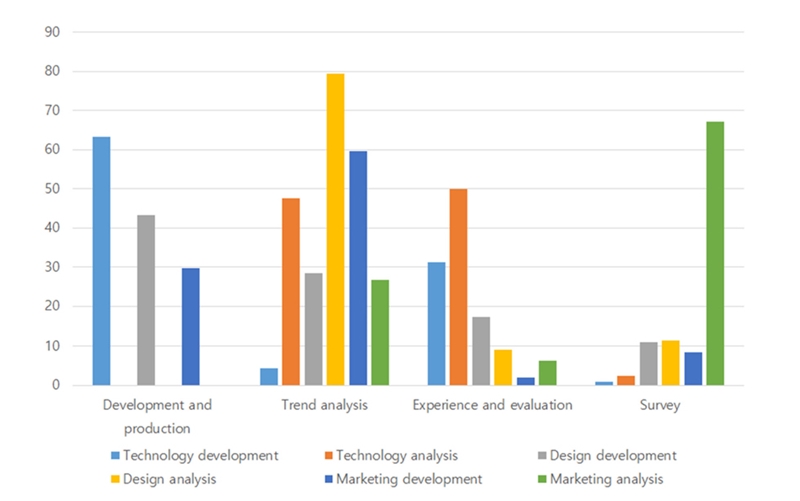
Distributions of articles in research methods by research subject.
3.5. Keyword analysis
For this study, 3,675 keywords extracted from 812 articles were analyzed to identify the primary keywords used over the last 10 years. By referring to the keywords of each article, the research titles were grouped together into the top five categories: devices, healthcare, big data, convergence technologies, and others. Excluding the others category, the remaining 3,150 keywords were grouped as follows: 1,585 (48.1%) were related to devices, 1,075 (32.6%) were related to healthcare, 253 (7.7%) were related to big data, and 237 (7.2%) were related to healthcare convergence technologies. Looking at the details of each category, the devices category was classified into healthcare wearable devices, technologies for device development, and consumer behavior for device use. Healthcare was classified into healthcare, healthcare services, smart healthcare, consumer behavior for healthcare services, and wellness. Big data was classified into biometric data and database. Convergence technology was classified into convergence with AI, convergence with IoT, and convergence with design (Table 4).
Healthcare wearable keywords
To identify the research trend for healthcare wearables, we conducted a year-by-year keywords analysis as shown in Fig. 8 and Table 5. Approximately 100 articles on devices were published from 2010 to 2013. This number increased to 254 from 2014 to 2017. A closer look indicated that technologies related to smart device development were steadily underway since 2010 and more active since 2015. Based on these technologies, research on healthcare devices began in earnest in 2012, demonstrated the most activity in 2017, and then significantly decreased in 2018, whereas wearable devices exhibited the most articles published in 2017 and continued research until 2018. This trend showed that research on consumer behavior, based on device use, was also active between 2016 and 2017. Focusing on the keywords related to big data, it was observed that research has been underway in earnest since 2012. In contrast, the keywords for biometric data represented a downward trend after a considerable amount of research was conducted in 2012; however, since 2017, they began to appear most frequently with cloud data in 2018. Healthcare-related keywords were published in less than 100 articles by 2014, and showed an increase beginning in 2015, up to 162 articles in 2017. Specifically, keywords related to smart healthcare and healthcare services were consistently high since 2010, accounting for the largest portion in 2017. We observed that wellness keywords started to increase in 2015 and showed considerable amount of activity in this field until recently. Keywords related to convergence displayed an increasing trend in the number of published articles since 2015. However, this number was extremely low in comparison with other fields, although studies on convergence between the IoT and healthcare were frequently observed since 2015, and studies on AI and healthcare recently increased in comparison with other years.
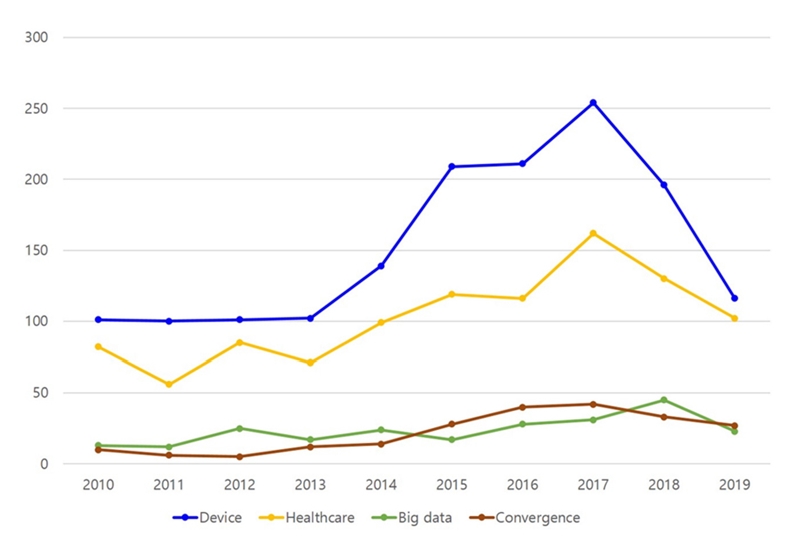
Number of keywords by year.
Breakdown of detailed keywords identified by year
4. Conclusions
Healthcare wearables refer to all devices attached to the body, or combined into one part of the body, to enhance the healthcare capability of the human body. They are secure and adjustable according to human will. This study aimed to provide information for the future research direction of healthcare wearables in the field of clothing science. This was completed by reviewing research trends, related to healthcare wearables, conducted in Korea from 2010 to 2019.
Over the last 10 years, 812 articles focused on healthcare wearables were found in Korea and identified by this study. Research has been active since 2015, and engineering was identified as the discipline (main category) with the largest number of articles published. The research was conducted in the order of technology development 378 articles (46.6%), marketing analysis 167 articles (23.0%), and technology analysis 118 articles (14.5%), design development 59 articles (7.3%), marketing development 37 articles (4.6%), design analysis 33 articles (4.1%). The research method observed most frequently was the development and production methods (35.9%); although, trend analysis (22.4%), experimentation (24.8%), and survey (16.9%) were other methods conducted and observed. The analysis of keywords in each article showed 1,585 keywords related to devices (48.1%), 1,075 keywords related to healthcare (32.6%), 253 keywords related to healthcare big data (7.7%), and 237 keywords related to healthcare convergence technology (7.2%).
Focusing on studies related to fiber, textiles, designs, and clothing in the field of clothing studies in healthcare wearables, only 81 out of the total 812 articles were found on this topic. Related studies indicated an increasing trend (10.0%) since 2014. However, it was concluded that more research on healthcare wear is needed for clothing studies as well. Broken down by discipline (main category), 7 articles were published in the Journal of the Korean Society of Fashion Design, in the field of art and kinesiology; and 15 articles were published in the Fashion and Textile Research Journal, in the field of natural science. This was the most active research on healthcare wearables in the Fashion and Textile Research Journal. Several studies were conducted to analyze technologies related to healthcare clothing manufacturing through trend analysis, or experimentation, and to develop and produce designs based on them.
We concluded that it is necessary to explore ways to transform technology development for healthcare wearables into high-performance products, with medical and welfare functions, as well as electronics, information and telecommunications technology fields, incorporated with clothing and textile studies. This requires convergence research through a cooperative network of industries, universities, and associations that can simultaneously strengthen the development capabilities of technology innovation players, and for which an optimal research environment should be created for the convergence of knowledge, such as smart clothing. Additionally, the government’s active support and training of experts are required to promote R&D in the relevant fields. In a follow-up study, we will look at research trends related to healthcare wearable devices, focusing on overseas papers, and seek new research topics and targets that should be noted in the domestic clothing industry.
References
- Ahn, S. J., Jung, H. J., Choi, J. S., Park, J. Y., Moon, Y. R., Jeon, J. H., Lee, S. H., Kim, J. S., Oh, K. H., Shin, S. Y., & Shin, H. M. (2018). The 10 smart health standardization strategies trends in 2018. Korea Standards Association Report. Retrieved October 18, 2019, from https://www.ksa.or.kr/ksa_kr/845/subview.do?enc=Zm5jdDF8QEB8JTJGYmJ zJTJGa3NhX2tyJTJGNTglMkYxMzc3MCUyRmFydGNsVmlldy5kbyUzRnBhZ2UlM0QyJTI2bGFzdFBhZ2Ul M0Q4JTI2c3JjaENvbHVtbiUzRCUyNnNyY2hXcmQlM0QlMjZiYnNDbFNlcSUzRCUyNmJic09wZW5XcmR TZXElM0QlMjZyZ3NCZ25kZVN0ciUzRCUyNnJnc0VuZGRlU3RyJTNEJTI2aXNWaWV3TWluZSUzRGZhbH NlJTI2cGFzc3dvcmQlM0QlMjY%3D
- Baik, J. K., & Lee, M. S. (2014). Interdisciplinary convergent research for a successful application of healthcare in an aging society. Korean Journal of Sports Science, 23(2), 333-346.
-
Choo, H. J., Nam, Y. J., Lee, Y. R., Lee, H. K., Lee, S. J., Lee, S. E., & Kim, D. Y. (2012). Domestic research trends in IT fashion. Fashion and Textile Research Journal, 14(4), 614-628.
[https://doi.org/10.5805/KSCI.2012.14.4.614]

-
Kim, Y. H., & Kim, Y. S. (2019). Trend analysis of healthcare research in Korea using topic modeling. Journal of the Korean Society for Wellness, 14(1), 253-262.
[https://doi.org/10.21097/ksw.2019.02.14.1.253]
- Keum, B. R., Kim, Y. M., & Kim, S. J. (2017). A study on trends of wearable device development for infants. Journal of the Korea Fashion and Costume Design Association, 19(4), 29-41.
-
Kwon, H., & Im, J. H. (2019). Trend analysis of next-generation wearable devices and strategic recommendation for domestic SMEs - Focus on Pitbit business model canvas. The Journal of Humanities and Social Science, 10(2), 559-574.
[https://doi.org/10.22143/HSS21.10.2.40]
-
Jeong, Y. S. (2017). Data storage and security model for mobile healthcare service based on IoT. Journal of Digital Convergence, 15(3), 187-193.
[https://doi.org/10.14400/JDC.2017.15.3.187]
-
Lee, E. J., Lee, M. A., Yang, K. Y., & Paik, J. K. (2019). A meta-analysis on domestic research trends of healthcare design - Focusing on articles of KCI accredited journal. Journal of Integrated Design Research, 18(2), 9-26.
[https://doi.org/10.21195/jidr.2019.18.2.001]
-
Lee, N. K., Lee, J. O., & Hwang, K. T. (2014). A study on research framework and research trends in the healthcare information technology area. Informatization Policy, 21(3), 3-32.
[https://doi.org/10.22693/NIAIP.2014.21.3.003]
- Lee, S. I. (2017). A study on the influence of technical and individual characteristics on the acceptance intention and performance expectation of healthcare wearable devices. Unpublished doctoral dissertation, Konkuk University, Seoul.
- Lim, C. S. (2017). A study on the analysis of technology and service issues for wearable devices and future development direction. The Journal of Korean Institute of Next Generation Computing, 13(4), 81-89.
- Lee, Y. H., & Shin, S. J. (2016). Healthcare wearable device new growth power industry expects value-added creation. Kisti market report. Retrieved October 18, 2019, from http://www.google.com/url?sa=tandrct=jandq=andesrc=sandsource=webandcd=1andved=2ahUKEwjYw6LxjuTmAhXdxYsBHXPZCKkQFjAAegQIBhACandurl=http%3A%2F%2Fwww.bioin.or.kr%2FfileDown.do%3Fseq%3D34763andusg=AOvVaw0TN0KNePoX7gq_Y9fRczV5
- Market Trends and Prospects for Smart Healthcare and Medical Devices. (2019). Seoul: Impactbook.
- Park, I. M., Ro, J. H., Choi, B. K., & Shin, M. J. (2016). Development and application of wearable devices for healthcare. Journal of Institute of Control, Robotics and Systems., 22(4), 27-34.
- Park, J. H. (2018). Technology and market trends of healthcare wearable devices. The Magazine of the Institute of Electronics and Information Engineers, 45(3), 48-56.
-
Yoon, J. E., & Suh, C. J. (2018). Research trend analysis on smart healthcare by using topic modeling and ego network analysis. Journal of Digital Contents Society, 19(5), 981-993.
[https://doi.org/10.9728/dcs.2018.19.5.981]
- Yoon, J. E., & Suh, C. J. (2019). Research trend analysis by using text-mining techniques on the convergence studies of AI and healthcare technologies. Journal of Information Technology Services, 18(2), 123-141.